 Ferry network
Norway ferry routes, schedules & timetables
Norway has 1183 ferry routes operated by 29 companies across 956 ferry ports. The average crossing takes about 18m, with the longest running roughly 8h 55m. Major operators include AMBU Pendlerrute, Agder Kollektivtrafikk AS, AtB, Brakar, Bygdøyfergen and FRAM. Below you'll find crossing times, operators and timetables for each route.
- 1183
- Ferry routes
- 29
- Operators
- 956
- Ports
- 18m
- Avg crossing
About
About ferries in Norway
Norway runs one of the world's densest ferry networks —1183 ferry routes weaving together fjord villages, offshore islands and the mainland. For most of the country the ferry is not a tourist novelty but everyday road: crossings replace bridges on the E39 and countless county roads, and many run every 20–40 minutes. This guide explains how Norwegian ferries actually work — how you pay, what they cost, which are free, and how to plan a trip — so you can travel them with confidence.
How Norwegian car ferries work
Norwegian car ferries (Norwegian: ferje) are drive-on, drive-off and almost always first-come, first-served — there is no ticket booth or barrier on the vast majority of routes. You queue in the marshalling lanes at the quay, drive on when directed, switch off the engine, and a roadside camera reads your number plate. The ferry keeper (or an automated system) bills the registered keeper afterwards. There is no need to buy a ticket in advance for a normal road ferry; you simply turn up, join the lane and cross.
How to pay: the AutoPASS for ferry system
Ferry tolls are run by Statens vegvesen (the Norwegian Public Roads Administration) through the national AutoPASS for ferry scheme — the same authority behind road tolls. How much you pay depends on how you are registered:
| Payment method | Discount | Notes |
|---|---|---|
| Prepayment agreement (private) | 50% off | Requires a ~2,000 NOK advance deposit linked to your plate; up to 2 vehicles |
| Prepayment agreement (business) | 40% off | Unlimited vehicles |
| AutoPASS toll tag only (no prepay) | 10% off | The same tag used for road tolls |
| FerryPay (register plate + card) | Full price, no fee | Simplest option for visitors — register at ferrypay.no |
| Invoice by post (do nothing) | Full price + 35 NOK fee | Foreign plates are invoiced via EPASS24 |
On a handful of privately operated crossings the prepay discount is 30% rather than 50%. Where on-board card payment is available it is only on staffed crossings — and no ferry takes cash.
Are ferries in Norway free?
Partly, yes. Foot passengers and cyclists travel free on all national road ferries, and passengers riding inside a vehicle are free too — you only pay for the vehicle. Since 1 July 2022 the state has also funded free car travel on roughly 60 ferry connections: routes carrying under 100,000 passengers a year, plus island services with no road link. Note for 2026: several counties have reintroduced summer fares on some otherwise-free connections (for example along the Fv17 Kystriksveien), while Troms keeps its small lines free year-round — so always check the official free-ferry list on autopassferje.no before you rely on one.
How much does a car ferry cost?
Norwegian ferries are priced by vehicle length band, not by weight, and the driver plus all passengers are included in the vehicle fare. A standard car under 6 m typically costs a modest amount on short fjord hops and more on long open-sea crossings:
| Crossing (example) | Vehicle | Approx. fare (2026) |
|---|---|---|
| Lavik–Oppedal (E39, ~20 min) | Car under 6 m | ~81 NOK |
| Mannheller–Fodnes | Vehicle at 6 m | ~72 NOK |
| Mannheller–Fodnes | Vehicle at 7 m | ~178 NOK |
| Bodo–Moskenes (to Lofoten) | Vehicle 6–8 m | ~1,257 NOK |
The Mannheller–Fodnes example shows why the length band matters: a roof box, bike rack, trailer or caravan can tip you into the next band and roughly double the fare. Motorhomes (8–10 m) pay several hundred kroner on a typical route.
Car ferry (ferje) vs express boat (hurtigbat)
Two different vessels serve Norway's coast. A ferje is a stable car ferry that carries vehicles, runs in most weather and prices by vehicle length (passengers free). A hurtigbat is a passenger-only high-speed catamaran that links coastal towns and islands far faster than the road — but it charges every passenger a ticket and is more prone to cancellation in high winds. Car-free travellers covering distance (say Bodo–Svolvaer) usually want the express boat; anyone with a vehicle needs a car ferry.
Electric and zero-emission ferries
Norway leads the world in battery-electric and hybrid ferries, with dozens of silent, emission-free crossings now in daily service — a distinctive part of travelling here. Zero-emission vehicles get a separate tariff: a discount of about 30% for vehicles under 6 m and 50% over 6 m, though these EV incentives are gradually being narrowed toward standard pricing.
Do you need to book?
For the overwhelming majority of Norwegian car ferries, no — it is turn-up-and-go. The main exceptions where you should reserve are Bodo–Moskenes (the popular Lofoten crossing) and Utsira, plus international lines, express boats, fjord cruises and the coastal voyage. In July and August the vehicle decks on tourist routes (Lofoten, the Geirangerfjord) can sell out, so arrive early.
When to travel: summer queues
Ferries run year-round, but high-season afternoons and weekends bring long vehicle queues on the busiest tourist crossings — notably Geiranger–Hellesylt, Lauvvik–Lysebotn, Bognes–Lodingen and Bodo–Moskenes. Some terminals have live queue webcams; Statens vegvesen publishes ferry traffic status. The reliable advice is to arrive well before your intended departure in July–August, since you cannot reserve a place in the lane on most routes.
Scenic and coastal ferries
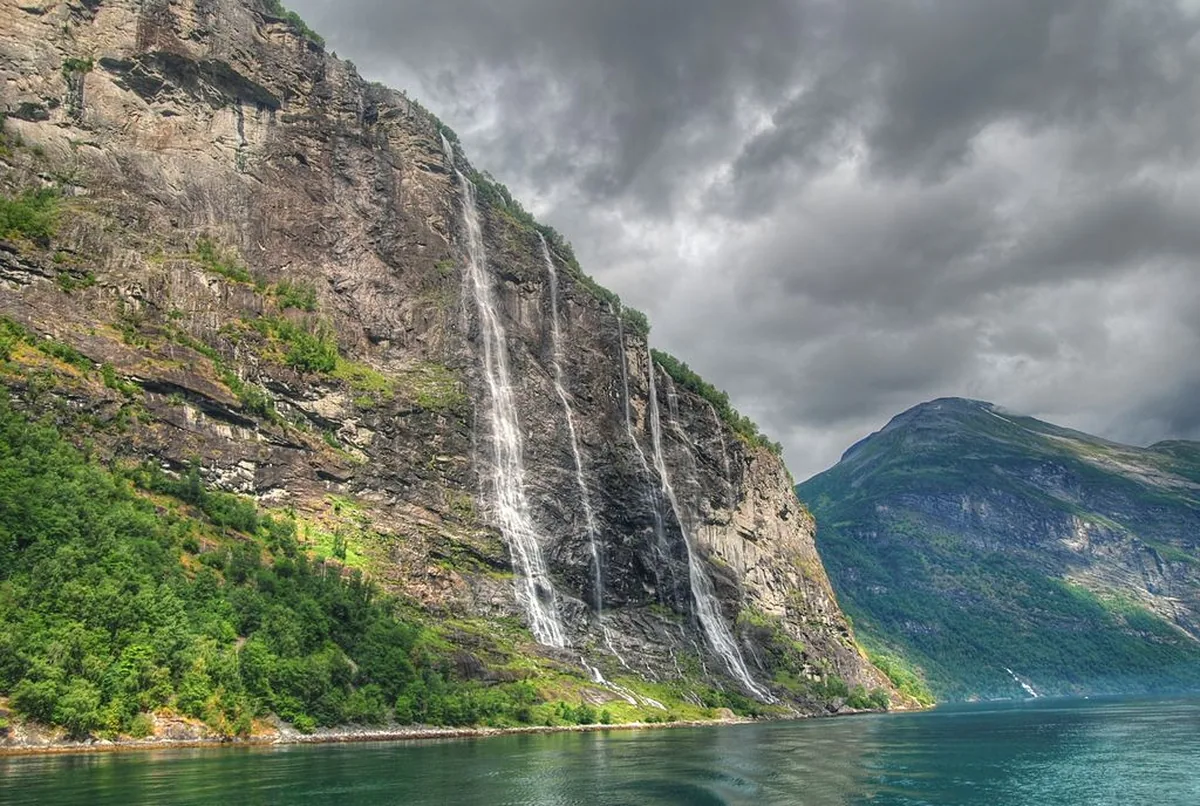
Some Norwegian ferries are destinations in themselves. The Geiranger–Hellesylt tourist ferry (about 65 minutes, roughly 1 May–15 December, from ~390 NOK) sails the UNESCO-listed Geirangerfjord past the Seven Sisters waterfall — it is a separate, pre-booked ticket on which passengers do pay. For the full coast, Hurtigruten runs Bergen–Kirkenes daily (an 11-day round trip) and Havila Kystruten sails the same route several times a week.
Where to check timetables
Norway's official national journey planner is Entur, which covers boats alongside bus, train and air with live departures; Statens vegvesen shows ferry traffic and queues. On this site you can browse the complete network — see the full directory of every Norway ferry route, or open any crossing below for its own timetable, crossing time and operators. Ferries in Norway are operated by companies including Fjord1 (the largest, running several of the busiest crossings), Norled (around 80 vessels from the Oslofjord to Troms), Torghatten in the north, Boreal and Basto Fosen on the heavy Moss–Horten link.
Operators
Which companies run ferries in Norway?
- AMBU Pendlerrute
- Agder Kollektivtrafikk AS
- AtB
- Brakar
- Bygdøyfergen
- FRAM
- Farte
- Fjonesundet
- Fjord Line
- Fjord X
- Fjord1 ASA
- Forsvarsbygg Oscarsborgfergen
- Fredrikstad kommune
- Havila
- Hurtigruten
- Høgsfjordferja
- Innlandstrafikk
- Kolumbus
- Nordland fylkeskommune
- Norled AS
- Ruter
- Skyss
- Snelandia
- Sundbåten
- Svipper
- The Fjords
- Torghatten Sør
- Vestlandske
- Østfold kollektivtrafikk
Regions
Ferry regions in Norway
Coastal travel is local — jump to a region for its routes, quays and timetables.
- Nordland309 routes · 222 quays
- Vestland264 routes · 228 quays
- Rogaland183 routes · 104 quays
- Møre og Romsdal86 routes · 71 quays
- Troms86 routes · 59 quays
- Trøndelag74 routes · 62 quays
- Finnmark60 routes · 42 quays
- Agder33 routes · 32 quays
- Østfold32 routes · 19 quays
- Vestfold og Telemark30 routes · 34 quays
- Oslo og Akershus23 routes · 33 quays
- Innlandet2 routes · 28 quays
Ports
Ferry ports in Norway
955 ports with published ferry connections. Open a port for every route that departs or arrives there.
- Fiskepirterminalen18
- Bodø hurtigbåtkai15
- Florø terminal14
- Kragerø ferjekai14
- Judaberg hurtigbåtkai12
- Hufthamar båtkai11
- Judaberg ferjekai11
- Hammerfest havn10
- Harstad hurtigbåtkai10
- Øksfjord hurtigbåtkai10
- Ørnes hurtigbåtkai10
- Askvoll kai9
- Nedstrand hurtigbåtkai9
- Rødøy hurtigbåtkai9
- Talgje hurtigbåtkai9
- Brottøy hurtigbåtkai8
- Dyrøy kai8
- Eidssund hurtigbåtkai8
- Haugesund hurtigbåtkai8
- Nedgården fergeleie8
- Nordeide kai8
- Skjervøy kai8
- Sør-Hidle hurtigbåtkai8
- Aker brygge7
- Bogøyvær hurtigbåtkai7
- Brimse hurtigbåtkai7
- Brønnøysund hurtigbåtkai7
- Foldøy hurtigbåtkai7
- Gumøy Tangane brygge7
- Hasvik kai7
- Jelsa hurtigbåtkai7
- Leirvik båtkai7
- Mjømna kai7
- Måløy hurtigbåtterminal7
- Nesheim hurtigbåtkai7
- Nesna hurtigbåtkai7
- Onøy ferjekai7
- Strandkaiterminalen båtkai7
- Tau ferjekai7
- Terråk hurtigbåtkai7
- Tonnes hurtigbåtkai7
- Tromsø Prostneset hurtigbåtkai7
- Trondheim hurtigbåtterminal7
- Valderøya hurtigbåtkai7
- Arendal Tyholmen ferjekai6
- Balestrand kai6
- Bekkjarvik båtkai6
- Bodø ferjekai6
- Byre hurtigbåtkai6
- Eidssund ferjekai6
- Feøy hurtigbåtkai6
- Fjelbergøy båtkai6
- Hansnes ferjekai6
- Havøysund kai6
- Hebnes hurtigbåtkai6
- Helgøy ferjekai6
- Helgøy hurtigbåtkai6
- Heng hurtigbåtkai6
- Herøy ferjekai6
- Krakhella kai6
Show all 955 portsShow fewer
- Litlakalsøy6
- Mausundvær kai6
- Møkster6
- Onøy hurtigbåtkai6
- Rørvik hurtigbåtkai6
- Røytvoll hurtigbåtkai6
- Sandland kai6
- Sandnessjøen hurtigbåtkai6
- Skåtøyroa ferjekai6
- Stokkvågen ferjekai6
- Storekorsnes hurtigbåtkai6
- Sæbø ferjekai6
- Sørarnøy hurtigbåtkai6
- Tjøtta ferjekai6
- Tjøtta hurtigbåtkai6
- Træna hurtigbåtkai6
- Vassøy hurtigbåtkai6
- Villevik kai6
- Våg hurtigbåtkai6
- Værøy ferjekai6
- Øksfjord ferjekai6
- Øksningøy hurtigbåtkai6
- Østhusvik hurtigbåtkai6
- Alta hurtigbåtterminal5
- Brekstad hurtigbåtkai5
- Finnkroken hurtigbåtkai5
- Finnsnes kai5
- Forvik hurtigbåtkai5
- Gravningsund fergeleie5
- Hamnsund hurtigbåtkai5
- Hella ferjekai5
- Hildring hurtigbåtkai5
- Jektvik ferjekai5
- Kongshus kai5
- Lensvik hurtigbåtkai5
- Mevær hurtigbåtkai Fleinvær5
- Nord-Hidle ferjekai5
- Nåra kai5
- Ropeid hurtigbåtkai5
- Sandsøy hurtigbåtkai5
- Skjærhalden fergeleie5
- Skånevik båtkai5
- Sleneset ferjekai5
- Smørhamn kai5
- Stokkvågen hurtigbåtkai5
- Storebø båtkai5
- Støtt ferjekai båt5
- Sula ferjekai5
- Sydnes ferjekai5
- Sør-Bokn hurtigbåtkai5
- Tonnes ferjekai5
- Træna ferjekai5
- Vengsøy ferjekai5
- Vik kai5
- Ålesund hurtigbåtkai Skateflukaia5
- Abelvær hurtigbåtkai4
- Andabeløy ferjekai4
- Austbø ferjekai4
- Bergsfjord ferjekai4
- Bindalseidet hurtigbåtkai4
- Bjarkøy hurtigbåtkai4
- Bjørn ferjekai Dønna4
- Bognes ferjekai4
- Borgundøy båtkai4
- Brøstadbotn hurtigbåtkai4
- Bærø Gulodden brygge4
- Drag hurtigbåtkai4
- Eidshaug hurtigbåtkai4
- Eivindvik kai4
- Festøya ferjekai4
- Fjølvika hurtigbåtkai4
- Flesland båtkai4
- Flørli ferjekai4
- Fogn hurtigbåtkai4
- Foldøy ferjekai4
- Fure ferjekai4
- Gamlebyen fergeleie4
- Gjermundshamn ferjekai4
- Gressvik fergeleie4
- Grødset hurtigbåtkai4
- Halhjem ferjekai4
- Halsnøy ferjekai4
- Hareid hurtigbåtkai4
- Havnnes ferjekai4
- Herføl fergeleie4
- Hjelmeland ferjekai4
- Hodnanes ferjekai4
- Hofles ferjekai4
- Horn ferjekai4
- Hovedøya4
- Husevågøy ferjekai4
- Igerøy ferjekai4
- Ingelsfjord hurtigbåtkai4
- Jektvik hurtigbåtkai4
- Jomfruland Åsvik ferjekai4
- Jøa hurtigbåtkai4
- Kalleli hurtigbåtkai4
- Kilboghamn ferjekai4
- Kirklandet Sundbåtkai4
- Kvalfjord kai4
- Kveitevik hurtigbåtkai4
- Kvellandstrand ferjekai4
- Lavik kai4
- Lovund ferjekai4
- Lundøy4
- Lyngør Holmbrygga4
- Løkta ferjekai4
- Makø fergeleie4
- Molde ferjekai4
- Moskenes ferjekai4
- Måløy ferjekai4
- Nesna ferjekai4
- Nesoddtangen4
- Nesvik hurtigbåtkai4
- Oldeide ferjekai4
- Ona ferjekai4
- Ranavik båtkai4
- Reinfjord4
- Rotsund ferjekai4
- Rysjedalsvika kai4
- Røst ferjekai4
- Røvær hurtigbåtkai4
- Sand hurtigbåtkai4
- Sandnessjøen ferjekai4
- Sandviksberget hurtigbåtkai4
- Sandvikvåg ferjekai4
- Sandvær hurtigbåtkai4
- Sanna hurtigbåtkai4
- Sanne fergeleie4
- Selsøyvik hurtigbåtkai4
- Sentrum fergeleie4
- Skjerjehamn kai4
- Skåtøy brygge4
- Smertu fergeleie4
- Sommerset hurtigbåtkai4
- Steinsøy hurtigbåtkai4
- Stevnebø kai4
- Stokkasjøen hurtigbåtkai4
- Storfosna ferjekai4
- Sula hurtigbåtkai4
- Sunde båtkai4
- Sørarnøy ferjekai4
- Sørnesøy hurtigbåtkai4
- Søvik ferjekai4
- Tennskjær hurtigbåtkai4
- Tro ferjekai4
- Uløybukt ferjekai4
- Utne ferjekai4
- Varaldsøy ferjekai4
- Vibrandsøy hurtigbåtkai4
- Vikedal hurtigbåtkai4
- Voksa ferjekai4
- Volda ferjekai4
- Vormestrand hurtigbåtkai4
- Værlandet ferjekai4
- Værste fergeleie4
- Ylvingen ferjekai4
- Åram ferjekai4
- Årsnes ferjekai4
- Øksnes hurtigbåtkai4
- Øyen hurtigbåtkai4
- Akkarfjord kombibåtkai Sørøya3
- Altneset kombibåtkai3
- Arnøyhamn kai3
- Askrova kai3
- Batalden kai3
- Bjelkarøyna ferjekai3
- Bjørn hurtigbåtkai3
- Bliksvær hurtigbåtkai3
- Bogøy hurtigbåtkai3
- Bolga ferjekai3
- Bolga hurtigbåtkai3
- Brevik ferjekai3
- Bærøyvågen hurtigbåtkai3
- Børøy3
- Dragsvik ferjekai3
- Edøya hurtigbåtkai3
- Engenes kai3
- Finden kai3
- Fister hurtigbåtkai3
- Flostad hurtigbåtkai3
- Frekhaug båtkai3
- Geithus kai3
- Gjersvikgrenda hurtigbåtkai3
- Gjervik ferjekai3
- Gjerøy ferjekai3
- Gjerøy hurtigbåtkai3
- Gjæsingen kai3
- Gunnarnes kai3
- Halsnøy hurtigbåtkai3
- Harangsfjord hurtigbåtkai3
- Hardbakke kai3
- Hasselvika hurtigbåtkai3
- Hebnes ferjekai3
- Hellesøy hurtigbåtkai3
- Helnessund hurtigbåtkai3
- Hernar båtkai3
- Hille kai3
- Hjelmeland hurtigbåtkai3
- Hommersåk hurtigbåtkai3
- Håheller hurtigbåtkai3
- Indre Kvarøy hurtigbåtkai3
- Ingøy kai3
- Jektavik ferjekai3
- Jomfruland Tårnbrygga3
- Kalvøy ferjekai3
- Karlsøy ferjekai3
- Kilboghamn hurtigbåtkai3
- Kinn kai3
- Kjøtta3
- Knarvik båtkai3
- Kolbjørnsvik ferjekai3
- Kristiansund hurtigbåtkai3
- Kårhamn kai3
- Langøy hurtigbåtkai3
- Lauvvik ferjekai3
- Leikanger kai3
- Lindøy hurtigbåtkai3
- Lonkan hurtigbåtkai3
- Lovund hurtigbåtkai3
- Malkenes båtkai3
- Marvik hurtigbåtkai3
- Mekjarvik hurtigbåtkai3
- Melfjordbotn hurtigbåtkai3
- Meløysund ferjekai3
- Meløysund hurtigbåtkai3
- Mindland ferjekai3
- Musvær kai3
- Myken hurtigbåtkai3
- Nedstrand ferjekai3
- Nikkeby3
- Nikkeby ferjekai3
- Nord-Lenangen3
- Nordhuglo ferjekai3
- Norodden ferjekai3
- Nuvsvåg kai3
- Nærøy kai3
- Orta ferjekai3
- Oscarsborg østre kai3
- Rubbestadneset båtkai3
- Rutledal ferjekai3
- Rødøy ferjekai3
- Rørøy hurtigbåtkai3
- Sandvik hurtigbåtkai3
- Sandøya Hauketangen3
- Sandøya Haven3
- Sandøya ferjekai3
- Sandøya hurtigbåtkai3
- Segelvik3
- Selje kai3
- Selsøyvik ferjekai3
- Selvær ferjekai3
- Sjølvik ferjekai3
- Skei hurtigbåtkai3
- Skogsholmen hurtigbåtkai3
- Skotnes hurtigbåtkai3
- Skrolsvik hurtigbåtkai3
- Skrova hurtigbåtkai3
- Skånevik ferjekai3
- Skåningsbukt ferjekai3
- Smines hurtigbåtkai3
- Småge ferjekai3
- Songesand ferjekai3
- Spildra3
- Stabbestad ferjekai3
- Store Kalvøy hurtigbåtkai3
- Storselsøy ferjekai3
- Storselsøy hurtigbåtkai3
- Storstein ferjekai3
- Støtt hurtigbåtkai3
- Sundbrygga3
- Svanøybukt kai3
- Sørburøy hurtigbåtkai3
- Sørfjorden ferjekai3
- Sørfjorden hurtigbåtkai3
- Sørlandegode hurtigbåtkai3
- Sørvær hurtigbåtkai Fleinvær3
- Tau hurtigbåtkai3
- Tunnstad hurtigbåtkai3
- Tussøy3
- Uskakalven hurtigbåtkai3
- Usken hurtigbåtkai3
- Utåker ferjekai3
- Vardetangen kai3
- Veiesund kai3
- Vikran kai3
- Vollen3
- Ålesund kystrutekai3
- Åram hurtigbåtkai3
- Ølen hurtigbåtkai3
- Ølesund hurtigbåtkai3
- Abelnes ferjekai2
- Anda ferjekai2
- Andalsvåg ferjekai2
- Arasvika ferjekai2
- Arsvågen ferjekai2
- Aukra ferjekai2
- Austringen hurtigbåtkai2
- Barekstad kai2
- Barkestad hurtigbåtkai2
- Barmen kai2
- Barmsund kai2
- Bellvik ferjekai2
- Bjørkøya brygge2
- Bjørnerå ferjekai2
- Bleikøya2
- Bodø kystrutekai2
- Bogsund hurtigbåtkai2
- Botnhamn ferjekai2
- Brasøy ferjekai2
- BrasøyFK hurtigbåtkai2
- Brattvåg ferjekai2
- Breistein ferjekai2
- Breivikeidet ferjekai2
- Brekstad ferjekai2
- Brensholmen ferjekai2
- Bruntveit båtkai2
- Brønnøysund kystrutekai2
- Buavåg ferjekai2
- Burfjord kai2
- Bygdøynes kai2
- Cicignon fergeleie2
- Daløy ferjekai2
- Drag ferjekai2
- Dronningen2
- Dryna ferjekai2
- Drøbak2
- Duesund ferjekai2
- Edøya ferjekai2
- Eidesvik båtkai2
- Eidsdal ferjekai2
- Espevær båtkai2
- Fanøy kai2
- Fedje ferjekai2
- Festvåg ferjekai2
- Finnøya ferjekai2
- Fiskebøl ferjekai2
- Fjelbergøy ferjekai2
- Fjone ferjekai2
- Flakk ferjekai2
- Flesnes ferjekai2
- Fodnes ferjekai2
- Fogn ferjekai2
- Folkestad ferjekai2
- Forsand ferjekai2
- Forvik ferjekai2
- Forøy ferjekai2
- Frønningen ferjekai2
- Furneset ferjekai2
- Furuholmen brygge2
- Færøyna kai2
- Garpaskjær ferjekai2
- Garten ferjekai2
- Geiranger ferjekai2
- Geisnes ferjekai2
- Gjeving brygge2
- Gomalandet Sundbåtkai2
- Gressholmen2
- Grønnøy hurtigbåtkai2
- Guldsmedenga ferjekai2
- Gutvik ferjekai2
- Hagefjord brygge2
- Haldorsnes ferjekai2
- Halsa ferjekai2
- Handnesøya ferjekai2
- Handnesøya hurtigbåtkai2
- Hanøy hurtigbåtkai2
- Hareid ferjekai2
- Hatvik ferjekai2
- Haugsholmen kai2
- Helgenes hurtigbåtkai2
- Helgøya Ny-Hellesund2
- Hellesylt ferjekai2
- Hellesøy ferjekai2
- Helligvær hurtigbåtkai2
- Hennset ferjekai2
- Hestmona hurtigbåtkai2
- Hestøya ferjekai2
- Hirtshals Fjordlineterminalen2
- Hisarøy ferjekai2
- Hjellestad ferjekai2
- Hokstad ferjekai2
- Hollingsholmen ferjekai2
- Holm ferjekai2
- Holmen hurtigbåtkai2
- Hommersåk ferjekai2
- Horn ferjekai2
- Horsdal ferjekai2
- Horten ferjekai2
- Hufthamar ferjekai2
- Hundeidvik ferjekai2
- Hundåla ferjekai2
- Husavik ferjekai2
- Husvika hurtigbåtkai2
- Høllen brygge2
- Høyanger kai2
- Indre Kvarøy ferjekai2
- Inndyr hurtigbåtkai2
- Innlandet Sundbåtkai2
- Isane ferjekai2
- Jelsa ferjekai2
- Jondal ferjekai2
- Kaljord hurtigbåtkai2
- Kalvøy hurtigbåtkai2
- Kanestraum ferjekai2
- Kapelløya Ny-Hellesund2
- Kaupanger ferjekai2
- Kilvær hurtigbåtkai2
- Kinsarvik ferjekai2
- Kirkeholmen brygge2
- Kjerringholmen ferjekai2
- Kjøpsvik ferjekai2
- Kleppestø båtkai2
- Klokkarøy ferjekai2
- Koparneset ferjekai2
- Korsfjord ferjekai2
- Kristiansand ferjeterminal2
- Krokeide ferjekai2
- Kvamsøya ferjekai2
- Kvanndal ferjekai2
- Kvanne ferjekai2
- Kvitsøy ferjekai2
- Kvitsøy hurtigbåtkai2
- Laggo kai2
- Langevåg ferjekai2
- Langevåg hurtigbåtkai2
- Langøy hurtigbåtkai2
- Langøy hurtigbåtkai2
- Larsnes ferjekai2
- Larsnes hurtigbåtkai2
- Lauer2
- Lauksundskaret ferjekai2
- Launes ferjekai2
- Lauvstad ferjekai2
- Lavik ferjekai2
- Leirgulen kai2
- Leirvågen ferjekai2
- Lekneset ferjekai2
- Leksa ferjekai2
- Levang ferjekai2
- Levanger ferjekai2
- Liabygda ferjekai2
- Lindøya vest2
- Lindøya øst2
- Linge ferjekai2
- Lisleby fergeleie2
- Litle Færøy2
- Loppa kai Mevær2
- Losna kai2
- Lote ferjekai2
- Lund ferjekai2
- Lyngseidet ferjekai2
- Lyngør Kommunalen2
- Lysaker brygge2
- Lågøy kai2
- Lødingen ferjekai2
- Magerholm ferjekai2
- Mannheller ferjekai2
- Masfjordnes ferjekai2
- Matre ferjekai2
- Mekjarvik ferjekai2
- Melbu ferjekai2
- Melkvikan Sundbåtkai2
- Melvika kai2
- Mesøy hurtigbåtkai2
- Mindland hurtigbåtkai2
- Misten ferjekai2
- Mjånes ferjekai2
- Molde kystrutekai2
- Monsøya Ny-Hellesund2
- Mordalsvågen ferjekai2
- Mortavika ferjekai2
- Moss ferjekai2
- Musken hurtigbåtkai2
- Måløy kystrutekai2
- Måren ferjekai2
- Måsøy kai2
- Nakkholmen2
- Namsos hurtigbåtkai2
- Nesheim ferjekai2
- Nesna kystrutekai2
- Nesna lokalbåtkai2
- Nesvik ferjekai2
- Nissedal ferjekai2
- Nord-Hidle hurtigbåtkai2
- Nordlandet Sundbåtkai2
- Nordnesøy hurtigbåtkai2
- Nordskot hurtigbåtkai2
- Notøy kai2
- Nyvoll ferjekai2
- Oanes ferjekai2
- Olderdalen ferjekai2
- Oppedal ferjekai2
- Ornes ferjekai2
- Os båtkai2
- Ranavik ferjekai2
- Reine hurtigbåtkai2
- Reinskard ferjekai2
- Revsnes ferjekai2
- Revså hurtigbåtkai2
- Ringholmen kai2
- Risøy kai2
- Risøyna kai2
- Rykkjem ferjekai2
- Rådhusbrygge 32
- Rørvik ferjekai2
- Rørvik kystrutekai2
- Sandeid hurtigbåtkai2
- Sanden båtkai2
- Sandneshamn kai2
- Sandnessjøen kystrutekai2
- Sandtorv2
- Sandvika ferjekai2
- Sandøya ferjekai2
- Sandøykilen2
- Sauda hurtigbåtkai2
- Sauren ferjekai2
- Seierstad ferjekai2
- Seivika ferjekai2
- Sekken kai2
- Seljeøya2
- Sellebakk fergeleie2
- Selvåg kai2
- Selvær hurtigbåtkai2
- Silda kai2
- Sjølvik hurtigbåtkai2
- Skarberget ferjekai2
- Skei ferjekai2
- Skilsø ferjekai2
- Skipavik ferjekai2
- Skipnes hurtigbåtkai2
- Skippernes kai2
- Skjersholmane ferjekai2
- Skjånes kai2
- Skjærvøy hurtigbåtkai2
- Skorpa kai2
- Skorpeide kai2
- Skrova ferjekai2
- Skutvik hurtigbåtkai2
- Skår ferjekai2
- Slemmestad brygge2
- Slettnes kai2
- Sløvågen ferjekai2
- Snilstveitøy båtkai2
- Solavågen ferjekai2
- Solfjellsjøen ferjekai2
- Solholmen ferjekai2
- Sollibotn kai2
- Solvorn ferjekai2
- Stangnes ferjekai2
- Stavang kai2
- Stokkasjøen ferjekai2
- Stokmarknes kystrutekai2
- Storholmen kai2
- Stornes ferjekai2
- Storå hurtigbåtkai2
- Storøy kai2
- Stranda ferjekai2
- Stårheim ferjekai2
- Stølsvik hurtigbåtkai2
- Sulesund ferjekai2
- Sund ferjekai2
- Sunderøy hurtigbåtkai2
- Sundøy hurtigbåtkai2
- Svelvik ferjekai2
- Svensby ferjekai2
- Svinodden ferjekai2
- Svolvær ferjekai2
- Svolvær hurtigbåtkai2
- Sykkylven ferjekai2
- Sævrøyna ferjekai2
- Sølsnes ferjekai2
- Søndre Nekkøy kai2
- Sør-Tverrfjord kai2
- Sørrollnes ferjekai2
- Tangen ferjekai2
- Tangenes kai2
- Telnes hurtigbåtkai2
- Tomma ferjekai2
- Tomma kai2
- Trandal ferjekai2
- Tro hurtigbåtkai2
- Tungodden kai2
- Tunsøy hurtigbåtkai2
- Tverrfjord ferjekai2
- Tåtøy ferjekai2
- Tømmervåg ferjekai2
- Tørvikbygd ferjekai2
- Urke hurtigbåtkai2
- Uskakalven ferjekai2
- Usken ferjekai2
- Utbjoa ferjekai2
- Utbjoa hurtigbåtkai2
- Utsira nord ferjekai2
- Valanhamn2
- Valestrand ferjekai2
- Valset ferjekai2
- Vandve ferjekai2
- Vangsnes ferjekai2
- Vannvåg kai2
- Vanvikan2
- Vassdalsvik ferjekai2
- Vassøy ferjekai2
- Vassøy kai2
- Venjaneset ferjekai2
- Vennesund ferjekai2
- Verftet Ny-Hellesund2
- Verket ferjekai2
- Vikholmen ferjekai2
- Vikholmen kai2
- Vindstad hurtigbåtkai2
- Visthus hurtigbåtkai2
- Voksa hurtigbåtkai2
- Vollevik kai2
- Vågaholmen hurtigbåtkai2
- Våge båtkai2
- Våge ferjekai2
- Værnes ferjekai2
- Ylvingen hurtigbåtkai2
- Åfarnes ferjekai2
- Ågskardet ferjekai2
- Ålekilen fergeleie2
- Ålesund hurtigbåtkai Langevåg2
- Årvika ferjekai2
- Ølhammeren ferjekai2
- Ørnes kystrutekai2
- Aurland kai1
- Aursletta hurtigbåtkai1
- Avløyp kai1
- Bakken hurtigbåtkai1
- Bergsfjord kai1
- Bia kai1
- Borgan ferjekai1
- Borgundøy ferjekai1
- Borøya1
- Bratteli hurtigbåtkai1
- Brennsund hurtigbåtkai1
- Bromnes ferjekai1
- Bårøyna kai1
- Eidshaug ferjekai1
- Evenes hurtigbåtkai1
- Finnvåg hurtigbåtkai1
- Florø kystrutekai1
- Gangsøy kai1
- Gardsøya kai Vega1
- Geitanger båtkai1
- Givær hurtigbåtkai1
- Gjerdinga ferjekai1
- Grytåga hurtigbåtkai1
- Gutvik hurtigbåtkai1
- Gåsvær kai1
- Hellefjord kai1
- Hellesøy båtkai1
- Hennøystrand kai1
- Holkestad hurtigbåtkai1
- Husøy kai1
- Indrevær kai1
- Kilvågen hurtigbåtkai1
- Kirkefjord hurtigbåtkai1
- Kjeldebotn hurtigbåtkai1
- Kjerrvika hurtigbåtkai1
- Kjøpsvik hurtigbåtkai1
- Knappskog båtkai1
- Koksøyna kai1
- Kolgrov kai1
- Kongshavn brygge1
- Kristiansand1
- Kristiansund kystrutekai1
- Krøttøy hurtigbåtkai1
- Kvamsøya kai1
- Langfjordhamn kai1
- Langfjordnes kai1
- Langøy brygge1
- Larvik1
- Lerøyna ferjekai1
- Litle Kvernøyna kai1
- Lotre kai1
- Lygra kai1
- Lyngøyna båtkai1
- Lysebotn ferjekai1
- Lysnes kai1
- Mariagården ferjekai1
- Mastrevik kai1
- Mosjøen ferjekai1
- Myre hurtigbåtkai1
- Nervei kai1
- Nordnesøy ferjekai1
- Nordøysundet båtkai1
- Otterskred kai1
- Pollen kai1
- Ramstadlandet ferjekai1
- Ramsøy hurtigbåtkai1
- Rendal hurtigbåtkai1
- Risøy kai1
- Rognaldsvåg kai1
- Rosendal båtkai1
- Rosenvik ferjekai1
- Rosenvik hurtigbåtkai1
- Rostad hurtigbåtkai1
- Skarpøya1
- Skavnakk kai Frakkfjorden1
- Sleneset hurtigbåtkai1
- Sommarøy kai1
- Sortland kystrutekai1
- Stamsund kystrutekai1
- Steinsøy ferjekai1
- Stokkevåg kai1
- Stokmarknes hurtigbåtkai1
- Store Kalvøy ferjekai1
- Strand kai1
- Stuvland hurtigbåtkai1
- Svolvær kystrutekai1
- Sydnes båtkai1
- Sætervika hurtigbåtkai1
- Sørfugløy hurtigbåtkai1
- Sørnes ferjekai1
- Teksmona hurtigbåtkai1
- Tinden hurtigbåtkai1
- Torvik kystrutekai1
- Trondheim kystrutekai1
- Tunsøy ferjekai1
- Utvær kai1
- Valderøya ferjekai1
- Valøy hurtigbåtkai1
- Vestre Randøya Skippergada1
- Vevling kai1
- Vingelven kai1
- Visten hurtigbåtkai1
- Vorterøy Jekthamna1
- Vågsodden ferjekai1
- Ytrøy kai1
- Ånnøy kai1
- Østre Randøya1
- Østre Randøya Skippergada1
- Aldra hurtigbåtkai
- Andenes ferjekai
- Arendal Rådhusbrygga kai
- Aspond
- Atlungstad Skibladnerbrygga
- Bekkhus fergeleie
- Bergen Jektevik terminal
- Bergen Nøstet kystrutekai
- Bessaker hurtigbåtkai
- Bradbenken kai
- Brumunddal Skibladnerbrygga
- Buskøy kai
- Buvika brygge
- Bygdin brygge
- Bønå hurtigbåtkai
- Dalen brygge
- Digermulen ferjekai
- Dikkon
- Dypfest ferjekai
- Eidfjord båtkai
- Eidsbugarden brygge
- Eidsvoll Skibladnerbrygga
- Elgå brygge
- Evjua Skibladnerbrygga
- Fagerstrand
- Femundshytta brygge
- Filtvet
- Finnvik ferjekai
- Fjellstrand
- Fjågesund brygge
- Flaskebekk
- Flåm kai
- Flørli hurtigbåtkai
- Foreneset hurtigbåtkai
- Fornebu
- Forsand hurtigbåtkai
- Furevik tømmerkai
- Færøy kai
- Gamle Bergen Museum
- Geiranger kystrutekai
- Gjendebu
- Gjendesheim brygge
- Gjøvik Skibladnerbrygga
- Grima kai
- Grindøy kai
- Gryllefjord ferjekai
- Gudvangen ferjekai
- Gårdalsbukta kai
- Halten kai
- Hamar Skibladnerbrygga
- Hattarvågen hurtigbåtkai
- Haugen brygge
- Hellmobotn hurtigbåtkai
- Hepsøy hurtigbåtkai
- Herand båtkai
- Hersvik kai
- Hevrøy båtkai
- Hitra hurtigbåtterminal
- Hogga sluse
- Hulløyhamn hurtigbåtkai
- Hysværøyan hurtigbåtkai
- Håøya
- Ildjernet
- Indrøy kai
- Jonasvollen brygge
- Kapp Skibladnerbrygga
- Kinsarvik båtkai
- Kjeldal sluse
- Kjerringholmen Hurtigbåt
- Kjørsvikbugen hurtigbåtkai
- Klokkarvik ferjekai
- Krakøysund kai
- Kversøyna kai
- Kviteseid brygge
- Langesund brygge
- Langstrand kai
- Langøy ferjekai
- Langøyene
- Lauvvik hurtigbåtkai
- Lillehammer Skibladnerbrygga
- Lindøy ferjekai
- Lofthus båtkai
- Lunde sluse
- Lysebotn hurtigbåtkai
- Lågøya
- Lårdal brygge
- Løveid sluse
- Løvøya
- Memurubu
- Moelv Skibladnerbrygga
- Mogen
- Måneset hurtigbåtkai
- Nes Skibladnerbrygga
- Nordfugløy hurtigbåtkai
- Nordsolvær hurtigbåtkai
- Norges Fiskerimuseum
- Norheimsund båtkai
- Nykirkekaien
- Oddekalv kai
- Oksøya
- Ommen
- Ortnevik kai
- Oscarsborg vestre kai
- Oslo
- Portør brygge
- Ramsøyaunet hurtigbåtkai
- Revlingen brygge
- Revsneshamn kai
- Risavika utenriksterminal
- Risør Øisangbrygga
- Ryggefjord kai
- Røa brygge
- Saltskår kai
- Sandefjord
- Sauøya kai
- Sigerland hurtigbåtkai
- Siktesøya brygge
- Sjøstrand
- Skien Hjellebrygga
- Skinnarbu kai
- Skjellfjord hurtigbåtkai
- Skutvik ferjekai
- Skålvær hurtigbåtkai
- Sluppen
- Sogndal kai
- Son
- Songesand hurtigbåtkai
- Spjotsodd brygge
- Standal ferjekai
- Stathelle brygge
- Steilene
- Steinsvika hurtigbåtkai
- Store Kvernøyna kai
- Storå hurtigbåtkai
- Strandbukta hurtigbåtkai
- Strømsnes ferjekai Akkarfjord
- Stølsvik ferjekai
- Sulo båtkai
- Sylvarnes kai
- Synnervika brygge
- Søndre Langåra
- Sør-Gjæslingan hurtigbåtkai
- Sørvær kai
- Tarva ferjekai
- Tennfjordvågen hurtigbåtkai
- Tollbodhopen
- Torfinnsbu turisthytte
- Ulefoss sluse
- Ulvik båtkai
- Utne båtkai
- Vaterland fergeleie
- Vetlesand kai
- Vindholmen kai
- Vokkøy hurtigbåtkai
- Vrangfoss sluse
- Vågen rundetårn
- Vågsodden hurtigbåtkai
- Værøy helikopterhavn
- Ådnøy ferjekai
- Ålvora kai
- Øysang ferjekai
At a glance
Which Norway ferry crossings run most often?
The busiest published crossings, ranked by number of listed sailings.
| Route | Crossing | Sailings | Operators |
|---|---|---|---|
| Arsvågen → Mortavika | 24m | 113 / wk | 1 |
| Cicignon → Gamlebyen | 1m | 106 / wk | 1 |
| Ålekilen → Gressvik | 10m | 76 / wk | 1 |
| Arendal Tyholmen → Norodden | 3m | 58 / wk | 1 |
| Anda → Lote | 11m | 57 / wk | 1 |
| Åfarnes → Sølsnes | 15m | 53 / wk | 1 |
| Aker → Nesoddtangen | 23m | 50 / wk | 1 |
| Ålesund hurtigbåtkai Skateflukaia → Valderøya | 9m | 47 / wk | 1 |
| Arendal Tyholmen → Skilsø | 5m | 38 / wk | 1 |
| Aukra → Hollingsholmen | 12m | 38 / wk | 1 |
| Årsnes → Gjermundshamn | 20m | 38 / wk | 1 |
| Årvika → Koparneset | 10m | 36 / wk | 1 |
Timetables
What ferry routes run in Norway?
1183 routes across the network.
Showing the 150 busiest of 1183 routes.
Browse all 1183 Norway ferry routes150 routes
FAQ
Frequently asked questions
Are ferries in Norway free?
Foot passengers and cyclists travel free on all national road ferries, and passengers riding inside a vehicle are free — you pay only for the vehicle. Since 1 July 2022 the state also funds free car travel on roughly 60 ferry connections (routes under 100,000 passengers a year and island services with no road link). Some counties reintroduced summer fares for 2026, so check the official list on autopassferje.no.
How do you pay for a car ferry in Norway?
Payment is run by Statens vegvesen through the AutoPASS for ferry scheme. A camera reads your number plate and the keeper is billed afterwards — there is usually no booth. The cheapest route is a prepayment agreement (50% off private, 40% business); an AutoPASS toll tag alone gives 10% off; FerryPay charges full price with no fee; doing nothing means a posted invoice at full price plus a 35 NOK fee.
How much does a Norwegian car ferry cost?
Ferries are priced by vehicle length band, not weight, with driver and passengers included. A standard car under 6 m pays roughly 80–200 NOK on typical crossings (e.g. Lavik–Oppedal ~81 NOK), while long open-sea routes cost much more (Bodo–Moskenes to Lofoten is about 1,257 NOK for a 6–8 m vehicle). A trailer, roof box or caravan can push you into the next band and roughly double the fare.
Do foot passengers pay on Norwegian ferries?
No. Foot passengers and cyclists ride free on all national road ferries, and passengers inside a vehicle are covered by the vehicle fare. Exceptions are high-speed passenger boats (hurtigbat) and a few tourist or privately operated ferries such as Geiranger–Hellesylt, which do charge per passenger.
What is AutoPASS for ferry?
AutoPASS for ferry is Norway's national ferry-toll system, operated by Statens vegvesen (the Public Roads Administration). It links your vehicle's number plate to a payment method so ferries can bill automatically without a ticket booth. Registering a prepayment agreement or FerryPay avoids invoice fees and can cut the fare by up to 50%.
Do I need to book a Norwegian ferry in advance?
For the vast majority of car ferries, no — they are first-come, first-served, so you just join the queue at the quay. The main exceptions are Bodo–Moskenes and Utsira, plus international lines, express boats, fjord cruises and the coastal voyage. In July and August, vehicle decks on Lofoten and Geirangerfjord routes can sell out, so arrive early.
What is the difference between a ferje and a hurtigbat?
A ferje is a car ferry: it carries vehicles, runs in most weather, prices by vehicle length and lets passengers travel free. A hurtigbat is a passenger-only high-speed catamaran that is much faster but charges every passenger and is more weather-sensitive. Choose the express boat if you are travelling without a car and want speed; choose the car ferry if you have a vehicle.
Can I take a car on a Norwegian ferry?
Yes — most Norwegian ferries are car ferries designed for drive-on, drive-off travel, and they are a normal part of the road network. You queue at the quay, drive on when directed and are billed automatically by plate. Only passenger-only express boats (hurtigbat) do not take cars.
Are there electric ferries in Norway?
Yes. Norway operates one of the world's largest fleets of battery-electric and hybrid car ferries, with dozens of silent, zero-emission crossings in everyday service. Zero-emission vehicles also get a tariff discount of about 30% (under 6 m) or 50% (over 6 m), though these EV incentives are being gradually reduced.
How do tourists with a foreign or rental car pay for ferries?
The simplest option is FerryPay: register your number plate and a card at ferrypay.no and you are billed at full price with no extra fee. If you do nothing, a foreign plate is read and invoiced later via EPASS24, which adds a fee. With a rental car, the ferry charges are usually passed on by the rental company; confirm the arrangement when you collect the vehicle.
Which Norwegian ferry crossings have the worst summer queues?
The busiest tourist crossings — Geiranger–Hellesylt, Lauvvik–Lysebotn, Bognes–Lodingen and Bodo–Moskenes — build long vehicle queues on high-season afternoons and weekends. Because you cannot reserve a lane place on most routes, arrive well ahead of your intended departure in July and August; some terminals have live queue webcams.
Is the Geiranger–Hellesylt ferry free?
No. Geiranger–Hellesylt is a tourist ferry through the UNESCO-listed Geirangerfjord, not an ordinary road ferry: it runs roughly 1 May to 15 December, takes about 65 minutes, costs from around 390 NOK and charges passengers, and it is bought as a separate ticket in advance.
How do I find Norwegian ferry timetables?
Norway's official journey planner is Entur (entur.no), which covers ferries alongside bus, train and air with live departures, while Statens vegvesen shows ferry traffic and queues. On Ferry Schedule Hub you can browse the full directory of every Norway ferry route and open any crossing for its own timetable, crossing time and operators.
Do Norwegian ferries take cash?
No — Norwegian ferries do not accept cash. Payment is by number-plate billing through AutoPASS for ferry, and where on-board card payment exists it is only on staffed crossings. Register FerryPay or a prepayment agreement in advance to avoid invoice fees.
Which companies operate ferries in Norway?
Ferries in Norway are run by several operators, led by Fjord1 (the largest, operating several of the ten busiest crossings), Norled (around 80 vessels from the Oslofjord to Troms) and Torghatten in northern Norway, along with Boreal and Basto Fosen on the busy Moss–Horten Oslofjord link. Each operator page lists its fleet and routes.
Explore
Ferries in other countries


















Reviewed by Serhat Özçelik, Founder & Editor of Ferry Schedule Hub · Last updated October 18, 2026.