 Ferry network
Turkey ferry routes & schedules — Istanbul & the Greek islands
Turkey has 9 ferry routes operated by 8 companies across 14 ferry ports. The average crossing takes about 1h 5m, with the longest running roughly 1h 25m. Major operators include Erturk Lines, Jalem Tur, Limni Express, Mavi Transfer, Meander Travel and Tilos Travel. Below you'll find crossing times, operators and timetables for each route.
- 9
- Ferry routes
- 8
- Operators
- 14
- Ports
- 1h 5m
- Avg crossing
About
About ferries in Turkey
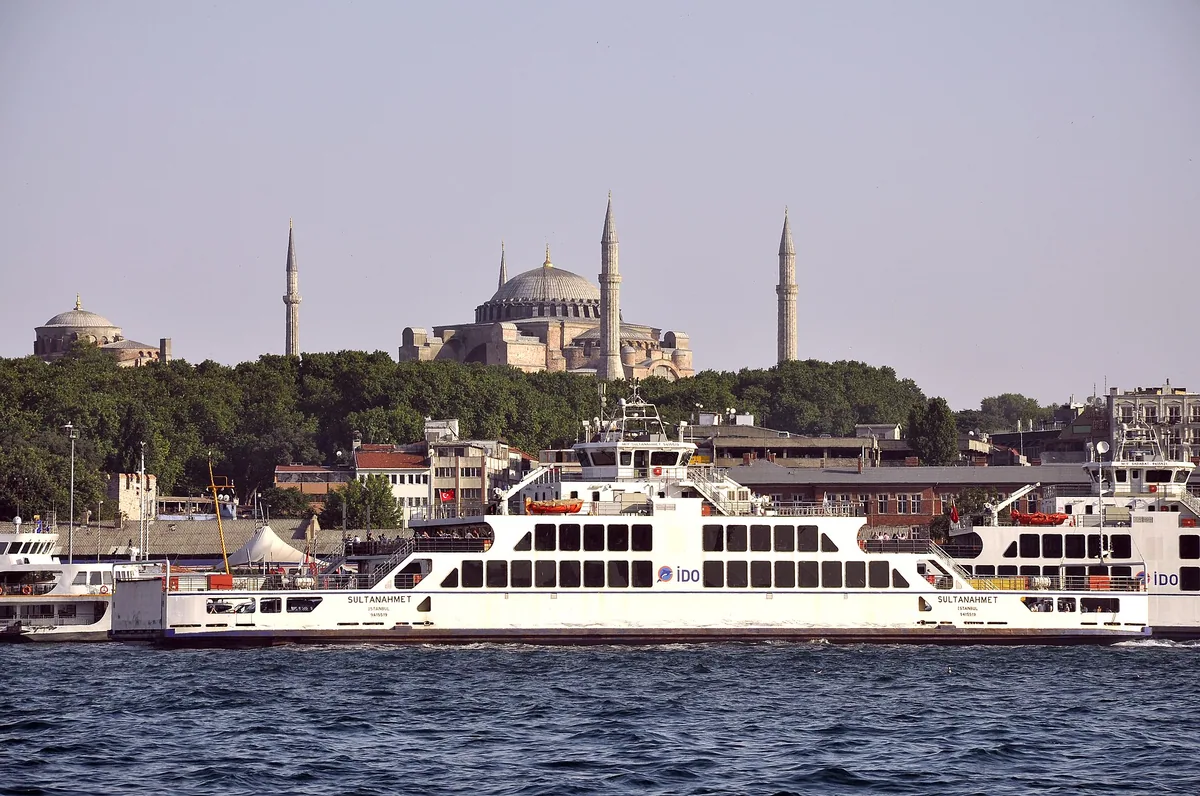
Tea on the Deck, One Foot in Each Continent
Every weekday morning a particular kind of Istanbullu ritual plays out on the water. You buy a small tulip glass of tea from the man with the swinging tray, you find a spot on the open stern, and for twenty minutes the boat carries you from Europe to Asia while gulls hang in the wake waiting for simit crumbs. This is the Şehir Hatları commuter ferry, the oldest and least glamorous member of the family, and also the one that best explains why this city is built around the sea rather than beside it. The workhorse runs go Eminönü, Karaköy and Beşiktaş across to Üsküdar and Kadıköy, and you board them the way locals do everything: no reservation, no printed ticket, just tap an İstanbulkart at the turnstile and walk on. Buy the card once from any kiosk, top it up, and it becomes your key to the ferries, the trams, the Marmaray tunnel and the funiculars alike.
Cutting the Corner of the Marmara
The commuter boats are slow on purpose. When Istanbullus actually need to be somewhere on the far shore, they take the fast sea-buses of İDO, which slice diagonally across the Sea of Marmara and turn a three-hour drive around the bay into a short hop. From Yenikapı you reach Yalova in roughly 75 minutes or push on to Bandırma in under three hours for the train connection down to İzmir; from Pendik on the Asian side, Yalova is about 45 minutes away. Two kinds of vessel share these piers, and the difference matters: the lean, aircraft-style sea-buses carry passengers only, while the broad fast ferries swallow cars. If you are bringing a vehicle onto the busy Yenikapı crossings in summer, book the sailing ahead rather than gambling on a walk-up slot. Down on the Bursa side of the bay, BUDO runs its own smart catamarans from the Mudanya coast; note that from the start of 2026 its Istanbul-bound sailings tie up at the Kabataş Transfer Center rather than Yenikapı, dropping you a funicular ride from Taksim.
Where the Sea Grows Narrow
Keep heading southwest and the water pinches into the Dardanelles, the strait the Turks call Çanakkale Boğazı, where continents come close enough to shout across. Here GESTAŞ is king. Its stubby car ferries shuttle almost constantly on the Çanakkale–Eceabat line — the one most pilgrims to the Gallipoli battlefields take — with shorter hops on Çanakkale–Kilitbahir beneath its Ottoman fortress and the quieter Gelibolu–Lapseki crossing further up. The Eceabat and Lapseki runs keep going around the clock. One local quirk to plan around: heavy trucks face timed restrictions on the strait crossings during peak passenger hours, so freight and holiday traffic are deliberately kept apart. GESTAŞ also carries you off the mainland entirely — out to wine-and-windmill Bozcaada from Geyikli, and to rugged, far-flung Gökçeada from Kabatepe, the longest of these island legs. Sailings to both thin out sharply once summer ends, so an autumn crossing rewards checking the timetable twice.
The Last Turkish Jetty Before Greece
Follow the Aegean coast down and the ferries stop being domestic errands and become border crossings. From a string of resort towns you can be on a Greek island in time for a late lunch: Çeşme to Chios, Ayvalık to Lesvos, Kuşadası to Samos, Bodrum to Kos (and on to Rhodes), and Marmaris to Rhodes. These are genuinely short seams of water — some under an hour — but they are international, so a passport is non-negotiable, and the boats mostly run from April into October, thinning to a skeleton service in winter (Bodrum–Kos and Marmaris–Rhodes hold on longest).
For Turkish citizens there is a small piece of paperwork magic worth knowing. Greece runs an "express" door visa issued right at the island port: about €60, valid for a stay of up to seven days, single-entry, within a rolling 12-month window, and currently offered at roughly a dozen eastern Aegean islands including Rhodes, Kos, Samos, Chios, Lesvos, Kalymnos, Symi, Patmos, Leros, Kastellorizo, Limnos and Samothrace. The catch is in the name: it is an islands-only permit. It will not carry you onward to the Greek mainland or into the wider Schengen area, and expect fingerprints and passport control on arrival. The scheme has been extended into the 2026–27 season, but always confirm the current island list and price before you buy the ferry ticket.
| Where you're going | Who runs it | Rough time |
|---|---|---|
| Eminönü/Karaköy ↔ Üsküdar/Kadıköy | Şehir Hatları | ~20 min |
| Yenikapı → Yalova | İDO | ~75 min |
| Pendik → Yalova | İDO | ~45 min |
| Mudanya → Kabataş | BUDO | ~1 h 50 |
| Çanakkale ↔ Eceabat | GESTAŞ | ~25–30 min |
| Çeşme ↔ Chios (Greece) | Seasonal lines | under ~1 h |
From the tea glass on a Bosphorus commuter boat to a passport stamp on a Greek quay, it is all one connected system of water. You can trace every Turkish ferry route across the network in one place, then match the crossing to your day.
Operators
Which companies run ferries in Turkey?
Ports
Ferry ports in Turkey
14 ports with published ferry connections. Open a port for every route that departs or arrives there.
At a glance
Which Turkey ferry crossings run most often?
The busiest published crossings, ranked by number of listed sailings.
| Route | Crossing | Sailings | Operators |
|---|---|---|---|
| Cesme → Chios | 45m | 6 / wk | 1 |
| Marmaris → Rhodes | 50m | 3 / wk | 1 |
| Datca → Symi | 1h | 2 / wk | 1 |
| Kusadasi → Samos | 1h 15m | 2 / wk | 2 |
| Fethiye → Rhodes | 1h 25m | 2 / wk | 1 |
| Ayvalik → Lesvos | 1h 30m | 2 / wk | 1 |
| Aliaga → Lesvos | 1h 50m | 1 / wk | 1 |
| Bodrum → Tilos | 2h 30m | 1 / wk | 1 |
| Canakkale → Limnos | 2h 30m | 1 / wk | 1 |
Timetables
What ferry routes run in Turkey?
9 routes across the network.
Aliaga1 route
Ayvalik1 route
Bodrum1 route
Canakkale1 route
Cesme1 route
Datca1 route
Fethiye1 route
Kusadasi1 route
Marmaris1 route
FAQ
Frequently asked questions
How do I pay for Istanbul's Bosphorus ferries?
Buy an İstanbulkart from any kiosk or vending machine, top it up with credit, and tap it at the turnstile as you board a Şehir Hatları ferry. There is no reservation and no separate ticket. The same card also works on Istanbul's trams, metro, buses, Marmaray and funiculars.
Do I need to book Istanbul commuter ferries in advance?
No. Şehir Hatları services across the Bosphorus, such as Eminönü, Karaköy and Beşiktaş to Üsküdar and Kadıköy, run frequently and are walk-on only. Just tap your İstanbulkart and board the next boat.
What is the difference between İDO sea-buses and fast ferries?
İDO sea-buses are fast, aircraft-style vessels that carry passengers only. İDO's fast ferries are larger boats that also carry cars and vehicles across the Sea of Marmara. Choose the sea-bus if you are on foot and the fast ferry if you are driving.
How long is the ferry from Istanbul to Yalova?
İDO's fast crossing from Yenikapı to Yalova takes about 75 minutes. From Pendik on the Asian side, Yalova is closer, at roughly 45 minutes. Both shortcut the long road route around the bay.
How do I get from Istanbul to Bandırma by sea?
İDO runs a fast ferry from Yenikapı to Bandırma in a little under three hours. Bandırma connects onward by train toward İzmir, making it a popular sea-and-rail route to the Aegean.
Where does the BUDO ferry from Bursa arrive in Istanbul?
BUDO sails from the Mudanya coast near Bursa. From the start of 2026 its Istanbul-bound services dock at the Kabataş Transfer Center rather than Yenikapı, with the Mudanya to Kabataş crossing taking roughly one hour and fifty minutes.
Which ferry do I take for Gallipoli?
Cross the Dardanelles with GESTAŞ on the Çanakkale to Eceabat line, the closest jetty to the Gallipoli battlefields, at about 25 to 30 minutes. The Çanakkale to Kilitbahir hop is shorter and lands beneath the old fortress.
Can I bring a car across the Dardanelles?
Yes. GESTAŞ car ferries carry vehicles on the Çanakkale to Eceabat, Çanakkale to Kilitbahir and Gelibolu to Lapseki crossings. The Eceabat and Lapseki lines run around the clock, though heavy trucks face timed restrictions during peak passenger hours.
How do I reach Bozcaada and Gökçeada by ferry?
GESTAŞ serves both islands. Bozcaada is reached from Geyikli, a crossing of roughly 35 to 45 minutes, while Gökçeada is reached from Kabatepe, the longer leg at around an hour or more. Sailings become much less frequent outside summer.
Is there a ferry from Turkey to the Greek islands?
Yes. Short international crossings link the Aegean coast to nearby Greek islands, including Çeşme to Chios, Ayvalık to Lesvos, Kuşadası to Samos, Bodrum to Kos and Marmaris to Rhodes. Most run from April into October and require a passport.
Do I need a passport to sail from Turkey to Greece?
Yes. These are international crossings, so a valid passport is required for everyone, and you clear immigration on both sides. The short distance does not change the border formalities.
What is Greece's express door visa for Turkish citizens?
It is a short-stay visa issued directly at participating Aegean island ports, costing about €60, valid for up to seven days, single-entry, within a rolling 12-month window. It removes the need to apply at a consulate in advance, though fingerprints and passport control still apply on arrival.
Which Greek islands accept the express door visa?
The scheme currently covers roughly a dozen eastern Aegean islands, including Rhodes, Kos, Samos, Chios, Lesvos, Kalymnos, Symi, Patmos, Leros, Kastellorizo, Limnos and Samothrace. Always confirm the current list before booking, as it is reviewed periodically.
Can the express door visa be used to reach mainland Greece?
No. It is an islands-only permit. It does not allow onward travel to the Greek mainland or into the wider Schengen area, and it is single-entry, so plan your trip to stay within the participating islands.
When is the best time to take Turkey's island and Greek ferries?
Summer, roughly May to September, offers the fullest timetables and the calmest seas. International Aegean crossings mostly run April to October, and domestic island services to Bozcaada and Gökçeada thin out in winter, so always check current schedules off-season.
Explore
Ferries in other countries


















Reviewed by Serhat Özçelik, Founder & Editor of Ferry Schedule Hub · Last updated August 2, 2026.