 Ferry network
Ferries to Ireland — routes, schedules & crossing times
Ireland has 4 ferry routes operated by 2 companies across 3 ferry ports. The average crossing takes about 22h 29m, with the longest running roughly 31h 1m. Major operators include Brittany Ferries and Hibernia Line. Below you'll find crossing times, operators and timetables for each route.
- 4
- Ferry routes
- 2
- Operators
- 3
- Ports
- 22h 29m
- Avg crossing
About
About ferries in Ireland
Ireland sits at the western edge of Europe, and for an island nation the ferry has always been a lifeline as much as a travel choice. Two very different sea corridors define the market: the busy Irish Sea crossings to Great Britain, and the long-haul Continental routes to France and Spain. Together they make Ireland one of the most ferry-dependent countries in Western Europe, with year-round service from Dublin and Rosslare in the Republic, Cork in the south-west, and Belfast in Northern Ireland.
The Irish Sea — crossings to Britain
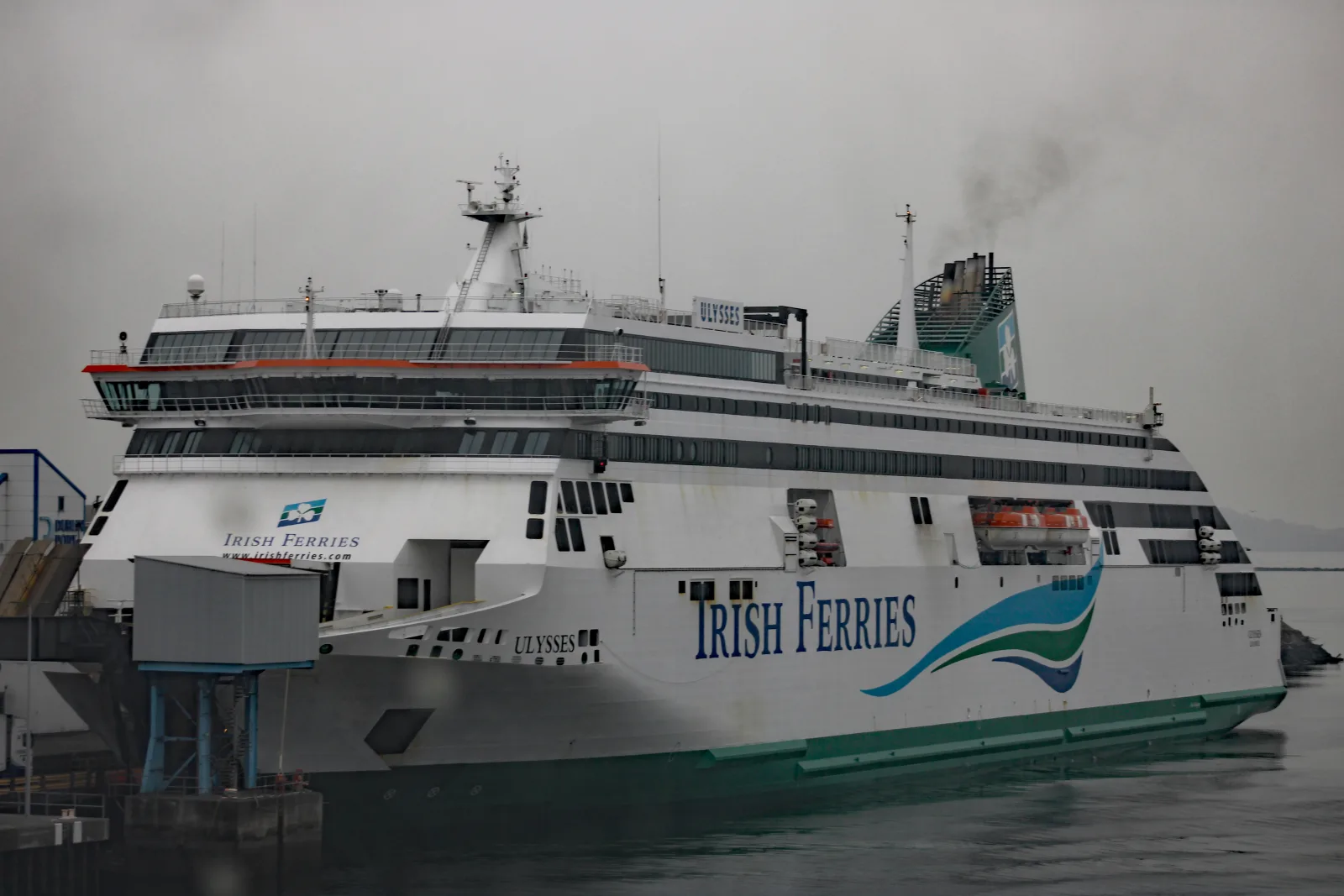
The flagship route is Dublin–Holyhead, linking the capital to North Wales in a little over three hours, with Irish Ferries and Stena Line together running up to a dozen sailings a day at peak. Further south, Rosslare offers the shortest hops to Wales — Rosslare–Fishguard (Stena Line) and Rosslare–Pembroke Dock (Irish Ferries). From Northern Ireland the crossings head to Scotland: Stena Line's Belfast–Cairnryan (about 2h 15m) and P&O Ferries' even quicker Larne–Cairnryan (around two hours), the shortest Ireland–Britain crossing.
The Continental corridor — France and Spain
These are long overnight crossings built for comfort, with cabins, restaurants and cinemas. Brittany Ferries is the dominant Continental operator, running the now-daily Rosslare–Cherbourg, the seasonal Cork–Roscoff aboard the flagship Pont-Aven, and a link from Rosslare to Bilbao in Spain. Irish Ferries runs the only other direct France route, Dublin–Cherbourg, and DFDS operates Rosslare–Dunkirk. All of these land travellers and trucks directly on the European mainland without touching British soil.
Brexit reshaped the map
Before the UK left the EU, most Irish freight to the Continent used the "land bridge" — ferry to Wales, drive across Britain, ferry again to France. Once Britain became a third country, that route acquired customs checks and delay, so direct Ireland–France sailings expanded sharply: new routes such as Rosslare–Dunkirk launched, and Rosslare–Cherbourg grew to a daily service. For hauliers and increasingly tourists, the direct crossing is now the default way to reach mainland Europe.
Vehicles, seasons and entry
Almost every route carries vehicles, and bringing a car or campervan is the norm, especially on the France and Spain routes. The Irish Sea runs year-round, while the Continental services peak from May to September — book vehicle space early in summer. On entry, the Republic of Ireland is in the EU but not in the Schengen Area; it shares the Common Travel Area with the UK, so British and Irish citizens move freely. Ireland issues its own visas and does not accept a Schengen visa. Note that Belfast is in Northern Ireland, part of the United Kingdom, though on the island of Ireland.
Operators
Which companies run ferries in Ireland?
Ports
Ferry ports in Ireland
3 ports with published ferry connections. Open a port for every route that departs or arrives there.
At a glance
Which Ireland ferry crossings run most often?
The busiest published crossings, ranked by number of listed sailings.
| Route | Crossing | Sailings | Operators |
|---|---|---|---|
| Cork → Boulogne-sur-Mer | 21h 30m | 6 / wk | 1 |
| Cork → Roscoff | 15h | 1 / wk | 1 |
| Rosslare → Cherbourg | 19h | 1 / wk | 1 |
| Rosslare → Bilbao | 27h 30m | 1 / wk | 1 |
Timetables
What ferry routes run in Ireland?
4 routes across the network.
Cork2 routes
Rosslare2 routes
FAQ
Frequently asked questions
What is the busiest ferry route between Ireland and Britain?
Dublin–Holyhead. Irish Ferries and Stena Line together run up to about a dozen sailings a day, making it the highest-frequency Irish Sea crossing.
What is the shortest ferry from Ireland to Great Britain?
P&O Ferries' Larne–Cairnryan, at roughly two hours between Northern Ireland and south-west Scotland. Stena Line's Belfast–Cairnryan is close at about 2h 15m.
Can I take my car on the ferry to Ireland?
Yes. Nearly all routes carry cars, campervans and motorcycles, and bringing your own vehicle is the norm — especially on the long France and Spain crossings. Book early in summer.
How long does the ferry from Ireland to France take?
Between about 16 and 20 hours: Rosslare–Roscoff ~16h, Rosslare–Cherbourg ~17–18h, Dublin–Cherbourg ~19–20h. The Rosslare–Dunkirk route is around 23 hours.
Which companies sail directly from Ireland to France?
Brittany Ferries (Rosslare–Cherbourg, seasonal Cork–Roscoff), Irish Ferries (Dublin–Cherbourg) and DFDS (Rosslare–Dunkirk), all landing directly on the Continent.
How did Brexit change ferry travel to Ireland?
Because crossing Britain now involves UK customs, direct Ireland–France sailings expanded sharply. Rosslare–Dunkirk launched and Rosslare–Cherbourg became a daily service, letting freight and travellers bypass the UK land bridge.
What is the difference between Belfast and the Republic's ports?
Belfast is in Northern Ireland, part of the United Kingdom, while Dublin, Rosslare and Cork are in the Republic of Ireland (an EU member). All sit on the island of Ireland but fall under different jurisdictions.
Which port should I use to reach France or Spain?
Rosslare Europort is the main Continental gateway (Cherbourg, Roscoff, Dunkirk, Bilbao). Dublin offers Irish Ferries to Cherbourg, and Cork runs seasonal Brittany Ferries sailings to Roscoff.
Do I need a passport or visa to travel to Ireland?
EU/EEA and Swiss citizens enter the Republic freely; British and Irish citizens use the Common Travel Area. Many other nationalities are visa-free for short stays but need a valid passport. Ireland is not in Schengen and does not accept a Schengen visa.
Is Ireland part of the Schengen Area?
No. The Republic of Ireland is in the EU but outside Schengen; it operates the Common Travel Area with the UK. Travellers continuing to France or Spain by ferry enter Schengen on arrival.
When is the best time to book a ferry to Ireland?
The Irish Sea routes run year-round, but summer (May–September) is peak for both the Wales crossings and the France routes. Book early for summer vehicle space.
How long is the Dublin to Holyhead ferry?
A little over three hours by conventional ferry, or under two hours on Irish Ferries' fast catamaran, the Dublin Swift.
How do I reach mainland Europe from Ireland without going through Britain?
Take a direct ferry to France or Spain: Rosslare or Dublin to Cherbourg, Cork to Roscoff, Rosslare to Dunkirk, or Rosslare to Bilbao. These avoid UK borders entirely.
Can bad weather cancel Irish ferry sailings?
Yes. Winter storms on the Irish Sea can cause cancellations and re-routing, as seen during the 2024–25 disruption at Holyhead. Check your operator's status in winter.
How many sailings a day run between Ireland and Wales?
On Dublin–Holyhead, up to around twelve combined daily departures at peak. Rosslare–Fishguard and Rosslare–Pembroke Dock each run about two sailings a day.
Explore
Ferries in other countries
















Reviewed by Serhat Özçelik, Founder & Editor of Ferry Schedule Hub · Last updated August 8, 2026.