 Ferry network
Croatia ferry routes & timetables — island crossings
Croatia has 2 ferry routes operated by 2 companies across 43 ferry ports. The average crossing takes about 1h 2m, with the longest running roughly 3h 20m. Major operators include Jadrolinija and Krilo (Kapetan Luka). Below you'll find crossing times, operators and timetables for each route.
- 2
- Ferry routes
- 2
- Operators
- 43
- Ports
- 1h 2m
- Avg crossing
About
About ferries in Croatia
The Dalmatian coast runs on a summer tide
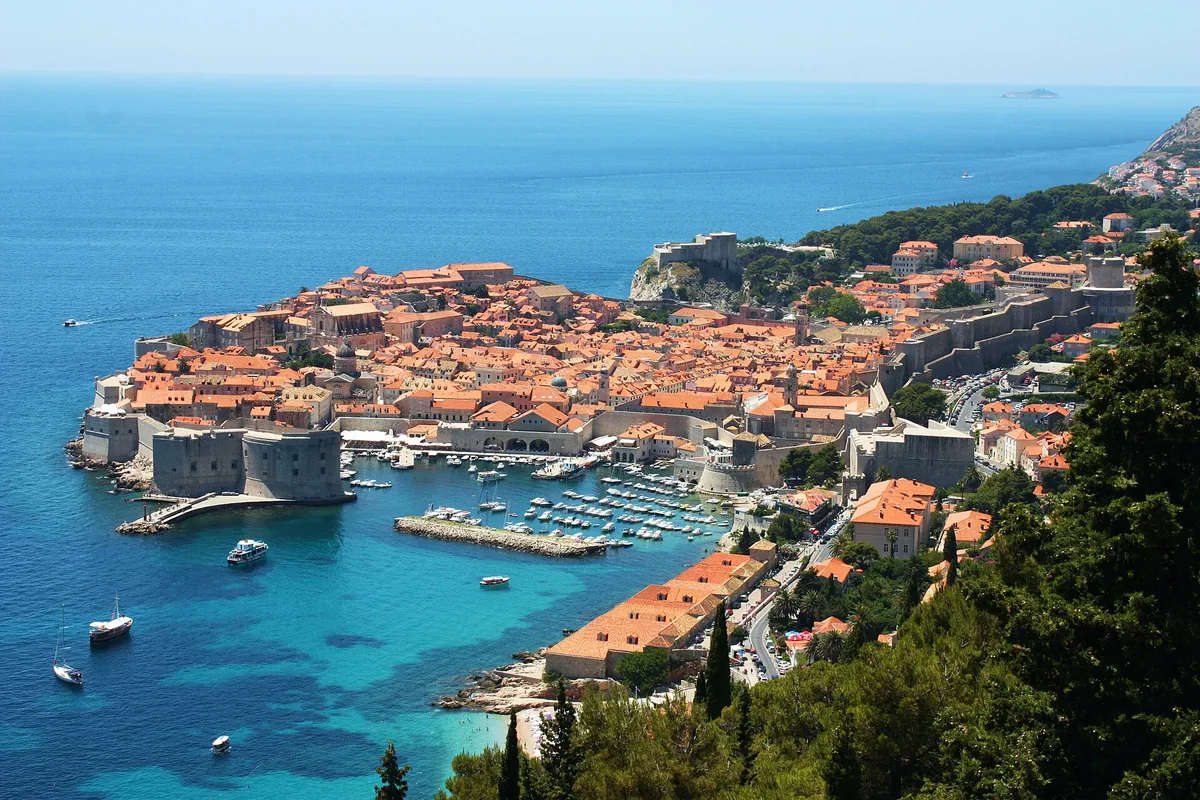
From roughly Easter to October, the Croatian Adriatic settles into a daily rhythm: white ferries and low, fast catamarans thread the channels between the mainland and a scatter of islands whose stone towns have been catching the same afternoon light for centuries. Jadrolinija, the national operator, is the spine of it all, running both vehicle-carrying car ferries and passenger-only catamarans across Dalmatia and, further north, the Kvarner Gulf. Around it, seasonal private lines such as Krilo (Kapetan Luka) and TP Line add fast catamaran crossings that appear in spring and thin out again once the crowds go home. You can trace every Croatian ferry route across this network, but the shape of a good trip usually comes down to one early decision.
Split: the beating heart
Most journeys begin in Split, whose Riva-side port is the busiest passenger harbour in the country and the natural route to the central Dalmatian islands — Brač, Hvar, Vis, Šolta and, further south, Korčula. In July and August the vehicle lanes here can back up for hours, and car spaces on the most popular sailings sell out well before the ticket window opens. Zadar serves the northern Dalmatian islands and the Kornati fringe, Rijeka anchors the Kvarner connections, and Dubrovnik sits at the southern end, linked by seasonal fast catamarans and its own local island crossings toward Mljet and the Elaphiti.
The choice that shapes your trip: car ferry or catamaran
This is the decision that matters, and it hinges on a quirk of Dalmatian geography: many of the loveliest old towns are effectively car-free. Hvar Town, the core of Korčula Town, and the medieval heart of Dubrovnik are walking places, and a passenger catamaran will set you down right at their edge. A car ferry cannot — it carries vehicles to a different, working harbour elsewhere on the island.
So the same island often has two front doors. Bring a car to Hvar and you land at Stari Grad, a scenic but real drive from Hvar Town over the island's spine. Take the catamaran and you step off in Hvar Town itself. On Korčula, car ferries dock at Vela Luka at the western tip, roughly three-quarters of an hour by road from Korčula Town, while catamarans call directly at the old town's walls. Brač's vehicle port is Supetar, a quick crossing from Split of under an hour; Šolta's is Rogač; Vis has its own reservation-based car line.
| Island | Vehicle (car ferry) port | Town centre reached by catamaran |
|---|---|---|
| Hvar | Stari Grad | Hvar Town |
| Korčula | Vela Luka | Korčula Town |
| Brač | Supetar | Bol / Supetar (local) |
| Vis | Vis Town | Vis Town / Komiža |
Catamarans are the quicker, breezier option: passenger-only, no car deck, and considerably faster across the water — Split to Hvar Town takes around an hour, where the car ferry to Stari Grad runs closer to two. They accept foot passengers and usually bicycles, but never vehicles. If you are island-hopping light and staying in the historic towns, catamarans are almost always the better tool.
Jadrolinija and the private catamarans
Jadrolinija carries the year-round burden: the state-supported car-ferry lines that keep islanders supplied through winter, plus a summer fleet of catamarans. Krilo (Kapetan Luka) runs sleek high-speed catamarans on marquee coastal runs — Split down through Hvar, Korčula and on to Dubrovnik — while TP Line covers additional seasonal passenger connections. For a car crossing you will almost always be on Jadrolinija; for a fast town-to-town hop, compare Jadrolinija's catamarans against Krilo on the same corridor. Timetables are published each season on the operators' own sites, such as Jadrolinija and Krilo.
Booking, vehicles and the summer squeeze
Foot passengers on catamarans have the most reason to book ahead, because seats are capped and popular sailings genuinely sell out in peak weeks. If you are driving, a vehicle reservation in July and August is strongly advised — the alternative is joining the port queue and hoping a space remains. Jadrolinija asks vehicle passengers to arrive around an hour before departure in high season. Come winter the whole picture contracts sharply: crossings drop to a lifeline frequency, some catamaran lines pause entirely, and the coast returns to the islanders. Plan around the season you are travelling in, and the Adriatic network will carry you almost anywhere its blue channels reach.
What Croatian ferry tickets cost
Croatia joined the euro in 2023, and by Mediterranean standards its island fares are a bargain. A foot passenger from Split reaches most of the central Dalmatian islands for under €10 — Split to Supetar on Brač is about €6.50, Split to Hvar around €6, Split to Vis €7.20 — and the Dubrovnik crossings to Mljet and Korčula sit in the same band. The catch is the car. On Jadrolinija’s roll-on car ferries the walk-on fare is cheap, but a vehicle is ticketed separately and typically costs several times the driver’s ticket, which is the single strongest argument for leaving the hire car on the mainland.
Two choices set your price. Boat: a Jadrolinija car ferry is the cheapest way to walk on, while the faster Krilo and Jadrolinija catamarans cost a little more, carry foot passengers only, and sell out first in July and August. Vehicle: only the car ferries take a car, and the vehicle fare — plus a compulsory summer reservation on the busy Split routes — dwarfs the passenger ticket. Book online ahead for peak-season car spaces; walk-on deck tickets you can still grab at the port.
| Crossing | From (foot passenger, one-way) | Typical time |
|---|---|---|
| Split → Milna (Brač) | €4.51 | ~55m |
| Split → Hvar | €6 | ~55m |
| Split → Supetar (Brač) | €6.50 | 50m |
| Split → Vis | €7.20 | ~1h 10m |
| Split → Vela Luka (Korčula) | €7.90 | ~2h 45m |
| Split → Korčula town | €8.49 | ~2h |
| Dubrovnik → Sobra (Mljet) | €8.36 | ~1h |
| Dubrovnik → Korčula | €10 | ~1h 55m |
Operators
Which companies run ferries in Croatia?
Regions
Ferry regions in Croatia
Coastal travel is local — jump to a region for its routes, quays and timetables.
Ports
Ferry ports in Croatia
43 ports with published ferry connections. Open a port for every route that departs or arrives there.
At a glance
Which Croatia ferry crossings run most often?
The busiest published crossings, ranked by number of listed sailings.
| Route | Crossing | Sailings | Operators |
|---|---|---|---|
| Split → Supetar | 50m | 12 / wk | 1 |
| Dubrovnik → Hvar | 3h 20m | 1 / wk | 1 |
Timetables
What ferry routes run in Croatia?
2 routes across the network.
Dubrovnik1 route
Split1 route
FAQ
Frequently asked questions
Should I take a car ferry or a catamaran to Hvar?
It depends where you want to stay. The passenger-only catamaran from Split reaches Hvar Town directly in about an hour, which is ideal if you're staying in the car-free old town. The car ferry carries vehicles but lands at Stari Grad on the other side of the island, so you'll then need to drive over to Hvar Town. Catamarans do not carry cars.
How do I get from Split to Hvar?
Two ways. Jadrolinija and Krilo (Kapetan Luka) run fast catamarans from Split straight into Hvar Town (roughly an hour, passengers only). Jadrolinija's car ferry takes vehicles and foot passengers to Stari Grad, a longer crossing of around two hours. Choose the catamaran for the town centre, the car ferry if you're bringing a vehicle.
Which ferry goes from Split to Brač?
Jadrolinija's car ferry runs frequently from Split to Supetar, Brač's main vehicle port, in under an hour. It's one of the shortest and busiest crossings in Dalmatia, carrying both cars and foot passengers, with several sailings a day in summer.
How do I reach Korčula from Split?
Fast catamarans (Jadrolinija and Krilo) call directly at Korčula Town, the walled old town, in a couple of hours. Jadrolinija's car ferry instead serves Vela Luka at the island's western end, about 45 minutes by road from Korčula Town. Take the catamaran for the old town, the car ferry if you have a vehicle.
Do I need a car on the Croatian islands?
Often not. Hvar Town, Korčula Town and central Dubrovnik are effectively car-free, so a catamaran drops you right where you want to be, and local buses, taxis and boats cover the rest. A car is useful for exploring an island's interior or remote beaches, but it also commits you to the vehicle ports and summer ferry queues.
What's the difference between Jadrolinija and Krilo?
Jadrolinija is the national operator, running both car ferries and catamarans year-round, including the lifeline lines that keep islands connected in winter. Krilo (Kapetan Luka) is a private company running seasonal high-speed catamarans on popular coastal routes like Split–Hvar–Korčula–Dubrovnik. For a car crossing you'll use Jadrolinija; for a fast passenger hop, compare both.
Do I need to reserve a vehicle space in summer?
Yes, a vehicle reservation is strongly advised in July and August. Car spaces on the popular Split routes fill quickly and the port lanes can back up for hours. Booking online secures a specific sailing; without it you risk waiting for the next departure with an available space.
How busy is Split ferry port in peak season?
Very. Split is Croatia's busiest passenger harbour, and in July and August both the catamaran seats and the car-ferry vehicle lanes come under heavy demand. Arrive early — Jadrolinija recommends being at the port around an hour before departure with a vehicle in high season — and book ahead where you can.
Are there ferries from Dubrovnik to the islands?
Yes. Dubrovnik has its own local crossings toward nearby islands such as Mljet and the Elaphiti, and in the summer season fast catamarans link it up the coast to Korčula, Hvar and Split. Many of these southern catamaran lines are seasonal, running roughly spring through October.
How do I get to Vis island?
Vis is reached from Split. Jadrolinija runs a reservation-based car ferry to Vis Town, and a faster passenger catamaran also serves the island in season. Because Vis is further out, sailings are less frequent than to Brač or Hvar, so check the timetable and book vehicle space ahead in summer.
Can I take a catamaran with a car?
No. All the fast catamarans in Croatia — Jadrolinija's, Krilo's and TP Line's — are passenger-only with no car deck. They usually accept foot passengers and bicycles, but for any vehicle you must use a Jadrolinija car ferry, which lands at the island's vehicle port.
How do the Croatian ferry schedules change in winter?
Dramatically. The dense summer network contracts to lifeline frequencies once the season ends: sailings become far less frequent, some seasonal catamaran lines pause entirely, and private operators like Krilo largely wind down. Jadrolinija's year-round car ferries keep the islands connected, but always check the current off-season timetable before travelling.
How do I reach Mljet by ferry?
Mljet is served mainly from Dubrovnik and, seasonally, from Split via catamaran calling at the island's ports such as Sobra and Pomena. There's also a car ferry connection from the Pelješac peninsula (Prapratno) to Sobra. Frequencies are modest and heavily seasonal, so plan Mljet trips around the published timetable.
Which islands can I reach directly from Split?
Split connects to the central Dalmatian islands: Brač (Supetar), Hvar (Stari Grad by car ferry, Hvar Town by catamaran), Šolta (Rogač), Vis, and Korčula (Vela Luka by car ferry, Korčula Town by catamaran), with onward links toward Lastovo. It's the single best hub for island-hopping in Dalmatia.
Is it better to buy ferry tickets online or at the port?
For catamaran seats and any summer vehicle crossing, online is safer because these sell out; a booked ticket guarantees your sailing. For frequent short car-ferry hops like Split–Supetar outside peak weeks, buying at the port is usually fine. In July and August, book ahead wherever a vehicle or a popular catamaran is involved.
How much do ferries cost in Croatia?
As a foot passenger, most central-Dalmatian crossings from Split cost under €10 — Split to Supetar is about €6.50, Split to Hvar around €6, Split to Vis €7.20 — and the Dubrovnik routes to Mljet and Korčula are similar. Bringing a car changes everything: the vehicle is ticketed separately and usually costs several times the passenger fare.
Is it cheaper to take the car ferry or the catamaran in Croatia?
For a foot passenger the Jadrolinija car ferry is normally the cheapest option, while the faster Krilo and Jadrolinija catamarans cost a little more and carry passengers only. If you have a car you must take a car ferry, and it is the vehicle fare, not the seat, that drives the total up.
How can I keep Croatian ferry costs down?
Travel as a foot passenger and leave the hire car on the mainland — vehicle fares dwarf the walk-on ticket — and use the Jadrolinija car ferries rather than the catamarans where time allows. Fares are stable through the season, so the saving is in the boat and whether you bring a car, not the date; just reserve car spaces online for July and August.
Explore
Ferries in other countries






















Reviewed by Serhat Özçelik, Founder & Editor of Ferry Schedule Hub · Last updated August 10, 2026.