 Croatia

Jadrolinija Schedules 2026
Croatia's Adriatic ferry backbone to the Dalmatian islands
Est. 1947Rijeka, Croatia
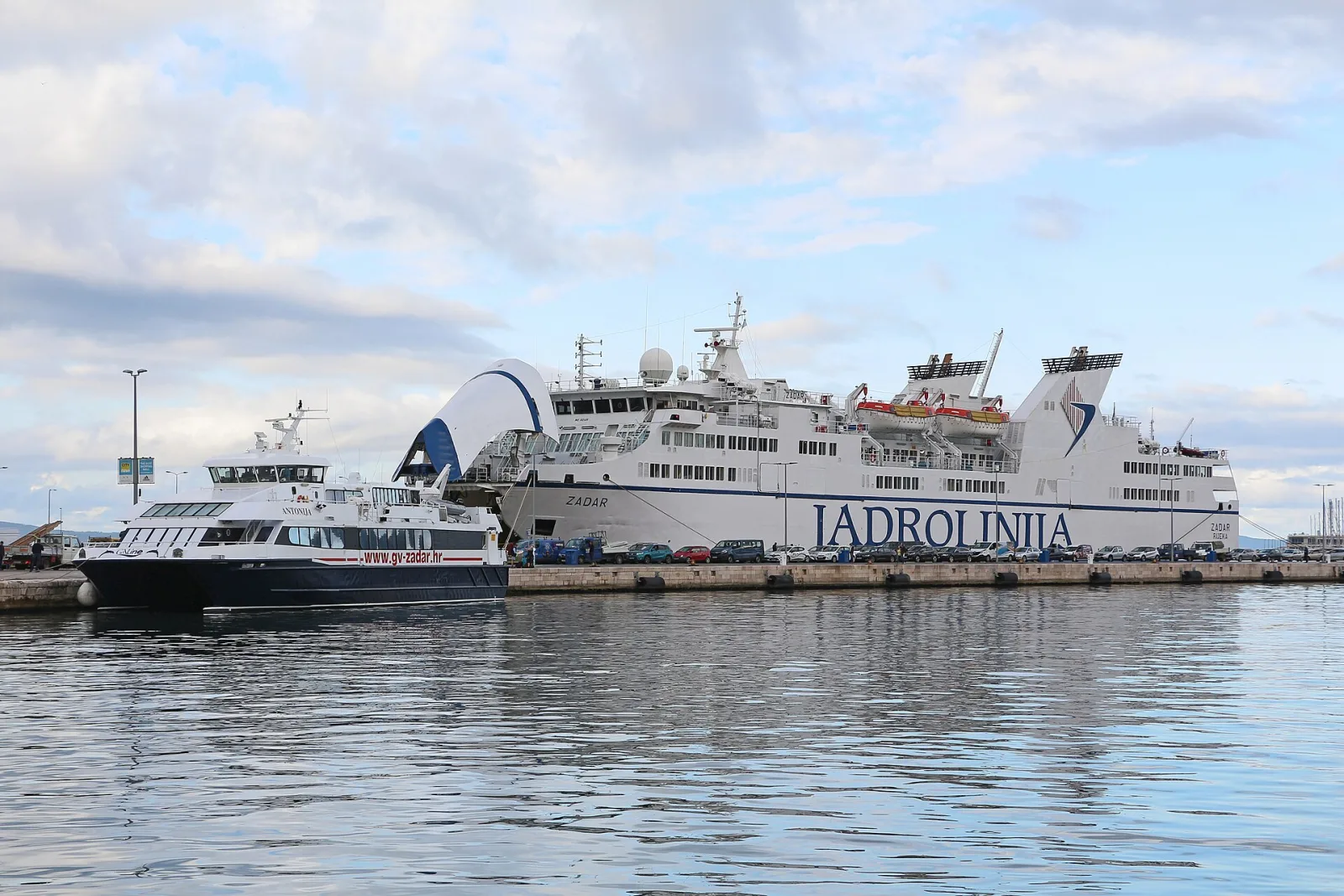 Photo: Bernard Gagnon / Wikimedia Commons (CC BY-SA 4.0)
- 1
- Routes
- 25
- Ports
- 50m
- Avg crossing
- ~54 vessels
- Vessels
- 1947
- Founded
Jadrolinija is Croatia's Adriatic ferry backbone to the Dalmatian islands, founded in 1947 and based in Rijeka, Croatia. It operates 1 ferry route serving 25 ports. Across its network, crossings average about 50m.
Live board
Jadrolinija departures today
Filtered to sailings that operate on today's date — open a departure for its full timetable.
Timetables
Which routes does Jadrolinija operate?
1 route with live schedules.
Split1 route
Network
Where does Jadrolinija sail?
Jadrolinija sails to 25 ports.
Experience
Onboard & services
- Car ferries & fast catamarans
- Cabins on international lines
- Island-resident discounts
- Vehicle decks
- Croatia's largest passenger shipping company
- State-owned, founded 1947 in Rijeka
- Links Split, Zadar, Rijeka and Dubrovnik to the Adriatic islands
- International car ferries: Ancona–Split/Zadar and Bari–Dubrovnik
- Carried ~12.7 million passengers in 2024
About
About Jadrolinija
Jadrolinija carried 12,671,824 passengers and 3,756,957 vehicles in 2024 — more than three times the population of Croatia. It is the state carrier, and for most of the islands it is not one option among several but the connection itself.
Founded 20 January 1947, still owned by the state
The company was created in Rijeka on 20 January 1947 by merging smaller shipping firms that had been working the Croatian coast since 1872. It is still headquartered in Rijeka, still owned by the Croatian government, and employs around 1,976 people.
A fleet shaped like a road network
Over fifty vessels are in service, and the proportions say more than the total. The bulk are small island ferries; there are twelve catamarans for fast passenger work; and only two large ships, Dalmacija and Marko Polo, handle the international crossings to Ancona and Bari. Combined capacity is roughly 32,364 passengers and 4,708 vehicles. Published fleet counts differ slightly between sources — between 54 and 57 — but the shape does not: this is a road network that happens to float, not a cruise operation.
Same island, two ports, two boats
The clearest illustration is Hvar. Split to Hvar Town takes 55 minutes; Split to Stari Grad, on the same island, takes 110. The difference is not distance, it is the boat. Hvar Town is served by fast passenger craft and takes no cars off the quay; Stari Grad is the vehicle port, and the car ferry that serves it is slower and berths on the far side of the island from the town most visitors are aiming for. Choosing the 55-minute option means arriving without a car and with a bus or taxi still to arrange if you are not staying in Hvar Town.
The Split fan, route by route
Five of the seven Split services we hold are under 75 minutes: Supetar on Brač at 50, Rogač on Šolta and Bol at 60, Hvar Town at 55, and Vis at 70. The two long ones reach further out: Stari Grad at 110 minutes and Vela Luka on Korčula at 165.
What we hold is Split, and only Split
All 19 Jadrolinija departures in this timetable leave from one port. The company runs domestic services from Rijeka, Zadar, Šibenik and Dubrovnik as well, and the Italy crossings on top of that; none of those are in our data, and neither are the return legs into Split. If you are planning around Rijeka or Dubrovnik, this page will not help you — go to the operator direct.
Why Split concentrates so much of it
Split handled 6,018,513 passengers in 2024 across all operators, making it Croatia’s busiest passenger port. Seven Jadrolinija services fan out from there to five islands, which is why a timetable holding nothing but Split still covers a meaningful share of what the company does in a season.
FAQ
Frequently asked questions
When was Jadrolinija founded?
Jadrolinija was founded in 1947, and is headquartered in Rijeka, Croatia.
Where does Jadrolinija sail?
Jadrolinija operates 1 ferry route and serves 25 ports in Croatia, including Bol, Dubrovnik, Hvar, Ist, Korčula, Lastovo, Mali Lošinj, Molat and more.
Can I take a car on Jadrolinija ferries?
Yes — Jadrolinija operates vehicle-carrying ferries on some routes. Book vehicle space in advance, especially in peak season, and check the specific crossing for size limits.
What facilities are available on Jadrolinija ferries?
Jadrolinija ferries typically offer Car ferries & fast catamarans, Cabins on international lines, Island-resident discounts, Vehicle decks. Facilities vary by vessel and route — check the specific sailing for details.
How early should I arrive for a Jadrolinija ferry?
Arrive at the terminal at least 30–60 minutes before a Jadrolinija departure as a foot passenger, and allow longer with a vehicle. Boarding and check-in times vary by port and route — confirm with Jadrolinija.
How do I find Jadrolinija ferry times?
Browse the live timetables for every Jadrolinija route on this page. Schedules are updated as the operator publishes them — always confirm with Jadrolinija before travelling, as sailings change seasonally.
Reviewed by Serhat Özçelik, Founder & Editor of Ferry Schedule Hub · Last updated October 1, 2026.
Contact & booking
Help us keep schedules accurate — we read every report.