 Ferry network
Cross-Channel ferries to France — routes, schedules & times
France has 24 ferry routes operated by 9 companies across 51 ferry ports. The average crossing takes about 3h 19m, with the longest running roughly 26h. Major operators include Brittany Ferries, CTN, Corsica Linea, DFDS, Hibernia Line and La Méridionale. Below you'll find crossing times, operators and timetables for each route.
- 24
- Ferry routes
- 9
- Operators
- 51
- Ports
- 3h 19m
- Avg crossing
About
About ferries in France
Two coastlines, two entirely different voyages
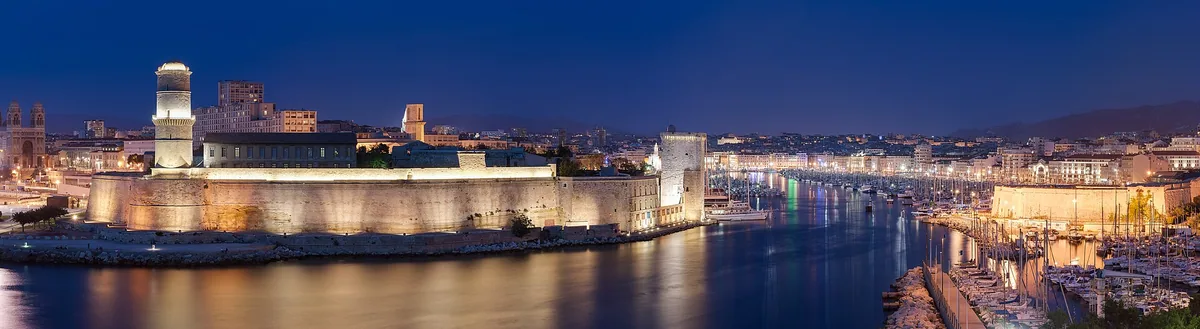
France meets the sea on two fronts, and its ferries behave accordingly. Along the Mediterranean, the crossings are long, deliberate affairs — a ship slipping out of Marseille at dusk and raising the mountains of Corsica at breakfast. Up on the Channel and the Atlantic, the mood changes: brisk shuttles between Britain and the Norman and Breton ports, threaded through with quieter runs to Ireland and northern Spain. Add a handful of ten-minute hops to islands you could almost swim to, and you have one of Europe's most varied maritime countries. Below is how every French ferry route fits together, told sea by sea.
The long haul south: sailing to Corsica
Corsica is the great overnight passage of French travel. From the mainland it is reached from three ports — Marseille, Toulon and Nice — bound for Bastia, Ajaccio, Île-Rousse, Porto-Vecchio and Propriano. Two flags dominate the Marseille runs: Corsica Linea and La Méridionale, both sailing conventional ships that cross largely by night. Reckon on roughly eleven to fourteen hours depending on the destination, which is precisely why cabins matter here in a way they rarely do elsewhere in France — you board in the evening, sleep, and wake to the island.
From Toulon and Nice the operator is Corsica Ferries, whose faster tonnage shortens the equation considerably: Toulon to Île-Rousse in under seven hours, to Ajaccio in around seven and a quarter, to Bastia in about ten; Nice to Île-Rousse can dip below five. The same company also links Corsica to the Italian ports of Savona, Livorno and Piombino, so the island sits at a genuine crossroads rather than at the end of a single line. Summer brings the heaviest schedules by far; winter thins to a dependable skeleton service.
| Mainland port | Corsican destinations | Operators | Character |
|---|---|---|---|
| Marseille | Bastia, Ajaccio, Île-Rousse, Porto-Vecchio, Propriano | Corsica Linea, La Méridionale | Long, mostly overnight, cabins |
| Toulon | Bastia, Ajaccio, Île-Rousse, Porto-Vecchio, Propriano | Corsica Ferries | Faster, day and night sailings |
| Nice | Bastia, Ajaccio, Île-Rousse, Porto-Vecchio | Corsica Ferries | Shortest mainland crossing |
The Channel: the fast lane and the scenic one
The English Channel has a stark choice of tempo. At its narrowest, the Calais and Dunkirk to Dover hop is the workhorse — a crossing of roughly ninety minutes from Calais, closer to two hours from Dunkirk, run around the clock by DFDS, P&O Ferries and Irish Ferries. With sailings departing many times a day, this is the route for motorists who want to be off the boat almost as soon as they have found the café.
West of there the rhythm slows and the scenery improves. Brittany Ferries is the specialist of the western Channel, connecting the English ports of Portsmouth, Plymouth and Poole to a string of Norman and Breton harbours: Caen (via Ouistreham), St-Malo, Cherbourg and Roscoff, with Le Havre also in the mix. These are half-day passages rather than dashes, often taken overnight with a cabin, and they land you within easy reach of Normandy's beaches or Brittany's granite coast without the long drive up from the short crossings.
Farther arcs: Ireland and the Spanish crossings
Brittany Ferries stretches well beyond Britain. From Roscoff and Cherbourg it reaches Ireland — Rosslare and Cork — on long overnight legs that spare Irish travellers the drive through England altogether. The same operator runs the Bay of Biscay routes to Spain, linking English ports to Santander and Bilbao and, seasonally, joining Bilbao to Rosslare. These are the epic end of the network: crossings measured in the tens of hours, with proper cabins, restaurants and a sense of the open Atlantic rather than a narrow strait.
The little crossings
France's smallest ferries are among its most appealing. On the Riviera, the Îles d'Hyères — car-free Porquerolles and the wild national park of Port-Cros — are served by short shuttles, the quickest being the fifteen-to-twenty-minute run from La Tour Fondue on the Giens peninsula near Hyères, with seasonal boats from Toulon, Le Lavandou and beyond. In Brittany, Belle-Île is reached from Quiberon in about three-quarters of an hour aboard the region's Compagnie Océane vessels, which also serve Houat, Hoëdic and Groix and carry cars. On the Atlantic coast, Île d'Yeu lies half an hour to seventy minutes off Fromentine, while tiny Île d'Aix is a twenty-minute passenger hop from the Pointe de la Fumée at Fouras.
One word of caution for planners: not every French island still needs a boat. Île de Ré, once a ferry destination, has been joined to the mainland near La Rochelle by a long toll bridge since 1988, and Noirmoutier too can be reached by road. When in doubt, check whether your island is reached by ship or by span — it changes the whole trip. For fares and live timetables it is always wisest to book directly with the operator, whose own booking channels hold the current schedule.
Operators
Which companies run ferries in France?
Regions
Ferry regions in France
Coastal travel is local — jump to a region for its routes, quays and timetables.
Ports
Ferry ports in France
51 ports with published ferry connections. Open a port for every route that departs or arrives there.
- Brest6
- Le Conquet6
- Molène6
- Ouessant6
- Roscoff4
- Cherbourg3
- Marseille3
- Audierne2
- Boulogne-sur-Mer2
- Ouistreham2
- Saint-Malo2
- Sein2
- Sète2
- Ajaccio1
- Bastia1
- Calais1
- Aix
- Bergevin
- Camaret
- Carénage
- Dieppe
- Dunkirk
- Facultés
- Facultés → Port Boyer
- Fouras
- Fromentine
- Guadeloupe
- Halage-des-Naufragés
- Houat
- Hœdic
- La Turballe
- Le Havre
- Les Issambres
- Les Marines de Cogolin
- Mangareva
- N3 Petit Port
- N3 Port Boyer → Petit Port
- Nice
- Paf
- Petit Port Facultés
- Port Boyer
- Port-Grimaud
- Port-aux-Français
- Porto-Vecchio
- Propriano
- Saint-Tropez
- Sainte-Maxime
- Toulon
- Île d'Yeu
- Île de Batz
- Île-Rousse
At a glance
Which France ferry crossings run most often?
The busiest published crossings, ranked by number of listed sailings.
| Route | Crossing | Sailings | Operators |
|---|---|---|---|
| Ouessant → Le Conquet | 1h | 11 / wk | 1 |
| Calais → Dover | 1h 40m | 11 / wk | 2 |
| Le Conquet → Ouessant | 1h | 10 / wk | 1 |
| Ouessant → Molène | 15m | 8 / wk | 1 |
| Le Conquet → Molène | 30m | 8 / wk | 1 |
| Molène → Le Conquet | 30m | 8 / wk | 1 |
| Molène → Ouessant | 30m | 8 / wk | 1 |
| Sein → Audierne | 1h | 7 / wk | 1 |
| Audierne → Sein | 1h | 6 / wk | 1 |
| Boulogne-sur-Mer → Cork | 21h 30m | 6 / wk | 1 |
| Le Conquet → Brest | 1h | 4 / wk | 1 |
| Ouessant → Brest | 1h 35m | 3 / wk | 1 |
Timetables
What ferry routes run in France?
24 routes across the network.
Brest3 routes
Le Conquet3 routes
Marseille3 routes
Molène3 routes
Ouessant3 routes
Roscoff2 routes
Audierne1 route
Boulogne-sur-Mer1 route
Calais1 route
Cherbourg1 route
Ouistreham1 route
Saint-Malo1 route
Sein1 route
FAQ
Frequently asked questions
How do you get to Corsica by ferry from France?
Corsica is reached from three mainland ports: Marseille, Toulon and Nice. Corsica Linea and La Méridionale sail from Marseille, while Corsica Ferries operates from Toulon and Nice. Between them they serve Bastia, Ajaccio, Île-Rousse, Porto-Vecchio and Propriano. Corsica Ferries also links the island to the Italian ports of Savona, Livorno and Piombino.
How long is the ferry crossing from Marseille to Corsica?
Crossings from Marseille to Corsica are long, typically around eleven to fourteen hours depending on the destination port. Because they run largely overnight, these Corsica Linea and La Méridionale sailings are designed to be slept through — booking a cabin is the norm rather than the exception.
Is there an overnight cabin ferry to Corsica?
Yes. The Marseille services with Corsica Linea and La Méridionale are overnight passages with cabins ranging from simple inside berths to en-suite outside rooms. You board in the evening, sleep aboard and arrive in Corsica the next morning. Reclining seats are also available on some sailings for shorter or budget crossings.
Which is the fastest way to reach Corsica by sea?
The shortest mainland crossings are from Nice and Toulon with Corsica Ferries, whose faster ships cut the journey considerably — Nice to Île-Rousse can fall below five hours and Toulon to Île-Rousse to under seven, compared with eleven-plus hours from Marseille. Schedules are fullest in summer.
Can you take a car on the ferry to Corsica?
Yes. All the mainland-to-Corsica operators — Corsica Linea, La Méridionale and Corsica Ferries — carry cars, motorhomes and motorcycles. On the long overnight Marseille sailings it is worth booking vehicle space and a cabin well ahead in the July-August peak, when capacity fills quickly.
What is the cheapest way to cross the Channel to France?
The short Calais or Dunkirk to Dover hop is generally the most economical car crossing thanks to its high frequency and many daily sailings, run by DFDS, P&O Ferries and Irish Ferries. Fares vary with date and how far ahead you book, so midweek and off-peak departures tend to be the best value.
How long does the Calais to Dover ferry take?
The Calais to Dover crossing takes roughly ninety minutes, with departures throughout the day and night. From Dunkirk the passage is a little longer at about two hours. Between the operators there are many sailings daily, so it functions almost like a shuttle.
What routes does Brittany Ferries operate from France?
Brittany Ferries connects the French ports of Caen (Ouistreham), St-Malo, Cherbourg, Roscoff and Le Havre to Portsmouth, Plymouth and Poole in England. It also sails from Roscoff and Cherbourg to Ireland, and operates Bay of Biscay routes to Santander and Bilbao in Spain.
Can you travel from France to Ireland by ferry?
Yes. Brittany Ferries links Roscoff and Cherbourg in France directly with Ireland, serving Cork and Rosslare. These are long overnight crossings with cabins, and they let travellers reach Ireland without driving up through Britain.
How do you get to Porquerolles and the Îles d'Hyères?
The quickest route to Porquerolles is the fifteen-to-twenty-minute shuttle from La Tour Fondue on the Giens peninsula near Hyères, operated by TLV-TVM. Port-Cros and Le Levant are served from Hyères and Le Lavandou, with additional seasonal boats from Toulon. Porquerolles is car-free, so vehicles stay on the mainland.
How do you reach Belle-Île-en-Mer?
Belle-Île is reached from Quiberon in Brittany in about forty-five minutes aboard Compagnie Océane (BreizhGo Océane) ferries, which carry both passengers and cars. The same regional service also links the smaller Morbihan islands of Houat, Hoëdic and Groix. Sailings are frequent in summer and reduced in winter.
Which ferry goes to Île d'Yeu?
Île d'Yeu is served from Fromentine on the Vendée coast, with the crossing taking roughly thirty minutes by fast catamaran and up to about seventy minutes on conventional boats. The island is largely explored on foot or by bike, so most visitors travel as foot passengers.
How do you get to Île d'Aix?
Île d'Aix is a car-free island reached by a short passenger boat of about twenty minutes from the Pointe de la Fumée at Fouras in Charente-Maritime. Vehicles are not carried, so you leave the car on the mainland and continue on foot or by bicycle.
Is Île de Ré reached by ferry?
No longer. Île de Ré has been connected to the mainland near La Rochelle by a toll road bridge since 1988, so it is reached by car rather than by boat. It is a common point of confusion, as the island was once a ferry destination before the bridge opened.
When is the best time to take a ferry in France?
Summer offers the widest choice of sailings across every route, from Corsica to the small islands, but it is also the busiest and most expensive, so book early. Spring and autumn bring lighter crowds and better fares while most services still run, whereas winter schedules on the Corsica and island routes are reduced to a core service.
Explore
Ferries in other countries


















Reviewed by Serhat Özçelik, Founder & Editor of Ferry Schedule Hub · Last updated August 8, 2026.