 Ferry network
Greek islands ferry routes & schedules
Greece has 65 ferry routes operated by 26 companies across 67 ferry ports. The average crossing takes about 6h 35m, with the longest running roughly 27h 55m. Major operators include Aegean Flying Dolphins, Anek Lines, Blue Star Ferries, Bodrum Ferryboat, Dentur Avrasya and Dodekanisos Seaways. Below you'll find crossing times, operators and timetables for each route.
- 65
- Ferry routes
- 26
- Operators
- 67
- Ports
- 6h 35m
- Avg crossing
About
About ferries in Greece
Start with the islands, then let the port choose itself
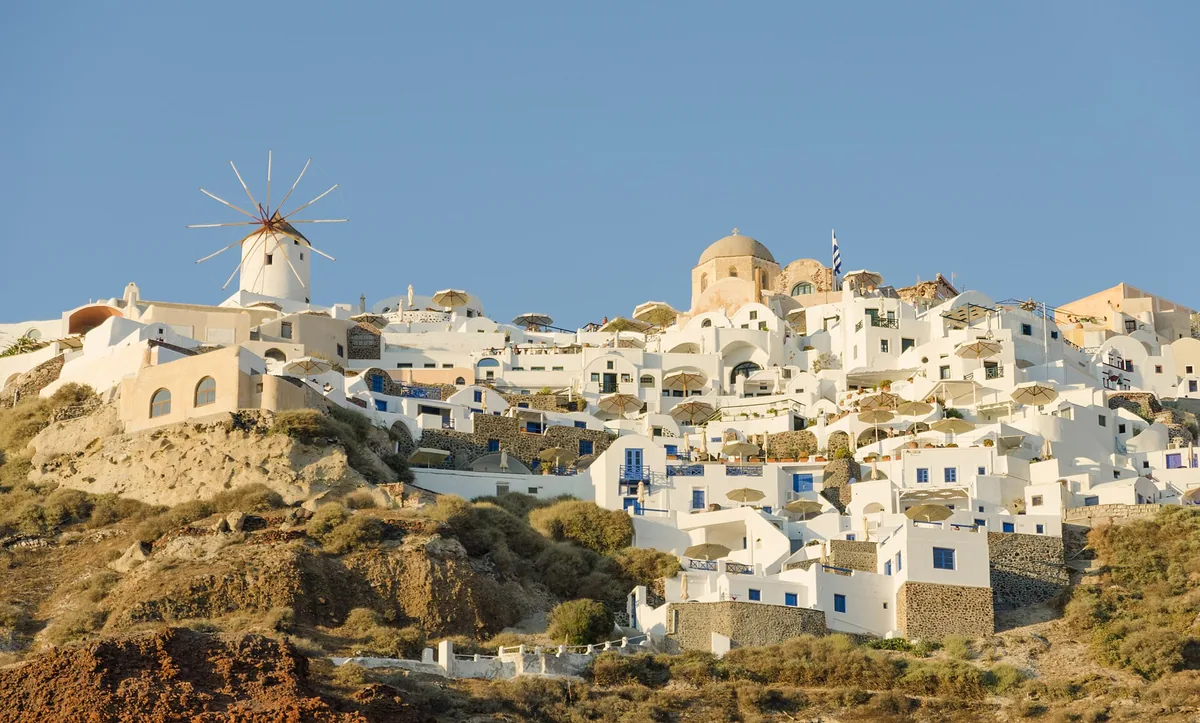
Nobody falls in love with a ferry timetable. You fall for a whitewashed village on Amorgos, a black-sand cove on Santorini, the harbour tavernas of Symi — and the boats are simply how you stitch those places together. So begin there. Sketch the islands you actually want, in the order that makes geographic sense, and the rest of the puzzle mostly solves itself. The Cyclades reward a loose chain (Paros to Naxos to a little Koufonisi, say); the Dodecanese string down the Turkish coast toward Rhodes; Crete is a destination, not a stepping stone. When you know the shape of the trip, you know which Athens port you're leaving from — and that single decision quietly sets the tone for everything after. You can trace every Greek ferry route before you commit to a single bed booked on an island.
The three gates of Athens, and why they aren't interchangeable
Athens breathes through three ports, and travellers who assume they're the same lose a morning to a taxi across the Attica peninsula. Piraeus is the great mother-port — a churning, gate-numbered city of ships that sends boats to the Cyclades, the Dodecanese, the North Aegean, the Saronic day-trip islands, and overnight down to Crete. If an island exists, Piraeus probably reaches it. Rafina, on the east coast and far closer to the airport, is the quiet cheat code for Andros, Tinos and Mykonos; crossings run shorter here, and there is simply no Piraeus boat to Andros at all. Lavrio, further south and sleepier still, is the only door to little Kea, plus Kythnos and a scattering of the western Cyclades and North Aegean. Land at the airport bound for Mykonos and you want Rafina, not the long crawl into Piraeus.
| Port | Best for | Character |
|---|---|---|
| Piraeus | Cyclades, Dodecanese, NE Aegean, Saronic, Crete | Vast, busy, gate numbers matter |
| Rafina | Andros, Tinos, Mykonos (and beyond) | Small, near the airport, faster hops |
| Lavrio | Kea, Kythnos, western Cyclades | Sleepy, uncrowded, limited sailings |
The boats you'll actually board
Two very different animals share these waters, and knowing which one you're standing in changes the whole day. The big conventional car ferries — Blue Star's blue-hulled workhorses, Golden Star's broad-decked Superferry and Andros Queen, Minoan's overnight giants to Crete — are floating villages: outdoor sun decks, cafeterias, room to wander, and a reassuring steadiness when the sea turns choppy. On the long haul to Heraklion or Rhodes you can book anything from an economy deck seat to a two-, three- or four-berth cabin with its own shower; the classic Piraeus–Crete boat slips out around nine at night and lands you at dawn, rested, with a whole extra day gained. Deck class here is its own culture — families camped on reclining seats, the smell of coffee, someone's grandmother handing out koulouria.
Then there are the high-speed catamarans — SeaJets tearing across the Cyclades at close to fifty knots, Hellenic Seaways' Flyingcats, the veteran Flying Dolphin hydrofoils buzzing the Saronic Gulf, Aegean Speed Lines darting to Sifnos and Milos. They halve your travel time and roughly double your fare, they take few cars or none, and their sealed, aircraft-style cabins give you speed instead of sea air. They are glorious on a calm morning. They are also the first boats cancelled when the wind gets up — a trade-off worth making with open eyes.
The meltemi, and the summer temper of the Aegean
The Aegean has a mood, and its name is the meltemi — a dry northerly that funnels down over the Cyclades and can blow for days. It builds through summer and peaks from the middle of July into August, exactly when the ports are busiest. On a strong meltemi day the big ferries shrug and sail; the fast catamarans are the ones that blink first, with sailings commonly suspended once the wind reaches force seven or eight and almost certainly by force nine. The practical lesson is simple: if a cancellation would wreck a flight home, ride a conventional ferry, leave a buffer day before you fly, and treat the last leg back to Athens as the one you don't gamble on. Book the boat, then check it again the night before — Greek operators post updates as the weather turns.
Small rituals that make or break the trip
A few habits separate the smooth trips from the stressful ones. Reserve car space early. Garage decks fill weeks ahead in July and August, and a foot passenger's flexibility vanishes the moment a vehicle is involved — some lines even discount very short cars, so measure yours. Summer schedules are only published around March, so the network firms up later than nervous planners would like; once it does, connections lock in fast. Print or screenshot your ticket, since coverage flickers at sea. Arrive at Piraeus with real margin — finding your gate among the ranks of ships takes longer than you think — and remember that the Ionian islands and the Sporades aren't reached from Athens at all, but from mainland ports like Igoumenitsa, Patra, Volos and Agios Konstantinos. Get the port right, respect the wind, and the sea does the rest. For live crossings and current fares it's worth cross-checking a specialist planner such as Ferryhopper before you lock anything in.
What Greek ferry tickets actually cost
Greek fares are gentler than most first-timers expect, and the boat matters more than the distance. Short Saronic and small-Cyclades hops are pocket change — Aegina to Agistri is about €4, Páros to Náxos around €5.50 — while the headline tourist legs out of Piraeus climb into the €30–46 range once you are crossing open water to Santorini or Crete. On any given route the high-speed catamarans roughly double the conventional fare and halve the time, trading sea air for a sealed, aircraft-style cabin; they are also the first boats the wind cancels.
Three levers move the number after that. Class: deck or economy is the floor, a numbered aircraft-style seat costs a little more, and a cabin berth on the overnight boats to Crete a good deal more. Vehicles: a car is ticketed separately and often costs more than its driver, so a family with a hire car is really paying for the metal. Season: the fares themselves barely flex, but in August the cheap cabins and car-deck spaces sell out, so the affordable options vanish rather than getting dearer — which is the real argument for booking the peak weeks early.
| Crossing | From (deck, one-way) | Typical time |
|---|---|---|
| Piraeus → Santorini | €46 | 4h 45m |
| Piraeus → Chania (Crete) | €37 | ~8h 30m |
| Páros → Santorini | €33 | 1h 30m |
| Igoumenitsa → Patras | €33 | ~6h 30m |
| Santorini → Milos | €16 | ~2h |
| Kos → Rhodes | €14.50 | ~2h 40m |
| Páros → Náxos | €5.50 | 25m |
| Aegina → Agistri | €4 | 10m |
Operators
Which companies run ferries in Greece?
- Aegean Flying Dolphins
- Anek Lines
- Blue Star Ferries
- Bodrum Ferryboat
- Dentur Avrasya
- Dodekanisos Seaways
- Erturk Lines
- Exas
- Fast Ferries
- Hellenic Seaways
- IONIAN SEA FERRIES ΚΟΙΝΟΠΡΑΞΙΑ
- Jalem Tur
- Kefalonian Lines
- Kos - Bodrum Express Lines
- Levante Ferries
- Mavi Transfer
- Meander Travel
- Minoan Lines
- Saronic Ferries
- SeaJets
- Sky Marine Ferries
- Small Cyclades Lines
- Superfast Ferries
- Tilos Travel
- Turyol
- Yesil Marmaris
Regions
Ferry regions in Greece
Coastal travel is local — jump to a region for its routes, quays and timetables.
Ports
Ferry ports in Greece
65 ports with published ferry connections. Open a port for every route that departs or arrives there.
- Piraeus15
- Rhodes11
- Samos9
- Kos8
- Heraklion6
- Kalymnos5
- Lesvos5
- Patras5
- Donousa4
- Irakleia4
- Koufonisi4
- Kyllini4
- Milos4
- Naxos4
- Schoinousa4
- Cephalonia3
- Chios3
- Leros3
- Symi3
- Syros3
- Mykonos2
- Patmos2
- Santorini2
- Tilos2
- Zakynthos2
- Aegina1
- Agistri1
- Amorgos1
- Igoumenitsa1
- Ithaca1
- Nisyros1
- Sitia1
- Anafi
- Andros
- Antikythera
- Astypalaia
- Chalki
- Chania
- Corfu
- Ermioni
- Gythio
- Hydra
- Ios
- Kalamata
- Karpathos
- Kasos
- Kastelorizo
- Kea
- Kissamos
- Kythira
- Kythnos
- Lavrio
- Limnos
- Marmari
- Mytilini
- Paros
- Patmos & Leros
- Poros
- Porto Heli
- Rafina
Show all 65 portsShow fewer
At a glance
Which Greece ferry crossings run most often?
The busiest published crossings, ranked by number of listed sailings.
| Route | Crossing | Sailings | Operators |
|---|---|---|---|
| Patras → Ancona | 21h 30m | 9 / wk | 2 |
| Aegina → Agistri | 10m | 8 / wk | 3 |
| Kos → Rhodes | 2h 5m | 6 / wk | 2 |
| Igoumenitsa → Patras | 6h | 6 / wk | 3 |
| Rhodes → Piraeus | 12h 15m | 6 / wk | 1 |
| Kalymnos → Kos | 35m | 5 / wk | 2 |
| Rhodes → Symi | 50m | 5 / wk | 2 |
| Piraeus → Rhodes | 12h 50m | 5 / wk | 1 |
| Cephalonia → Ithaca | 30m | 4 / wk | 3 |
| Chios → Cesme | 45m | 4 / wk | 1 |
| Kyllini → Zakynthos | 1h 15m | 4 / wk | 2 |
| Zakynthos → Kyllini | 1h 15m | 4 / wk | 1 |
Timetables
What ferry routes run in Greece?
65 routes across the network.
65 routes
FAQ
Frequently asked questions
Which Athens port should I leave from?
Piraeus is the main hub and reaches the Cyclades, Dodecanese, North Aegean, Saronic islands and Crete. Rafina is smaller, closer to the airport, and best for Andros, Tinos and Mykonos. Lavrio is the only port serving Kea, plus Kythnos and some western Cyclades.
How far is each port from Athens airport?
Rafina and Lavrio sit on the eastern side of Attica and are noticeably closer to Athens International Airport, while Piraeus is nearest the city centre and further from the airport. If you land and head straight to Mykonos, Tinos or Andros, Rafina usually saves the most time.
What is the difference between a conventional ferry and a high-speed catamaran?
Conventional car ferries are large, steady vessels with open decks, cafeterias, cabins on long routes and space for vehicles. High-speed catamarans and hydrofoils are much faster and pricier, carry few or no cars, have enclosed cabins, and are the first services cancelled in strong wind.
Can I sleep in a cabin on the way to Crete?
Yes. Overnight ferries from Piraeus to Heraklion and other Crete ports offer two-, three- and four-berth cabins with private facilities, plus economy deck seats and VIP numbered seats. The night boat typically leaves Piraeus around 21:00 and arrives at dawn.
What is the meltemi and how does it affect ferries?
The meltemi is a strong dry northerly wind over the Aegean that builds through summer and peaks from mid-July into August. It rarely stops the big conventional ferries but frequently grounds high-speed catamarans, which are commonly suspended once the wind reaches force seven to eight.
Should I book Greek ferry tickets in advance?
For popular summer crossings, cabins, and any sailing with a vehicle, yes — book well ahead, as these sell out in July and August. Foot passengers on quieter shoulder-season routes have more flexibility, but the busiest Cyclades boats still fill quickly in peak season.
Do I need to reserve space for my car?
Absolutely, in summer. Garage decks book out weeks in advance during July and August, so reserve vehicle space as early as your dates are fixed. Some operators offer discounts for very short vehicles, so it helps to know your car's length.
Which companies operate Greek island ferries?
The network is shared by several operators, including Blue Star Ferries, SeaJets, Golden Star Ferries, Hellenic Seaways, Aegean Speed Lines and Minoan Lines. Conventional car ferries and high-speed catamarans often run the same routes at different speeds and prices.
How can I reach the Ionian islands or the Sporades?
Not from Athens. The Ionian islands are served from western mainland ports such as Igoumenitsa, Patra, Kyllini and Astakos, while the Sporades connect from Volos and Agios Konstantinos. Only the Aegean island groups sail from the Athens ports.
What happens if my ferry is cancelled because of wind?
Operators typically rebook you on the next available sailing or refund the ticket when weather forces a cancellation. To protect a flight home, favour conventional ferries for your final leg and leave a buffer day in Athens before departure.
Are conventional ferries more comfortable in rough seas?
Generally yes. Larger conventional ferries ride choppy water more steadily, offer open decks and cabins, and are less likely to be cancelled. High-speed catamarans are faster in calm conditions but feel the swell more and are grounded sooner when the meltemi blows.
When are summer ferry schedules released?
Greek operators usually announce their summer timetables around March, once the seasonal itineraries are set. Extra sailings are added for the high season, and the schedules appear on booking platforms as soon as they are officially confirmed.
Is deck class a good option?
For shorter daytime crossings, deck or economy seating is comfortable and by far the cheapest choice, with access to decks and cafeterias. On overnight routes to Crete or the Dodecanese, a cabin is worth the extra cost so you arrive rested.
Can I island-hop across different companies on one trip?
Yes. Most itineraries mix operators, since several companies serve overlapping routes. Just leave sensible gaps between connections, especially in windy months, because tickets from different companies are separate and a delayed high-speed boat can cost you a same-day transfer.
How much does a ferry to the Greek islands cost?
It depends far more on the boat than the distance. Short hops like Aegina–Agistri or Páros–Náxos start around €4–6, mid-range Cyclades legs such as Santorini–Milos run about €16, and the fast boats from Piraeus to Santorini or Crete start near €37–46 in deck class. A high-speed catamaran roughly doubles the conventional fare for the same crossing, and cars are ticketed separately — often for more than a passenger.
Are high-speed ferries worth the extra money in Greece?
On a calm day a Flyingcat or SeaJet halves your travel time for roughly double the fare, which pays off if your trip is short or you are connecting to a flight. In a strong meltemi, though, the fast boats are the first cancelled, so on exposed routes a slower conventional ferry is both cheaper and more likely to actually sail.
How can I keep Greek ferry costs down?
Travel deck or economy class rather than booking a cabin, take a conventional ferry instead of a high-speed catamaran where time allows, and leave the hire car behind when island-hopping — vehicle fares add up fast. Fares are broadly stable across the season, so the saving comes from the class and boat you choose, not from timing a particular date.
Explore
Ferries in other countries



















Reviewed by Serhat Özçelik, Founder & Editor of Ferry Schedule Hub · Last updated October 18, 2026.