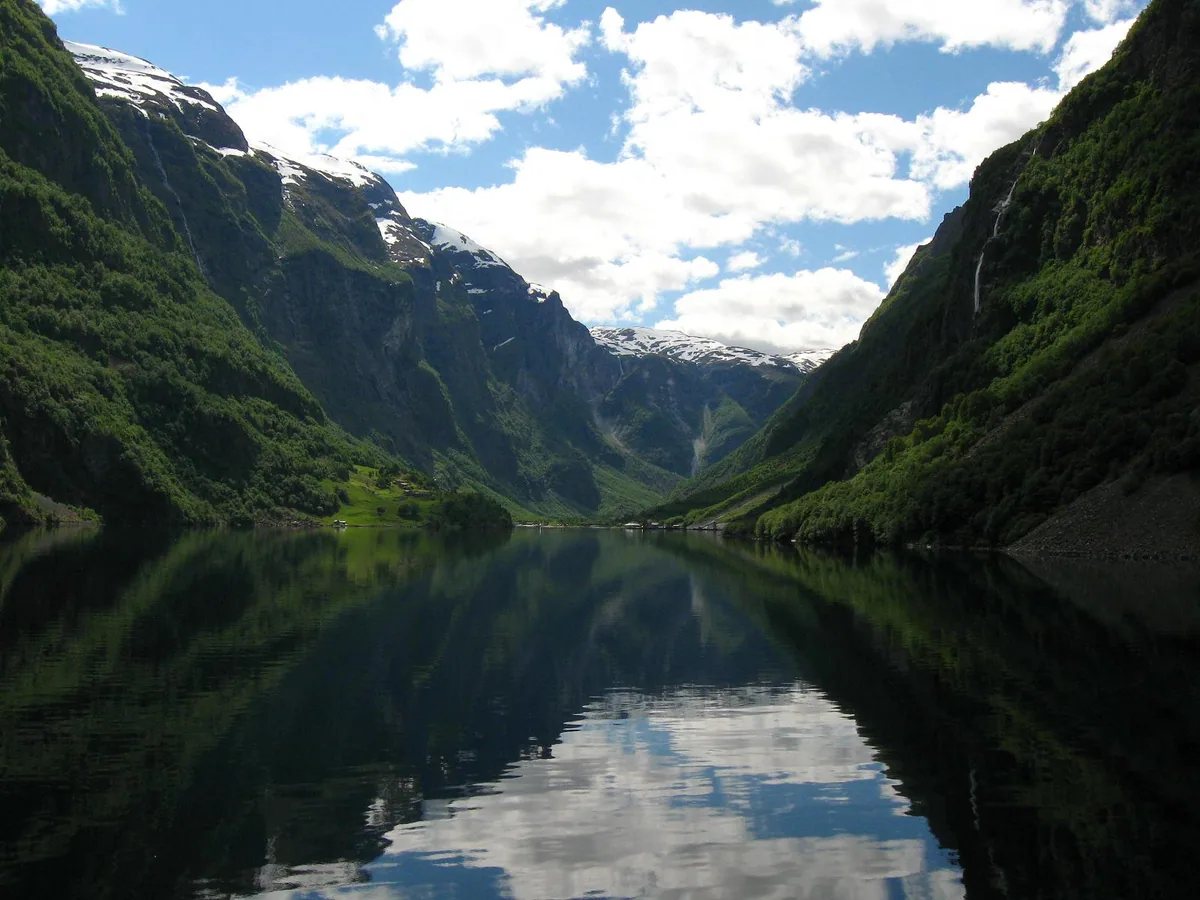
 (c) mcxurxo / CC BY 2.0
Norway's Fjord Ferry Crossings: Geiranger, Sognefjord & Hardanger
A practical guide to Norway's most scenic and essential fjord ferry crossings — from the UNESCO Geirangerfjord to the year-round Sognefjord link, the Hardanger orchard routes and the Lysefjord gateway to Preikestolen.
By Serhat Özçelik, Founder & Editor of Ferry Schedule Hub· Published June 18, 2026
Norway's western fjords cut so deep inland that the road network simply stops at the water's edge and resumes on the far shore. Car ferries bridge those gaps — and in doing so they turn an ordinary drive into one of the most scenic stretches of any European road trip. Some crossings are year-round workhorses that carry commuters and freight every twenty minutes; others run only in summer and exist almost purely for the view from the deck. This guide walks through the four fjord systems travellers ask about most — Geiranger, Sognefjord, Hardanger and Lysefjord — with the practical detail you need to slot each crossing into a self-drive itinerary. For the bigger picture, including coastal voyages and island routes, see our pillar guide to Norway by ferry.
Geirangerfjord: the Hellesylt–Geiranger showpiece
If you only take one fjord ferry in Norway, make it this one. The crossing between Hellesylt and Geiranger sails the full length of the UNESCO-listed Geirangerfjord, gliding past the famous Seven Sisters and Bridal Veil waterfalls that tumble straight off near-vertical cliffs. The trip takes roughly 65 minutes one way and is treated as much as a sightseeing cruise as a transport link — many travellers ride it purely for the scenery and pick their car up again at the other end.
This is a seasonal service, typically running from April into October, with several departures a day at the height of summer. Because it doubles as a bucket-list attraction, demand is heavy in July and August: a regular car with two passengers cost in the region of 1,000 NOK in the 2025 season, and spaces sell out. Booking ahead is strongly advised if you are bringing a vehicle. You can board at the Geiranger quay or from Hellesylt; either direction delivers the same views. The route is run by Fjord1, one of Norway's largest fjord operators. It also slots neatly into the classic scenic loop that pairs the fjord with the hairpin bends of the Trollstigen mountain road.
Sognefjord: the Fodnes–Mannheller year-round link
Where Geiranger is about spectacle, the Fodnes–Mannheller crossing is about reliability. Spanning the inner reaches of the Sognefjord — Norway's longest and deepest fjord — it is a critical link on the main road network through Vestland and runs around the clock, every day of the year, with departures roughly three times an hour. The hop itself is short, about 15 minutes across some 2.8 km of water, so even if you just miss one sailing the wait is rarely long.
Because it operates year-round on a frequent, turn-up-and-go basis, you almost never need to reserve this one in advance. It is the kind of crossing that keeps a winter road trip moving long after the seasonal tourist ferries have shut down for the year. The wider Sognefjord region also rewards travellers who would rather sit back than drive: scenic express boats link Bergen with fjord villages such as Balestrand and Flåm, and the narrow Nærøyfjord arm near Flåm — itself a UNESCO site — is one of the most photographed waterways in the country. Pairing a car ferry with one of these passenger express boats is a popular way to see the fjord from two angles.
Hardangerfjord: orchard-country crossings
The Hardangerfjord — nicknamed Norway's fruit orchard for its hillsides of apple and cherry blossom — is stitched together by a cluster of short car ferries operated by Norled. The Jondal–Tørvikbygd crossing takes about 20 minutes, while the Utne–Kvanndal and Kinsarvik–Utne links (around 20 and 30 minutes respectively) let you triangulate between the fjord's arms without a long detour around the head of the fjord.
These ferries carry bathrooms and a small self-service café, and the open upper car deck is the place to be for photographs. They are at their most magical during blossom season in late April and May, when the orchards lining the water erupt in white and pink — a very different palette from the bare granite further north. The region also forms part of one of Norway's National Tourist Routes, so the ferries link directly to some of the country's best-signposted scenic driving.
Lysefjord and Ryfylke: route to Preikestolen
South of Bergen, in the Ryfylke region near Stavanger, the Lysefjord is best known as the fjord beneath Preikestolen (Pulpit Rock), the cliff that rises 604 metres straight out of the water. Local ferries through this area connect small shoreline communities, and the Lauvvik–Oanes crossing is a handy short link for drivers threading through Ryfylke. The quay at Forsand sits only about a 20-minute drive from the Preikestolen trailhead, making it a practical start or end point for the hike — and the local boat that runs the length of the fjord also calls at Flørli, home of the world's longest wooden staircase beside the old power station.
For the classic on-the-water view of Pulpit Rock itself, sightseeing express boats run into the Lysefjord from Stavanger; The Fjords is one of the operators offering this kind of scenic cruise, sailing right beneath the towering cliff. Combining a fjord sailing with the Preikestolen climb is one of the most rewarding day trips in southern Norway, and an easy add-on if you are already exploring the region by car.
Foot passenger or car?
On most fjord crossings you can travel either way, and the right choice depends on your trip. With a car you keep the freedom to chase the next viewpoint the moment you roll off the ramp, which suits a touring road trip where the ferries are links in a longer drive. As a foot passenger you usually pay less, need to plan less far ahead on local routes, and can lean on the rail for photos — ideal if you are basing yourself in one fjord village and dipping across for the day. Express passenger boats, by contrast, almost always reward advance booking even without a vehicle.
Practical tips for fjord ferry crossings
- Year-round vs seasonal: Backbone crossings like Fodnes–Mannheller run all year; scenic routes such as Geiranger–Hellesylt are summer-only. Always confirm operating dates before relying on a crossing in spring or autumn.
- Book the busy ones: On tourist-heavy summer routes, reserve a vehicle space in advance. Frequent local ferries are usually first-come, first-served.
- Arrive early with a car: Aim to be at the quay 20–30 minutes before departure in peak season so you don't miss the sailing if it fills.
- Payment: Most fjord ferries are cashless and many use Norway's AutoPASS system for automatic billing; check whether your route registers your number plate or sells tickets on board.
- Build them into your route: Treat ferries as part of the road — a single crossing often replaces hours of driving around a fjord head, so plan around the timetable rather than against it.
Ready to map it out? Browse live timetables and fares across the country on our Norway ferry hub, or return to the full Norway by ferry guide for coastal voyages and island routes.
Frequently asked questions
Do I need to book Norway's fjord ferries in advance?
For busy summer tourist routes such as Hellesylt–Geiranger, booking a vehicle space ahead is strongly recommended. Frequent year-round crossings like Fodnes–Mannheller run on a turn-up-and-go basis and rarely need reservations.
Which fjord ferry is the most scenic?
The Hellesylt–Geiranger crossing through the UNESCO-listed Geirangerfjord is widely considered the most spectacular, passing the Seven Sisters and Bridal Veil waterfalls. It runs seasonally, roughly from April to October.
Are Norwegian fjord ferries open year-round?
It depends on the route. Key transport links such as Fodnes–Mannheller on the Sognefjord operate 24 hours a day, every day of the year. Scenic and tourist-oriented routes like Geiranger–Hellesylt usually run only in the warmer months.
How long does the Fodnes–Mannheller crossing take?
About 15 minutes across roughly 2.8 km of the inner Sognefjord, with departures around three times an hour throughout the day and night.
Can I reach Preikestolen (Pulpit Rock) by ferry?
You cannot dock at the trailhead, but the Forsand quay in Ryfylke is only about a 20-minute drive from the Preikestolen car park, and sightseeing boats from Stavanger sail directly beneath the cliff for the famous on-the-water view.
Do fjord car ferries take motorhomes and campervans?
Yes. Most fjord car ferries carry motorhomes and campervans, charged by vehicle length. On popular summer routes, book ahead and arrive early as larger vehicles fill deck space quickly.
Keep reading