 (c) Scottish001real / CC0
CalMac Ferries: A Guide to Scotland's Island Ferries
CalMac is Scotland's lifeline to the islands, sailing to the Hebrides, Arran, Mull and more. Here's how the network works, how to book, fares and which crossings to know.
By Serhat Özçelik, Founder & Editor of Ferry Schedule Hub· Published July 16, 2026· updated August 2, 2026
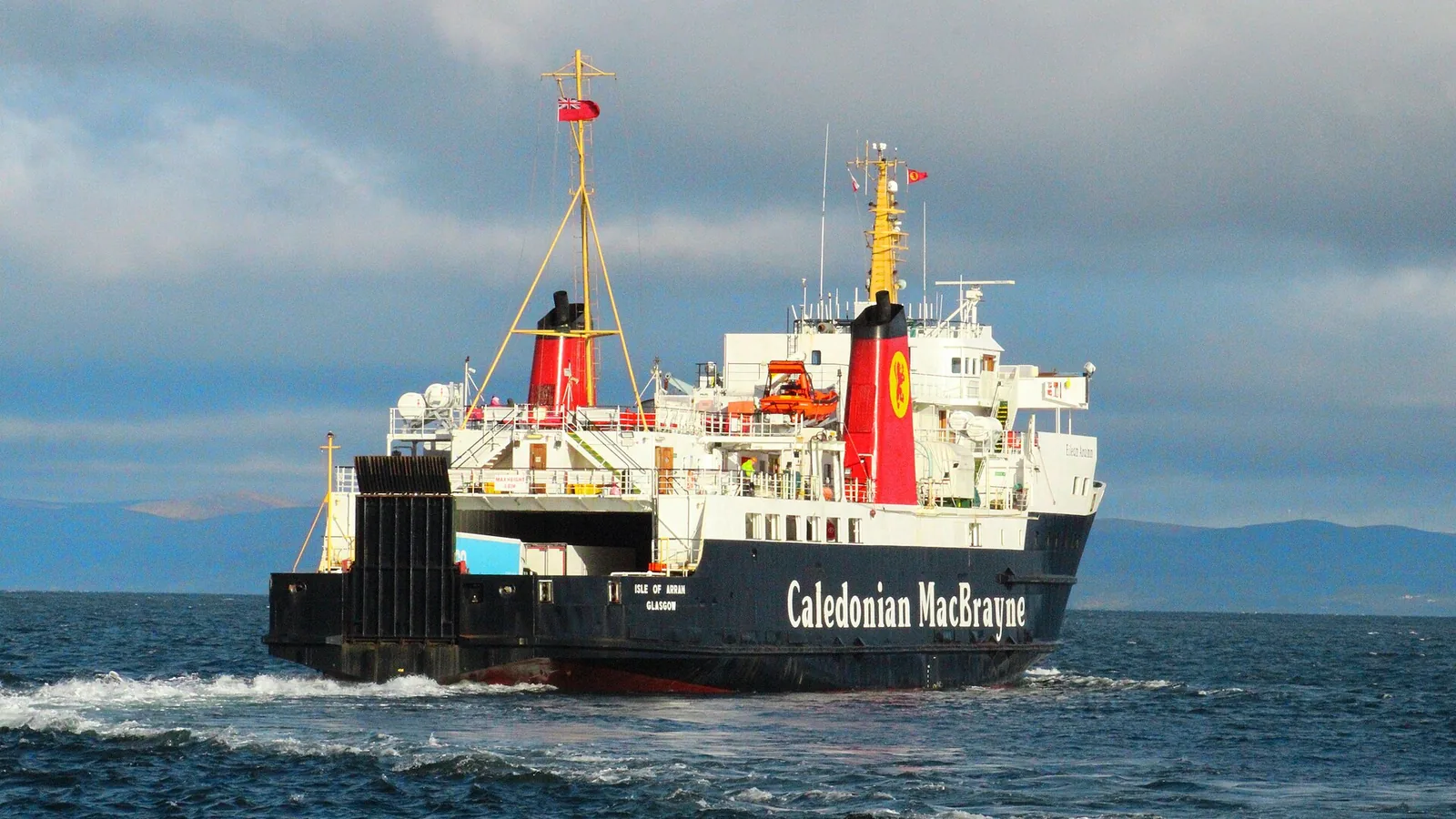
Few ferry networks are as woven into a place as CalMac is into the west of Scotland. Its dark-hulled ships with the red funnels and yellow lion are the lifeline to more than twenty islands — and, for visitors, the scenic, salt-sprayed way into the Hebrides. If you're planning a trip to Arran, Mull, Skye, Lewis or beyond, here's how the system works.
Who are CalMac?
Caledonian MacBrayne (CalMac) runs the ferries along Scotland's west coast and out to the islands of the Firth of Clyde and the Hebrides — over 30 routes serving more than 20 inhabited islands. It's a publicly owned lifeline service that islanders depend on year-round for everything from the weekly shop to hospital trips, which is why the boats run in almost all weathers and the timetable is treated as public infrastructure rather than a tourist attraction.
The scale is easy to underestimate: CalMac lists 56 ports and harbours, 37 vessels and 31 island destinations, from a five-minute hop across a narrow kyle to the long Atlantic run out to Barra. That range is why one piece of advice rarely fits the whole network — the rules for booking a car onto Arran are not the rules for stepping aboard at Colintraive.
The main island crossings
The network falls into a few natural clusters:
- The Clyde — the busy commuter-and-holiday crossings closest to Glasgow: Ardrossan to Brodick for the Isle of Arran, and Wemyss Bay to Rothesay for Bute.
- Oban and the southern Hebrides — Oban is the great hub, with sailings to Mull (Craignure), Coll, Tiree, Colonsay and the long run to Barra and South Uist.
- Skye and the Small Isles — the Isle of Skye is reached by road bridge, but the Mallaig to Armadale ferry is a lovely scenic shortcut, and Mallaig also serves the Small Isles of Rum, Eigg, Muck and Canna.
- The Outer Hebrides — Ullapool to Stornoway for the Isle of Lewis, and Uig (Skye) across to Tarbert (Harris) and Lochmaddy (North Uist).
Do you need to book? The two kinds of route
This is the single most useful thing to understand about CalMac, and it is not about whether you have a car. The network is split into Bookable routes and Turn Up and Go routes, and the difference decides what your ticket even means.
On a Bookable route — which is most of the network, including every long crossing to the Outer Hebrides, Arran, Mull via Craignure, Islay and the Small Isles — a ticket is tied to a specific sailing on a specific date and time. That applies to foot passengers too, not just vehicles. Book ahead.
On a Turn Up and Go route you buy an open ticket with no sailing time, valid for the season you bought it in. There are thirteen of them:
| Route | Island / area | Note |
|---|---|---|
| Wemyss Bay – Rothesay | Bute | |
| Colintraive – Rhubodach | Bute | |
| Largs – Cumbrae Slip (Millport) | Cumbrae | |
| Claonaig / Tarbert – Lochranza | Arran | tidal amendments |
| Tayinloan – Gigha | Gigha | |
| Tarbert (Loch Fyne) – Portavadie | Cowal & Kintyre | tidal amendments |
| Gourock – Dunoon | Dunoon | foot passengers only |
| Gallanach – Kerrera | Kerrera | foot passengers only |
| Gourock – Kilcreggan | Kilcreggan | foot passengers only |
| Fionnphort – Iona | Mull / Iona | |
| Lochaline – Fishnish | Mull | |
| Tobermory – Kilchoan | Mull | tidal amendments |
| Sconser – Raasay | Raasay |
Two traps here. An open ticket is valid only for the season it was bought in — summer or winter, never carried across — and unused journeys are not refunded. And Gourock–Dunoon is a passenger-only CalMac service: if you need to take a car to Dunoon you want Western Ferries from McInroy's Point, a different company altogether. Our guide on taking a car on a ferry covers the vehicle side.
Fares: the Road Equivalent Tariff
Scottish island ferries are cheaper than many travellers expect, because they're priced under the Road Equivalent Tariff (RET) — fares are set roughly in line with the cost of driving the equivalent distance by road, as a way of keeping island life affordable. Foot-passenger fares in particular are modest, which makes island-hopping without a car very good value.
The fare structure itself is simple, and worth knowing before you count heads:
- Adults — 16 and over.
- Children 5 to 15 — half the adult fare.
- Under 5s — free.
- Vehicles — always ticketed separately, priced by length.
- Pets — every animal needs its own ticket, so add them to the booking rather than turning up with the dog.
Beyond singles and returns, CalMac sells 10-journey tickets for routes you use regularly and multi-island tickets for hopping — see below.
Tides can change the timetable
Several CalMac slipways are shallow enough that a low spring tide makes the normal timetable unworkable, so the operator publishes amended timetables for specific dates rather than cancelling. This catches visitors out because the sailing you looked up in the main timetable simply is not running that day.
The routes that carry published tidal amendments are Mallaig–Armadale, Mallaig–Lochboisdale, Mallaig–Small Isles, Oban–Lismore, Tobermory–Kilchoan, Tarbert–Portavadie, Claonaig–Lochranza and Berneray–Leverburgh. The affected dates are scattered through the season — on Mallaig–Armadale for summer 2026, for instance, they fall across late July, six days in August, seven in late September and six more in October.
Before you fix a date, check the service-changes page for your route as well as the timetable. It is the one CalMac quirk that regularly breaks otherwise careful plans.
Weather and disruption
This is the open Atlantic coast, and weather is part of the deal. Winter gales and summer storms can delay or cancel sailings at short notice, and the anxious refresh of the service-status page is a rite of passage for island travellers. Build slack into any itinerary that depends on a single crossing, and read our guide on whether ferries are cancelled in bad weather before you go.
Two habits make a real difference. Sign up for text alerts on your route so a cancellation reaches you before you have driven to the pier. And check the annual overhaul schedule — every vessel comes off service for maintenance at some point in the year, and on single-ship routes that means a reduced or replacement timetable for weeks, published well in advance.
Island-hopping by CalMac
The network is built for stringing islands together — you can, for example, work up through the Outer Hebrides from Barra to Lewis, or combine Mull with Iona and the smaller isles. CalMac offers multi-crossing "hopscotch" tickets for set island-hopping routes, which can save money over booking each leg separately. Our guide to planning a multi-stop ferry trip helps you sketch a route.
One practical note for hoppers: the short inter-island links are mostly Turn Up and Go, while the long crossings that get you into and out of the chain are Bookable. So a Hebridean itinerary usually needs firm reservations at each end and can stay loose in the middle — which is, conveniently, exactly the flexibility you want when the weather turns.
Frequently asked questions
Who runs the ferries to Scotland's west coast islands?
Caledonian MacBrayne, universally known as CalMac. It is a publicly owned operator running over 30 routes to more than 20 inhabited islands across the Firth of Clyde and the Hebrides, listing 56 ports, 37 vessels and 31 island destinations.
Do I need to book a CalMac ferry in advance?
On most of the network, yes — including foot passengers. CalMac splits its routes into 'Bookable', where your ticket is tied to a specific sailing date and time, and 'Turn Up and Go', where you buy an open ticket with no sailing time. Only thirteen routes are Turn Up and Go; everything else, including all the long Outer Hebrides crossings and Arran, should be booked ahead.
Which CalMac routes are Turn Up and Go?
Thirteen: Wemyss Bay–Rothesay, Colintraive–Rhubodach, Largs–Cumbrae, Claonaig/Tarbert–Lochranza, Tayinloan–Gigha, Tarbert–Portavadie, Gourock–Dunoon, Gallanach–Kerrera, Gourock–Kilcreggan, Fionnphort–Iona, Lochaline–Fishnish, Tobermory–Kilchoan and Sconser–Raasay. Open tickets on these routes are valid only for the season you bought them in and unused journeys are not refunded.
Can I take a car from Gourock to Dunoon with CalMac?
No — CalMac's Gourock–Dunoon service is passenger-only. For a car ferry to Dunoon you need Western Ferries, which sails from McInroy's Point to Hunter's Quay and is a separate company with its own timetable and tickets.
Why is my CalMac sailing time different on some dates?
Low spring tides make some slipways unusable at the normal times, so CalMac publishes amended timetables for specific dates instead of cancelling. Mallaig–Armadale, Mallaig–Lochboisdale, Mallaig–Small Isles, Oban–Lismore, Tobermory–Kilchoan, Tarbert–Portavadie, Claonaig–Lochranza and Berneray–Leverburgh all carry tidal amendments, scattered through the season.
How much do CalMac ferries cost?
Fares are set under the Road Equivalent Tariff, which prices a crossing roughly in line with driving the same distance by road, so they are cheaper than most visitors expect. Children aged 5 to 15 pay half the adult fare, under-5s travel free, vehicles are ticketed separately by length, and every pet needs its own ticket.
Do I need a ticket for my dog on a CalMac ferry?
Yes. All pets require a ticket on CalMac ferries, so add the animal to your booking rather than arriving at the pier and hoping. This applies on both bookable and turn-up-and-go routes.
What happens if a CalMac ferry is cancelled?
West coast weather cancels sailings at short notice, particularly in winter. Sign up for text alerts on your route so you hear before driving to the pier, check the service status page the morning you travel, and avoid itineraries that depend on a single crossing with no slack. Also check the annual overhaul schedule — single-vessel routes run reduced timetables while their ship is in for maintenance.
Is island-hopping with CalMac worth it?
It is what the network is built for. Hopscotch tickets bundle set multi-crossing routes more cheaply than separate legs, and foot-passenger fares under RET are low. In practice the long crossings into and out of the island chain need firm reservations while the short inter-island links are turn-up-and-go, so the middle of a Hebridean itinerary can stay flexible.
Keep reading