 (c) Photo: Mytrajectory22, CC0 (https://creativecommons.org/publicdomain/zero/1.0/)
Are Ferries Cancelled in Bad Weather?
When ferries are delayed or cancelled, why high-speed services are most affected, and what to do if your sailing is called off.
By Serhat Özçelik, Founder & Editor of Ferry Schedule Hub· Published June 11, 2026· updated August 8, 2026
Yes — ferries can be delayed or cancelled in bad weather, most often because of strong winds and high seas rather than rain. Whether a sailing runs depends on the vessel type, the route's exposure, and the operator's safety limits.
Why weather stops ferries
The deciding factor is usually wind and wave height, not rain or fog alone. Open-water crossings are more exposed than short, sheltered hops, so the same forecast can cancel one route while another nearby keeps running.
High-speed craft are the first to go
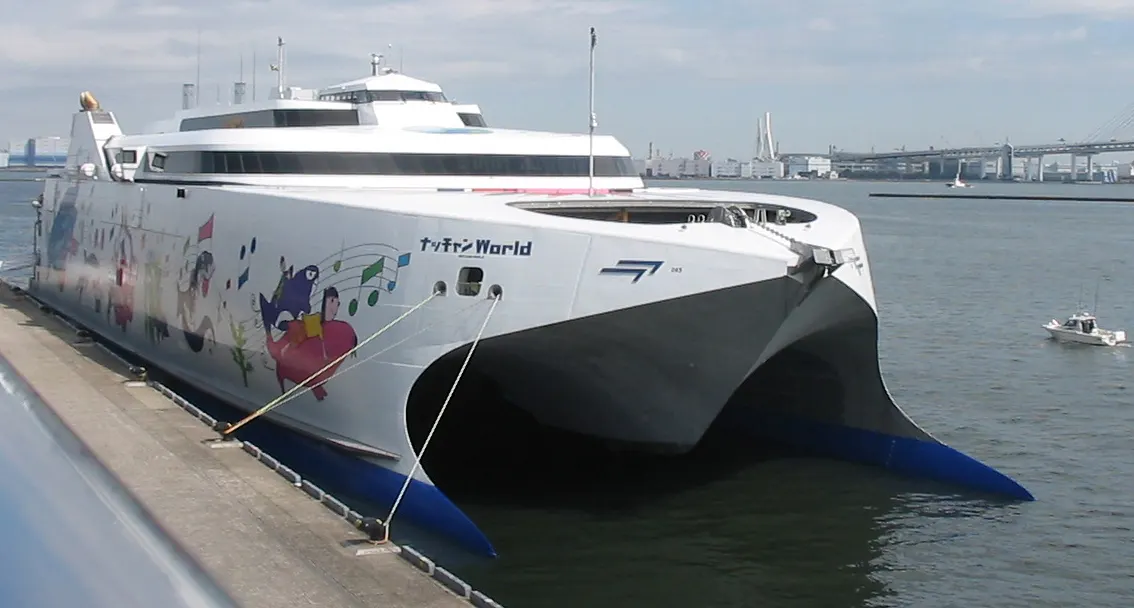
Catamarans and hydrofoils are lighter and more weather-sensitive than conventional ferries, so they're often cancelled while the slower car ferry on the same route still sails. If your high-speed service is called off, ask whether a conventional sailing is available.
What to do if your ferry is cancelled
- Operators typically offer a transfer to the next available sailing or a refund — check the conditions of your ticket.
- Follow the operator's live service status and notifications for the latest position.
- In peak season, rebook quickly: alternative sailings fill fast when one is cancelled.
Always check the operator's service status on the day of travel, especially in autumn and winter when disruption is most common.
Tide can close a route without any weather at all
Cancellation is not only about wind. Aquabus, in Vancouver's False Creek, warns that at extremely low tide the ramps at Stamps Landing and Hornby Street become very steep and effectively unusable. The boat sails; the dock is what fails. If you use a wheelchair, push a stroller or carry a bike, the tide table matters as much as the forecast.
Restrictions are often partial rather than total
Operators frequently keep a route open while removing part of its capacity:
- A Norwegian archipelago service placed a temporary axle-load limit of 5 tonnes on its main vessel's ramp; heavier vehicles were shifted to a different ship on Tuesdays and Thursdays only.
- BC Ferries notes that when a particular reserve vessel is in service, a wheelchair cannot be used at one specific dock — the sailing runs, but not for everyone.
"Is the ferry running?" and "can I get on it?" are different questions.
Vessel type decides exposure
Fast craft and hydrofoils suspend service in conditions that conventional ships handle without comment. On routes where both operate — the Aeolian Islands, the Greek Cyclades, the Philippine inter-island corridors — the conventional RoRo is the one still sailing when the fast boats stop. Booking the quicker option in an exposed season carries that risk.
Where to look, in order
- The operator's own service-notice page, not its timetable. Disruptions are posted separately and the timetable is not updated.
- Live vessel tracking where offered — BC Ferries publishes real-time positions and terminal conditions.
- The local terminal number. FastCat lists a direct mobile for each port rather than a central call centre; on a disrupted day that is the line that answers.
What you are owed if it is cancelled
Less than you might expect. Carriers commonly disclaim responsibility for onward costs: OceanJet's conditions state it is not responsible for lost time due to delay or cancellation, and reserves the right to carry you to the destination by other reasonable means or refund the ticket. If a missed connection would be expensive, the ferry's terms will not cover it — travel insurance might.
Frequently asked questions
At what wind speed do ferries stop running?
There's no single cut-off, but as a typical guide high-speed catamarans and hydrofoils are often suspended around Force 6 to 7 (roughly 25-33 knots), while large conventional car ferries usually keep sailing until Force 8 and cancel in Force 9 or above. The exact limit depends on the vessel, the route's exposure and wind direction at the harbour entrance.
Do ferries get cancelled because of rain?
Rain alone almost never cancels a ferry. Sailings are stopped by strong wind and the high seas it creates, not precipitation. Thick fog can occasionally delay departures at ports with visibility rules, but it's the sea state, wave height and wind force, that determines whether a crossing runs, so a wet but calm day is usually no problem.
Will I get a refund if my ferry is cancelled due to weather?
Yes. Under EU Regulation 1177/2010 and similar UK rules, a weather cancellation entitles you to choose between a full refund within seven days or free re-routing to your destination at the earliest opportunity. Because bad weather is outside the operator's control, extra cash compensation for the delay generally doesn't apply, but your refund or re-routing right always stands.
Are high-speed ferries cancelled more often than conventional ones?
Yes, considerably. Lightweight catamarans and hydrofoils are far more sensitive to swell, so they're grounded first, often while the heavier conventional car ferry on the same route sails on schedule. If your fast service is called off in windy weather, always ask whether a slower conventional sailing is still operating that day.
How can I check if my ferry is cancelled before leaving?
Check the operator's official website or app service-status page first, as it carries the definitive updates and push notifications. Also watch for email or SMS alerts to your booking contact, check the local port authority for blanket suspensions, and follow a marine wind forecast a day or two ahead so a coming blow doesn't catch you out.
Keep reading