Cyclades · Greece
Paros
Paros is the junction of the Cyclades. Most ships between Piraeus and the islands call here on the way somewhere else, which makes it the one place in the archipelago where you can change boats rather than backtrack. Naxos is twenty-five minutes away with thirteen sailings a day. That is not a ferry route; that is a bridge.
Everything docks at Parikia
One port matters. Parikia, the main town, takes every scheduled ferry — from Piraeus, from Rafina, from the other Cyclades, conventional and high-speed alike. You walk off the ramp into the town.
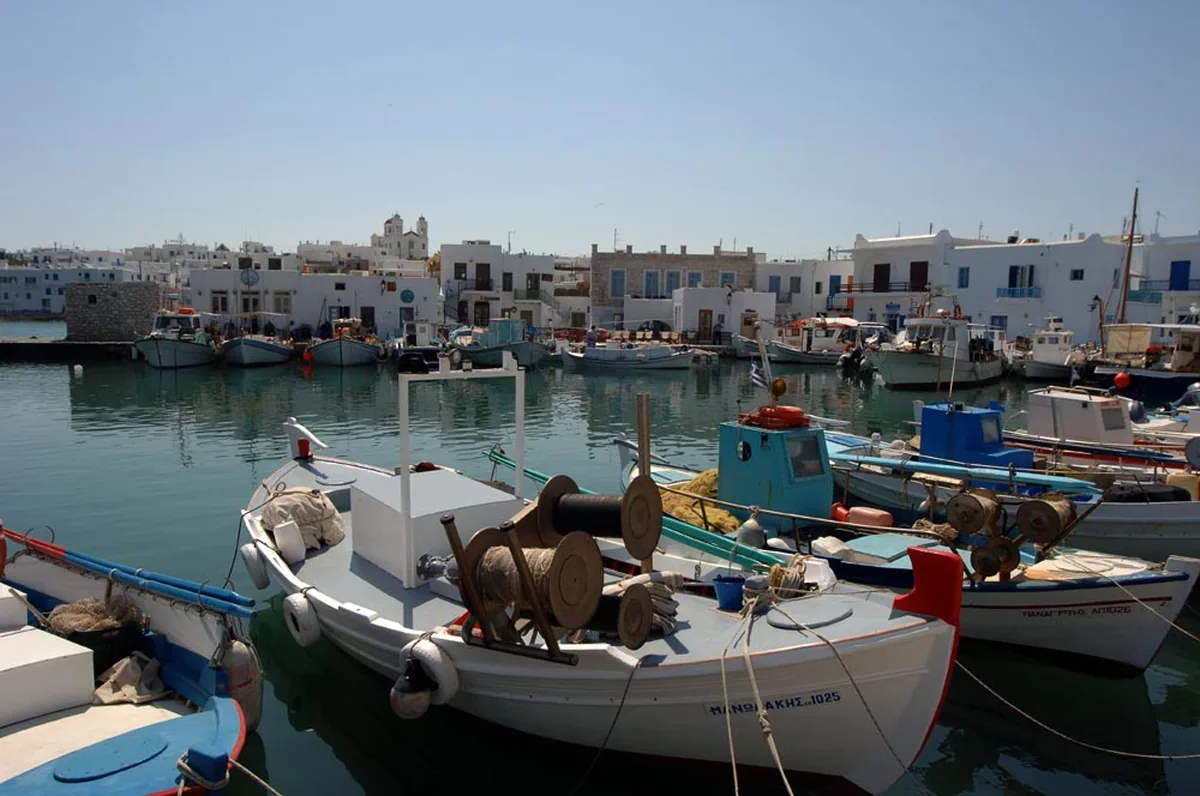
There is a second harbour at Naoussa in the north, but it handles water taxis, excursion boats and small craft. It will not be on your ticket unless you booked a day trip. A third quay, Pounta on the west coast, exists for one purpose only — see below.
Naxos is twenty-five minutes away, thirteen times a day
Paros to Naxos runs at about 25 minutes with 13 sailings in our timetable, shared between Blue Star, Fast Ferries, Golden Star and SeaJets. Nothing else in the Cyclades is that short and that frequent.
The consequence is worth thinking through: you do not have to choose between the two islands. Base on one, spend days on the other, and treat the crossing as commuting. It also means a missed boat costs you an hour rather than a day.
Santorini without the fuss
Paros to Santorini is around 90 minutes with four sailings, and it is the most-searched route from this island by a distance.
Read the Santorini guide before you book it, though: the crossing is the easy part, and what happens at Athinios on arrival — a port far below the villages with very few taxis on the island — is where the day actually goes wrong.
⚠ Antiparos leaves from a different quay
The five-minute hop to Antiparos does not go from Parikia. It goes from Pounta, on the west coast, reached by the island bus network.
People turn up at the main port expecting it and lose a morning. If Antiparos is on the plan, work out the bus first — the crossing itself is trivial, the getting-to-it is not.
Why a junction makes a better base than a terminus
Islands at the end of a line give you one way in and one way out. Paros sits in the middle of several lines at once, so the same week can include Naxos, Santorini, Mykonos and Antiparos without ever repeating a leg.
The trade-off is that Paros is busy in high season precisely because everyone else has worked this out too. Parikia in August is a transit town as much as a resort.
Athens: which port, and how fast
High-speed craft cover Piraeus–Paros in roughly 3 to 4 hours; conventional ferries take about 4 to 5. Rafina, on the other side of Athens and much closer to the airport, is the alternative and is often the better choice if you are flying in or out the same day.
The usual mistake is booking Piraeus by default because it is the famous one, then paying for a long taxi across Athens at both ends.
Getting around once you are here
Paros has a real bus network rather than a token one, linking Parikia and Naoussa with the beaches, the airport and Pounta. That matters more here than on smaller islands, because the two main towns are on opposite coasts and the ferry lands you at only one of them.
If your accommodation is in Naoussa, add the transfer from Parikia to your arrival plan — it is not a walk.
Season
The high-speed network peaks from June to September, when the Naxos and Santorini links run at full frequency and Paros becomes the interchange it is famous for. Blue Star's conventional ships to Piraeus keep going year round.
Out of season the island stays reachable but stops being a junction: fewer fast craft means fewer same-day connections, and the twenty-five-minute Naxos hop thins out along with everything else.
Paros ferry & travel FAQ
Which port do ferries use in Paros?
Parikia, the main town — every scheduled ferry docks there. Naoussa in the north handles water taxis and excursion boats, and Pounta on the west coast serves only the Antiparos crossing.
How long is the ferry from Paros to Naxos?
About 25 minutes, with 13 sailings in our timetable across Blue Star, Fast Ferries, Golden Star and SeaJets. It is the shortest and most frequent hop in the Cyclades.
How do I get to Antiparos?
From Pounta on the west coast, not from Parikia. The crossing takes about five minutes but you need the island bus to reach the quay, so plan that leg first.
How long is the ferry from Paros to Santorini?
Around 90 minutes with four sailings. It is the most-searched route from Paros.
Should I sail to Paros from Piraeus or Rafina?
High-speed craft take about 3 to 4 hours from Piraeus and conventional ferries 4 to 5. Rafina is on the other side of Athens and much nearer the airport, so it is often the better choice if you are flying the same day.
Is Paros a good base for island hopping?
Yes — it sits on several routes at once, so a week can take in Naxos, Santorini, Mykonos and Antiparos without repeating a leg. The cost is that Parikia is crowded in August.
How far is Naoussa from the ferry port?
Naoussa is on the opposite coast from Parikia and is not walkable. Use the island bus network, which links both towns with the beaches, the airport and Pounta.
Do ferries to Paros run in winter?
Yes, Blue Star's conventional ships to Piraeus run year round. The high-speed network is seasonal, so same-day connections between islands become much harder out of season.
More Cyclades destinations
Reviewed by Serhat Özçelik, Founder & Editor of Ferry Schedule Hub · Last updated August 8, 2026.