Cyclades · Greece
Milos
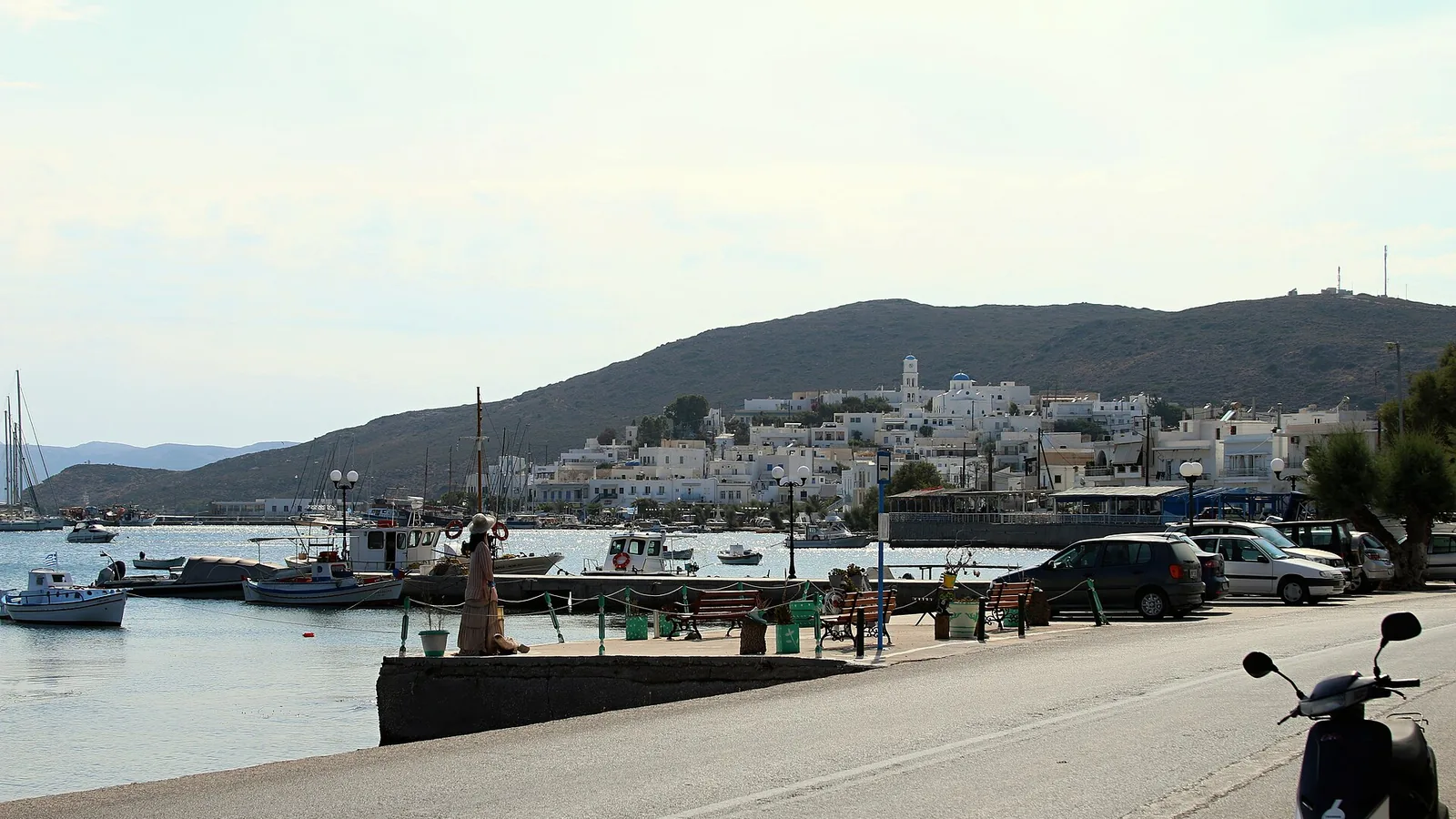
Nearly every ferry to Milos ties up at one place: Adamas (Adamantas), the island's harbour on its huge natural bay. From Athens you sail from Piraeus — a SeaJets high-speed catamaran does it in roughly 2h35m, while slower conventional ferries take about 5–7 hours but shrug off the wind. Milos also links into the Western Cyclades chain (Sifnos, Serifos, Paros, Naxos), Santorini, and Crete. It is a volcanic island of coloured cliffs, the moonscape of Sarakiniko, and the boat-only cove of Kleftiko.
Getting to Milos by ferry
Direct crossings serving Milos — open one for its full timetable.
Milos to Heraklion
- Fastest crossing
- 5h 10m
- Operators
- 1 operator
See schedule
Milos to Piraeus
- Fastest crossing
- 4h 30m
- Operators
- 4 operators
See schedule
Milos ferry crossings at a glance
| Route | Crossing | Sailings | Operators | Country |
|---|---|---|---|---|
| Milos → Piraeus | 4h 30m | 1 / wk | 4 | Greece |
| Milos → Heraklion | 5h 10m | 1 / wk | 1 | Greece |
Milos ferry timetable
Live ferry departure times to and from Milos — Piraeus (Athens) and the neighbouring Cyclades including Santorini. Open any crossing for the full timetable and fares.
Adamas: the one harbour you'll actually use
Milos keeps things simple. Almost all scheduled ferry traffic — high-speed and conventional alike — arrives at Adamas (also written Adamantas), the port town wrapped around the island's broad, sheltered bay. The quay sits about a two-minute walk from the waterfront strip of cafés, tavernas, car-rental desks and mini-markets, so you can step off the boat and sort out wheels, a coffee or a last-minute SIM without a transfer.
There is a second, much smaller port at Pollonia on the northeast tip, but it is not where your Athens ferry lands — it exists mainly for the little shuttle across to neighbouring Kimolos. When you book, your ticket will say Milos/Adamantas; treat Pollonia as an on-island detail, not an arrival point. Adamas is also the pivot of the island: every local bus route runs through it, so it doubles as your transport hub the moment you dock. One thing to know before you arrive — the bay is spectacular but exposed, and in strong wind larger ferries occasionally shift berths or run late, so give yourself a cushion rather than sprinting for a connecting bus.
Athens to Milos: choosing between speed and stubbornness
The workhorse route is Piraeus (Athens) to Adamas, running daily and year-round. Here you face the real Milos decision — a fast boat or a tough one.
- High-speed (SeaJets catamarans): the quickest sailings reach Milos in around 2h35m–3h. They are airplane-style numbered seats, no cabins, and they are the priciest option. Fares typically open around €55–€75 in season.
- Conventional ferries (operators such as Blue Star Ferries, Zante Ferries and others): slower at roughly 5–7 hours, sometimes calling at Serifos and Sifnos on the way, but far cheaper (from ~€33) and much more likely to sail when it's blowing.
In summer there can be up to around six departures a day between the fast and slow fleets combined. The counter-intuitive tip: the slow boat is often the smart boat. When the Meltemi wind is up in July and August, high-speed catamarans are the first to be cancelled, while big conventional ferries almost always still cross. Plan your outbound and return here: Piraeus to Milos ferry schedules and, for the way home, Milos to Piraeus times. If you're routing through Athens, the port itself is worth understanding — see our Piraeus guide.
Hopping the Western Cyclades: Milos as a stepping stone
Milos sits at the southwest end of the Western Cyclades line, which makes it a natural anchor for island-hopping rather than a dead end. Several neighbours are quick, frequent hops:
- Sifnos: the closest easy connection — roughly 40 minutes to 1h20m, with up to about three sailings a day in season on SeaJets and conventional operators. See Sifnos to Milos ferries.
- Serifos: up to three crossings daily, around 1 to 3 hours depending on the vessel.
- Paros: 1–2 ferries most days, year-round, ranging from about 1h45m to 5.5 hours — handy if you're linking to the central Cyclades. More on the island in our Paros guide.
- Naxos: a less frequent link, roughly up to seven crossings a week, taking about 3h45m to 6h20m. Details in our Naxos guide.
Two named services do most of the heavy lifting: a Blue Star Ferries route threading Lavrio–Kythnos–Serifos–Sifnos–Kimolos–Milos (and a longer weekly loop via the central islands), plus a SeaJets fast line running Piraeus–Serifos–Sifnos–Milos–Folegandros–Santorini–Naxos–Paros–Mykonos. Because a single boat often chains these ports together, sailing times shift a lot depending on which itinerary you catch — always check the specific departure, not just the route average.
Santorini and Crete: the long-haul links south
Milos pairs beautifully with Santorini as a two-island trip, and the ferry makes it painless. SeaJets fast catamarans cover Santorini to Milos in about 1h55m–3 hours, with conventional boats closer to 5 hours; expect up to two daily crossings in high summer and a year-round (if thin) winter service. Book it via Santorini to Milos ferries, and read up on the caldera island in our Santorini guide.
Coming up from Crete, ferries run from Heraklion to Milos in roughly 4h10m–5h10m, operated by the likes of SeaJets and Minoan Lines. There are usually 1–2 sailings a day, thinning to only a handful per week outside the June–September window, so this is the connection most worth pinning down early. Compare options on Heraklion to Milos ferries. Because these southern routes lean on seasonal high-speed vessels, they are also the ones most exposed to summer wind cancellations — build in slack if you're connecting to a flight.
A practical note on ticketing for both links: because a single catamaran may string several islands together in one run, the timetable for a given day can look nothing like the day before. Rather than trust a route's headline duration, always read the specific sailing you're buying — the number of intermediate stops is what turns a two-hour hop into a half-day at sea.
The Sarakiniko effect: why summer seats sell out
Milos is no longer a quiet secret. It has become one of the highest-booking islands in the Cyclades and ranks among the most-searched Greek islands by US travellers — driven largely by the lunar-white cliffs of Sarakiniko flooding social feeds. Ferry demand for 2026 is tracking well ahead of prior years, with early bookings up in the double digits.
What that means practically:
- Book 1–2 months ahead for July and August, and even earlier for weekend departures or if you're bringing a vehicle — car-deck space is the first thing to vanish.
- Popular high-speed sailings genuinely sell out; travellers who wait can find themselves stuck for a day or forced onto an awkward multi-stop boat.
- Fares are cheapest and choice widest when itineraries are first published, usually in March for the coming summer. Shoulder season (May–June, September) is the sweet spot for both price and calm seas.
If your dates are fixed, treat the ferry as the thing you lock in first and the hotel second — not the other way around.
Meltemi season: planning around the wind
From roughly May to September, the Aegean's seasonal north wind, the Meltemi, sweeps the Cyclades — peaking in July and August. It doesn't ruin a Milos trip, but it does make schedules optimistic. Lightweight high-speed catamarans are the first casualties; conventional car ferries are far more resilient and will usually sail through conditions that ground the fast boats.
A few habits save the day here:
- If you have a same-day onward flight from Athens after your return ferry, don't book the last sailing — leave a buffer, or take a conventional boat that's less likely to be cut.
- Note that Milos's own airport uses small propeller planes that are grounded by strong wind just as easily as a fast ferry, so flying is not automatically the safer bet — a big ferry is often the most dependable link to Athens.
- Watch operator announcements the evening before in peak wind spells; cancellations are typically confirmed the day of or night before.
Docking is only half of it: getting around Milos
Milos rewards a bit of logistics after you land, because the ferry only gets you to Adamas — and the island's best bits are scattered. The local bus network is cheap (around €2, cash to the driver) but every line radiates from Adamas, so it works well only for the headline stops like Sarakiniko, the fishing village of Pollonia and hilltop Plaka. Many beaches have no bus at all.
To reach the wilder south and the coloured coves, most visitors rent a car, ATV or scooter — reckon on roughly €60–€100 a day for a car in peak season, and note some of the loveliest beaches sit at the end of rough dirt tracks better suited to an ATV or a high-clearance vehicle. Book rentals ahead in August; the island's fleet is finite.
Crucially, the island's signature sight — Kleftiko, a maze of white sea-stacks and caves — has no road at all. You reach it (and spots like Gerontas and Sikia cave) only by boat trip, on half- or full-day cruises out of Adamas, or by hiring a small self-drive boat. From Pollonia there's also the frequent little shuttle across to Kimolos (about 20 minutes, several times a day in summer, just a few euros) for an easy day-hop. In short: plan the ferry to Milos, then plan a second, on-water leg to actually see it.
Milos ferry & travel FAQ
How long is the ferry from Athens to Milos?
It depends on the boat. A SeaJets high-speed catamaran from Piraeus reaches Milos in about 2h35m–3 hours, while a conventional ferry takes roughly 5–7 hours, sometimes with stops at Serifos or Sifnos. Compare both on Piraeus to Milos ferries.
Which port do ferries to Milos use?
Almost all scheduled ferries dock at Adamas (Adamantas), the main harbour on Milos's central bay, about a two-minute walk from the town's cafés and car-rental offices. The smaller port at Pollonia is used mainly for the short local crossing to Kimolos, not for arrivals from Athens.
Should I take the high-speed or the conventional ferry to Milos?
The high-speed boat is roughly twice as fast but costs more and is the first to be cancelled when the Meltemi wind blows in July and August. The conventional ferry is slower and cheaper but far more likely to sail in rough conditions — often the safer choice for tight schedules.
How far in advance should I book a Milos ferry for summer 2026?
For July and August, book at least 1–2 months ahead, and earlier still for weekends or if you're taking a car, since vehicle space and popular high-speed seats sell out fast. Summer itineraries are usually released around March, when fares and choice are best.
Can I get from Santorini to Milos by ferry?
Yes. SeaJets high-speed catamarans link Santorini and Milos in about 1h55m–3 hours, with conventional sailings closer to 5 hours; there are up to two crossings a day in high summer. See Santorini to Milos ferries.
Is there a ferry from Crete to Milos?
Yes, from Heraklion, taking roughly 4h10m–5h10m with operators such as SeaJets and Minoan Lines. Service is frequent (1–2 a day) in June–September but drops to a few crossings a week off-season, so book early. Details on Heraklion to Milos ferries.
Do I need a car on Milos, or can I rely on ferries and buses?
You'll want your own wheels. Buses only serve the main stops from Adamas and skip many beaches, so most visitors rent a car, ATV or scooter (about €60–€100/day in peak season). The famous Kleftiko coves have no road and are reachable only by boat trip.
Which nearby islands connect to Milos by ferry?
Milos anchors the Western Cyclades: quick, frequent hops to Sifnos (40min–1h20m) and Serifos, daily links to Paros, plus connections to Naxos, Folegandros, Santorini and Crete. It's a strong base for island-hopping — see Sifnos to Milos ferries.
More Cyclades destinations
Reviewed by Serhat Özçelik, Founder & Editor of Ferry Schedule Hub · Last updated July 13, 2026.