Attica & Saronic · Greece
Piraeus
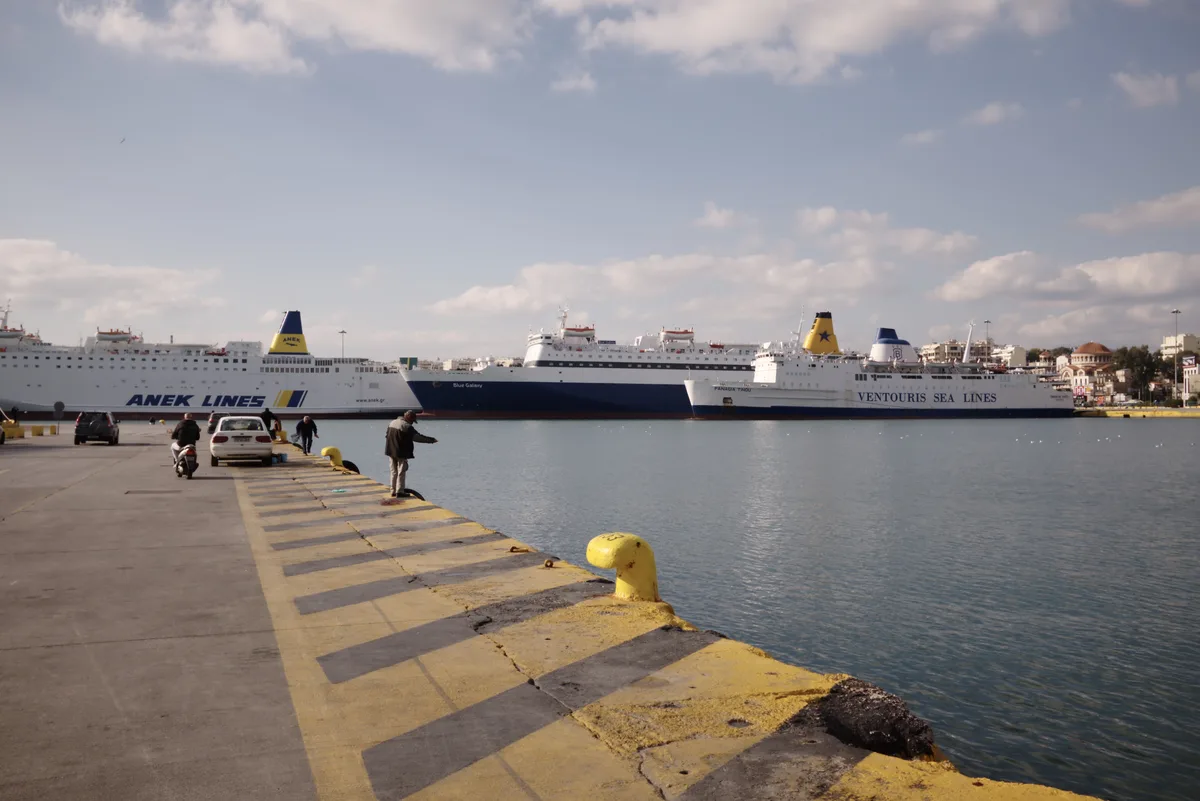
Piraeus is the busiest passenger port in Europe and it is laid out like a working harbour, not an airport: gates E1 to E12 are strung along roughly four kilometres of waterfront, and the one on your ticket decides whether the walk from the metro takes five minutes or forty-five. Everything else — which boat, how early, whether you can bring the car — follows from that.
Getting to Piraeus by ferry
Direct crossings serving Piraeus — open one for its full timetable.
Piraeus to Heraklion
- Fastest crossing
- 9h 30m
- Operators
- 4 operators
See schedule
Piraeus to Kos
- Fastest crossing
- 9h 35m
- Operators
- 1 operator
See schedule
Piraeus to Lesvos
- Fastest crossing
- 12h 20m
- Operators
- 1 operator
See schedule
Piraeus to Milos
- Fastest crossing
- 4h
- Operators
- 2 operators
See schedule
Piraeus to Patmos
- Fastest crossing
- 8h 20m
- Operators
- 2 operators
See schedule
Piraeus to Rhodes
- Fastest crossing
- 12h 50m
- Operators
- 1 operator
See schedule
Piraeus ferry crossings at a glance
| Route | Crossing | Sailings | Operators | Country |
|---|---|---|---|---|
| Piraeus → Rhodes | 12h 50m | 5 / wk | 1 | Greece |
| Piraeus → Kos | 9h 35m | 4 / wk | 1 | Greece |
| Piraeus → Patmos | 8h 20m | 3 / wk | 2 | Greece |
| Piraeus → Lesvos | 12h 20m | 2 / wk | 1 | Greece |
| Piraeus → Milos | 4h | 1 / wk | 2 | Greece |
| Piraeus → Samos | 9h 10m | 1 / wk | 1 | Greece |
| Piraeus → Heraklion | 9h 30m | 1 / wk | 4 | Greece |
The port is 4 km long — the gate matters more than the ship
Piraeus is not a building with a departure hall. It is a working harbour that runs roughly 4 km around the waterfront, and the numbered gates (E1 to E12) are spread along its whole length. Turning up at the wrong one can mean a 30–45 minute walk with luggage, and there is no shortcut across the water.
Your ticket names a gate. That number is the first thing to read, before the departure time.
Which gate for which islands
Assignments follow the destination group rather than the operator:
- E1–E2 — Crete (Heraklion, Chania) and the Dodecanese (Rhodes, Kos). The far end of the port.
- E3 — also used for Crete; ANEK directs Chania passengers here specifically.
- E5–E6 — nearest the metro; Saronic Gulf and some conventional sailings.
- E6–E10 — the Cyclades: Mykonos, Santorini, Paros, Naxos. E7 is the usual high-speed catamaran gate.
These are patterns, not guarantees — see the next section.
⚠ Gates get reassigned, especially in July and August
Ships are shuffled between berths during high season, so the gate printed on a ticket bought in March may not be the gate used in August. Two habits protect you:
- Check the electronic boards at the port entrance on the day — they show the live berth for each departure.
- Allow the walk. If the board sends you from E6 to E1, that is the far end of the port.
A free shuttle bus circulates inside the port, picking up just outside the metro exit. For E1 and E2 it is worth waiting for.
Arriving by metro, bus or taxi
The Piraeus metro station sits directly opposite gates E5 and E6, which is why those gates feel easy and E1 does not. Line 1 (green) from Monastiraki and Line 3 (blue) from Syntagma both terminate here, taking about 25–30 minutes from central Athens for around €1.20.
From the airport, the X96 express bus runs to the port directly; the metro requires a change. Taxis drop at the gate itself, which is the argument for taking one when your gate is E1, E2 or E3.
How early to arrive
Rules differ by ship type and route:
- Conventional car ferries to Crete and the Dodecanese: 60–90 minutes, more with a vehicle. ANEK asks 90 minutes with a car and one hour on foot in summer, dropping to 30 minutes in winter.
- High-speed catamarans to the Cyclades: 30 minutes is usually enough, but boarding closes firmly.
Add the walk to your gate on top of whatever the operator states.
Two kinds of boat, two different journeys
From Piraeus the same island often has both:
- Conventional ferries — slower, cheaper, take vehicles, and keep sailing in weather that stops everything else. The overnight ships to Crete are cabins-and-a-night's-sleep rather than a crossing.
- High-speed craft — roughly half the time to the Cyclades, passenger and small-vehicle only on most, and the first to be cancelled when the meltemi blows.
In July and August that wind is a scheduling factor, not a footnote: it can suspend fast services for days while the conventional boats run.
Where Piraeus can take you
It is the busiest passenger port in Europe and the hub for most of the Aegean. Direct sailings reach the Cyclades (Santorini, Mykonos, Paros, Naxos, Milos, Syros), Crete (Heraklion, Chania), the Dodecanese (Rhodes, Kos, Patmos), the North Aegean (Chios, Lesvos, Samos) and the Saronic Gulf (Aegina, Poros, Hydra, Spetses).
Browse the full list on our Piraeus port page, or start from a specific crossing such as Piraeus to Chania.
Buying tickets, and what a ticket does not include
Most sailings can be booked online, and in high season the popular Cyclades departures do sell out — particularly cabins on the overnight Crete boats, which go first. Agencies cluster around the port for same-day purchases.
Two things the fare usually excludes: the island's own charges on arrival where they apply, and any port shuttle or taxi at the far end. The ticket buys the crossing, not the transfer.
Piraeus ferry & travel FAQ
Which gate does my ferry leave from at Piraeus?
It depends on the destination group, not the operator. Crete and the Dodecanese generally use E1–E3, the Cyclades use E6–E10 with E7 the usual high-speed gate, and E5–E6 sit opposite the metro. Gates are reassigned in high season, so check the electronic boards at the port entrance on the day.
How far is Piraeus port from the metro station?
The station is directly opposite gates E5 and E6. Other gates are spread along a harbour roughly 4 km long — reaching E1 or E2 on foot can take 30 to 45 minutes, so use the free internal shuttle bus that picks up outside the metro exit.
How do I get from Athens city centre to Piraeus?
Metro Line 1 from Monastiraki or Line 3 from Syntagma, about 25–30 minutes for roughly €1.20; both terminate at Piraeus. From the airport the X96 express bus runs directly to the port.
How early should I arrive at Piraeus?
Sixty to ninety minutes for conventional ferries to Crete and the Dodecanese, and more if you are taking a vehicle. Around 30 minutes is usually enough for a high-speed catamaran to the Cyclades. Add the walk to your gate on top.
What is the difference between the fast and conventional ferries?
Conventional ships are slower and cheaper, carry vehicles, and keep sailing in rough weather. High-speed craft roughly halve the journey to the Cyclades but are mostly passenger-only and are the first to be cancelled when the meltemi blows.
Can I take a car from Piraeus to the islands?
Yes, on conventional ferries — the overnight ships to Crete and the larger Cyclades boats all have vehicle decks. Most high-speed catamarans do not take cars, so check the vessel type before booking.
Do I need to book Piraeus ferries in advance?
In July and August, yes for popular Cyclades sailings, and well ahead for cabins on the overnight Crete boats, which sell out first. Outside high season you can usually buy at the port on the day.
Which islands can I reach directly from Piraeus?
The Cyclades (Santorini, Mykonos, Paros, Naxos, Milos, Syros), Crete (Heraklion, Chania), the Dodecanese (Rhodes, Kos, Patmos), the North Aegean (Chios, Lesvos, Samos) and the Saronic Gulf (Aegina, Poros, Hydra, Spetses).
Reviewed by Serhat Özçelik, Founder & Editor of Ferry Schedule Hub · Last updated August 8, 2026.