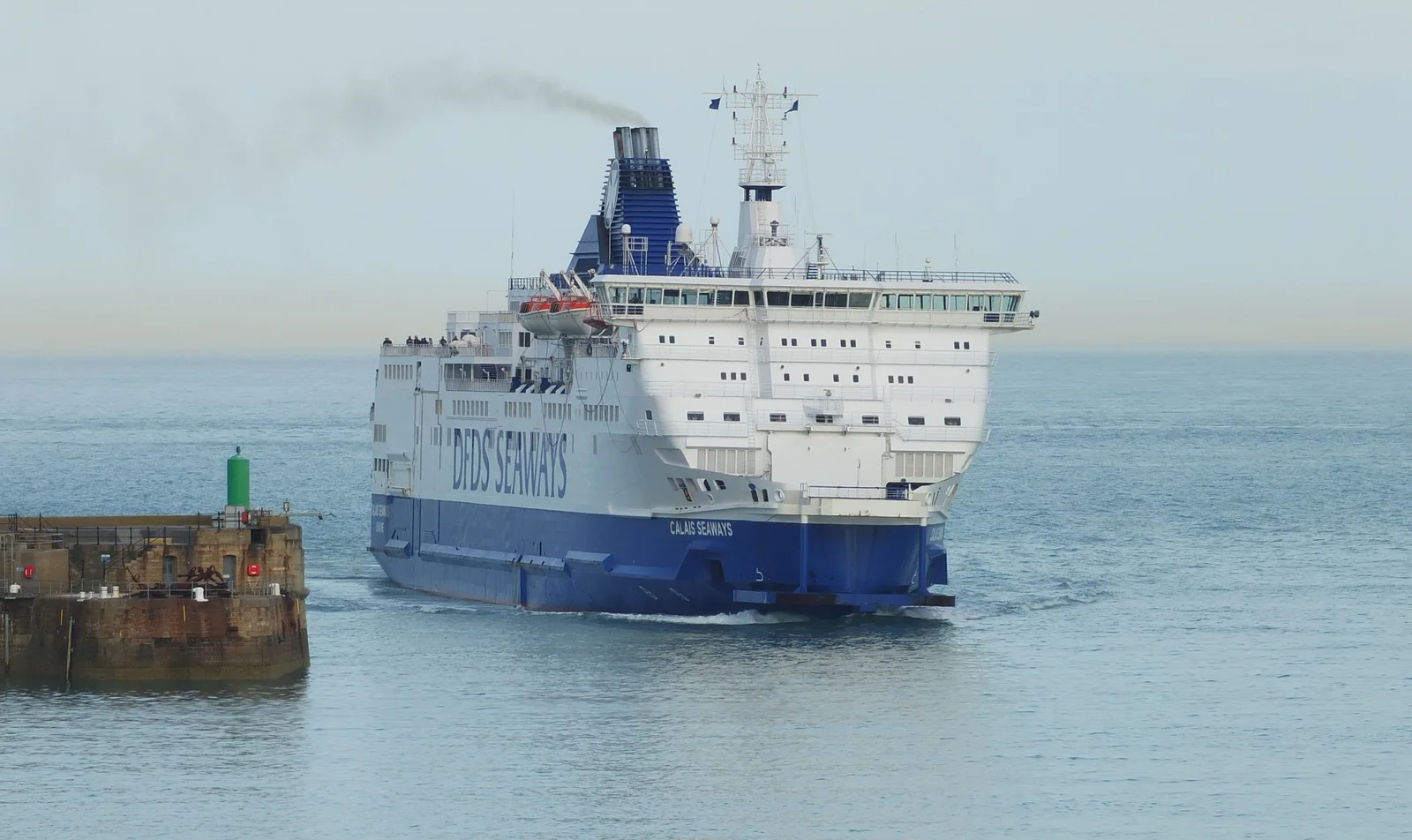
 (c) Ad Meskens / CC BY-SA 4.0
DFDS Ferry Routes: Complete Travel Guide & Network Overview
Where DFDS actually sails, how its crossings differ, and which one fits your trip — with the timetable and fares on the operator page.
By Serhat Özçelik, Founder & Editor of Ferry Schedule Hub· Published July 15, 2026· updated August 5, 2026
DFDS is one of Northern Europe's largest ferry and freight operators, connecting more than 20 countries across the UK, mainland Europe, Scandinavia and North Africa. If you've searched for its schedule or route map and landed on a page that didn't quite answer the question, here's the full picture: where DFDS sails, what its ships are like, and how to book a crossing.
Looking for departure times and fares? Those live on the DFDS operator page, with every route, crossing duration and price we hold. This guide is the other half of the question: which crossing to pick and what to expect on board.
What is DFDS?
Founded in Copenhagen in 1866, DFDS today describes itself as Northern Europe's leading transport provider, combining ferry services with road and rail logistics. The passenger-facing side of the business runs Ro-Pax ferries — ships that carry both vehicles and foot passengers — across five main regions: the English Channel and Ireland, the North Sea, the Channel Islands, the Baltic Sea, and the Strait of Gibraltar.
DFDS ferry routes: the full network
Cross-Channel and Ireland
DFDS's best-known routes link the UK and mainland Europe across the Dover Strait: Dover–Calais and Calais–Dover, plus Dover–Dunkirk and Dunkirk–Dover. A little further west, Newhaven–Dieppe and Dieppe–Newhaven offer a quieter alternative into Normandy. DFDS also runs a freight-and-passenger service linking Ireland directly to France on the Rosslare–Dunkirk route, bypassing the UK landbridge entirely.
North Sea
The Newcastle–Amsterdam (IJmuiden) route is DFDS's flagship overnight crossing, run as a mini-cruise as much as a transport link, with cabins, restaurants and entertainment on board for the roughly 15-and-a-half-hour sailing.
Channel Islands
DFDS also connects Jersey with the UK and France on Jersey–Poole, Jersey–Portsmouth and Jersey–St Malo routes, popular with day-trippers and holidaymakers.
Baltic Sea
In the Baltic, DFDS links Lithuania with Germany and Sweden on routes including Kiel–Klaipėda, Karlshamn–Klaipėda, Trelleborg–Klaipėda and Kapellskär–Paldiski — mostly overnight freight-and-passenger crossings that are far less known outside the region but carry substantial traffic.
Strait of Gibraltar
At the opposite end of the network, DFDS runs high-speed ferries across the Strait of Gibraltar on Algeciras–Tanger Med and Tanger Med–Algeciras, plus the shorter Algeciras–Ceuta and Ceuta–Algeciras crossing — a roughly one-hour hop with ten or more sailings a day between the two directions combined.
The DFDS fleet: ships and onboard life
DFDS's fleet varies a lot by route. The Dover–Calais crossing is served by a mix of UK- and French-flagged Ro-Pax ferries carrying 1,000–1,500 passengers and 250–400 cars, including Côte d'Opale, the newest and largest ship on the Channel. The Newcastle–Amsterdam route uses two purpose-built overnight ships, King Seaways and Princess Seaways, each with several hundred cabins and berths for well over a thousand passengers — proper cruise-ferry accommodation rather than just reclining seats. On the Strait of Gibraltar, DFDS runs faster, smaller high-speed ferries built for the short crossing time, with a Premium Class cabin option on some sailings.
Freight vs passenger routes
Not every DFDS route is meant for holidaymakers. A large part of the network is dedicated purely to freight — trucks, trailers and containers moving goods between the UK, the continent and Scandinavia — with no passenger service at all. The routes covered above are the ones that also carry foot passengers and cars; if you're researching DFDS as a traveller rather than a haulier, these passenger-and-vehicle routes are the ones that matter.
How to book a DFDS ferry
Bookings are made through DFDS's own website, where the "My Booking" area lets you view or amend a reservation at any time. On the shorter Channel and Gibraltar routes, fares are generally flexible: if you miss your booked sailing, you can usually still catch the ferry before or after it without penalty. Regional routes such as Algeciras–Ceuta can also be booked through DFDS sales points, by phone or via WhatsApp, and DFDS recommends checking in at least 48 hours ahead for those crossings. A valid passport is required for all UK–France and UK–Ireland sailings.
How often do DFDS ferries sail?
Frequency depends entirely on the route. Dover–Calais is the busiest, with up to 30 sailings a day in each direction at peak times. Newcastle–Amsterdam runs once daily each way, timed overnight. Algeciras–Ceuta is somewhere in between, with ten or more combined daily departures thanks to its short crossing time. Baltic routes typically sail overnight, once a day.
How much does a DFDS ferry cost?
DFDS doesn't publish a fixed price list — fares are dynamic and move with demand, season, vehicle size and how far ahead you book, the same way flight prices do. As a rough guide, DFDS has advertised Channel car fares from around €114 for a car and up to five people one way, and Jersey day-return foot-passenger fares from around £32, but treat these as illustrative starting points rather than current prices — always check the live fare on DFDS's own booking engine before planning around a number.
Planning your DFDS crossing
- Book vehicle space and cabins early in summer — the Newcastle–Amsterdam and Baltic overnight routes sell out cabins first.
- Check passport requirements before travelling on any UK route.
- On Gibraltar Strait routes, arrive with plenty of buffer — border checks on both sides can add time beyond the sailing itself.
- See the DFDS operator page for live schedules and fares on each route above.
Frequently asked questions
What ferry routes does DFDS operate?
DFDS runs ferry connections across Northern Europe, the Baltic and the Strait of Gibraltar, including Dover-Calais, Dover-Dunkirk, Newhaven-Dieppe, Newcastle-Amsterdam, Rosslare-Dunkirk, Jersey routes, four Baltic routes, and Algeciras-Tanger Med/Ceuta, alongside a larger freight-only network.
How does DFDS's ferry network connect different countries?
By linking key ports in the UK, France, the Netherlands, Ireland, the Channel Islands, the Baltic states and Scandinavia, and Spain, Morocco and North Africa, forming an integrated Ro-Pax and freight network across more than 20 countries.
What ships does DFDS use and how big are they?
The fleet ranges from short-crossing Ro-Pax ferries carrying 1,000-1,500 passengers, such as Côte d'Opale, to large overnight cruise ferries with cabins, King Seaways and Princess Seaways, to smaller high-speed ferries on the Strait of Gibraltar.
How often do DFDS ferries sail?
Frequency varies sharply by route: up to 30 daily sailings on Dover-Calais, one overnight sailing a day on Newcastle-Amsterdam, and ten or more daily departures on Algeciras-Ceuta.
How much does a DFDS ferry ticket cost?
Fares are dynamic and vary by route, season, vehicle and passenger count. DFDS advertises "from" fares, such as from around €114 per car on some Channel routes, but the final price depends on availability, so always check the live booking engine.
How do I book a DFDS ferry crossing?
Bookings are made through DFDS's website and My Booking portal, available 24/7, or by phone, WhatsApp or a sales point on some regional routes. Most fares let you catch an earlier or later sailing if you miss your booked departure.
Keep reading