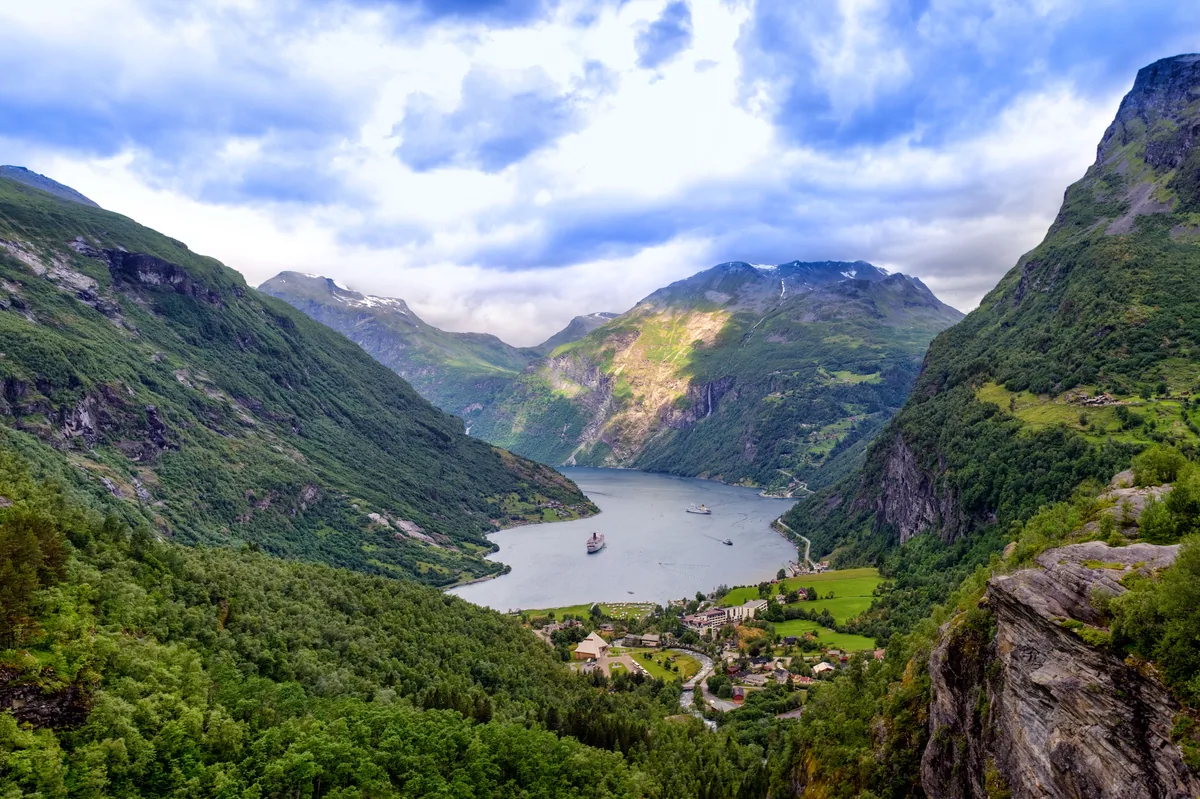
 (c) Andreas Trepte / CC BY-SA 2.5
Hurtigruten & Havila: Norway's Coastal Voyage (Bergen-Kirkenes)
How Norway's Bergen-Kirkenes Coastal Express works: Hurtigruten vs Havila, segments, cabins, seasons and practical tips.
By Serhat Özçelik, Founder & Editor of Ferry Schedule Hub· Published June 18, 2026
The Coastal Express: Norway's Working Voyage
For more than 130 years, a daily ship has threaded its way up and down Norway's coast, carrying mail, freight, locals and travellers between Bergen in the south and the Arctic town of Kirkenes near the Russian border. Known as the Coastal Express, this is not a conventional cruise that loops back to a single home port — it is a scheduled transport service that happens to pass through some of the most spectacular scenery on earth. Ships call at 34 ports along roughly 2,500 nautical miles of fjords, islands and open sea, and you can join for the full journey or just a single leg.
Today two companies share the route. Hurtigruten, the original operator, runs the heritage service with the larger fleet, while Havila Voyages entered the route in 2021 with a small fleet of brand-new low-emission ships. Together the two operators keep at least one northbound and one southbound departure leaving Bergen every single day of the year. This guide explains how the voyage works, how the two operators differ, and how to plan a trip that fits your time and budget.
How the Route Works
The voyage runs in two directions, and they are genuinely different experiences because the ships pass much of the scenery at opposite times of day:
- Northbound (Bergen to Kirkenes): About 7 days. This direction favours the western fjord country in daylight, with calls at Ålesund, Trondheim and, in summer, scenic detours into the Geirangerfjord or Hjørundfjord.
- Southbound (Kirkenes to Bergen): Around 6 days. This is the route for nature lovers heading home through the Arctic — the Lofoten Islands, the distinctive Torghatten mountain and the narrow Trollfjord are all highlights.
- Round trip: Roughly 11–12 days for the full Bergen–Kirkenes–Bergen circuit, which lets you see every stretch of coast in both daylight and the soft northern night.
Because the ships keep a fixed timetable, calls range from a few minutes — just long enough to load freight — to several hours in larger towns where you can step ashore and explore. The southern stretch out of Bergen toward Florø eases you into the rhythm of the coast, while legs such as Trondheim to Rørvik and Ørnes to Bodø carry you steadily into the north.
Hurtigruten vs Havila: Which to Choose
The route is identical, but the onboard experience is not. Choosing between the two operators comes down to the style of ship you prefer.
Hurtigruten operates the larger and more varied fleet of around seven ships, ranging from refurbished classics to modern vessels. It carries the heritage of the original service, has a wide spread of excursions at ports of call, and tends to have the broader choice of departure dates. Cabins span four broad categories, from compact inside cabins to sea-view suites.
Havila Voyages runs four identical, newly built sister ships fitted with LNG and large battery packs. They can sail on battery power alone through sensitive fjord areas, which makes for notably quiet, emission-free stretches. Standard sea-view cabins are generous for a working ferry, with a sofa, desk and modern bathroom, and dining is à la carte with table service rather than a buffet. If a quieter, newer ship with a strong environmental story appeals to you, Havila is the natural pick; if you want the widest choice of dates, excursions and ship styles, Hurtigruten has the edge.
Cabins, Deck Tickets and Segments
One of the most useful things to understand is that you do not have to book a multi-day cruise package. Both operators sell port-to-port (segment) tickets, which lets you treat the Coastal Express like a scenic ferry between two towns — for example riding just the Ålesund to Molde leg as part of a wider road trip. Segment fares can be booked with or without a cabin.
For overnight legs you can usually choose between a reserved cabin and a cheaper deck or seat option. A cabin is strongly recommended for any journey crossing the open stretches of Molde–Kristiansund or the exposed waters around Bodø, where a quiet bed makes a real difference. Our guide to overnight ferries — cabins, seats and sleeping aboard explains the trade-offs in detail.
When to Travel
The Coastal Express runs all year, and the season shapes the experience entirely:
- Summer (June–August): The midnight sun north of the Arctic Circle, green landscapes and the longest port calls. This is peak season, so book well ahead.
- Autumn and winter (October–March): The best window for the northern lights, especially on the Arctic legs, plus dramatic snow-covered scenery and lower fares on many departures.
- Spring (April–May): Long days return, waterfalls run at full force from the snowmelt, and crowds are thinner than in high summer.
Life Onboard and Going Ashore
The Coastal Express is deliberately understated compared with a big ocean cruise. There are no casinos or West End shows; instead the draw is the view, which changes hour by hour as the ship moves between sheltered sounds, open crossings and tight fjord arms. Public lounges with panoramic windows, an open observation deck and a restaurant or bistro make up most of the social space. Meals lean heavily on Norwegian produce — seafood, game and local cheeses — and on Havila ships the dining is à la carte, while Hurtigruten typically runs a buffet for breakfast and lunch with served dinners.
Because this is a working transport line, the longer port calls double as built-in shore excursions. In Trondheim you can walk to the medieval Nidaros Cathedral; in Ålesund the Art Nouveau town centre and the Aksla viewpoint are within easy reach; and further north the calls at Bodø put you within striking distance of the Lofoten gateway. Optional paid excursions — dog-sledding, fjord safaris, city tours — can be added at many ports, but simply walking off the ship during a long call costs nothing and is one of the quiet pleasures of the voyage.
Practical Tips for the Coastal Voyage
- Book early for summer and for cabins: Popular northbound summer sailings and the best cabins sell out months ahead. Winter northern-lights departures are also in high demand.
- Decide segment vs full voyage first: If you only want a taste, a one- or two-night segment between major towns delivers the scenery at a fraction of the cost of the full circuit.
- Pack layers and a windproof outer shell: Even in summer the open deck is cool and breezy, and weather changes fast along the coast. See our ferry packing checklist before you go.
- Watch the timetable for short calls: Some ports are only a few minutes long. Listen for announcements and never wander far unless the call is clearly a long one.
- Build the voyage into a wider plan: The Coastal Express pairs naturally with shorter fjord crossings and car ferries elsewhere in the country — our Norway by ferry guide covers the full network, and you can browse every connection on our Norway ferries hub.
Whether you sail the whole Bergen–Kirkenes line or hop aboard for a single overnight leg, the Coastal Express remains one of the most rewarding ways to experience Norway — a moving window onto a coastline that few other journeys can match.
Frequently asked questions
How long is the Hurtigruten / Coastal Express voyage?
The northbound trip from Bergen to Kirkenes takes about 7 days, the southbound trip about 6 days, and the full round voyage roughly 11 to 12 days. You can also book shorter port-to-port segments lasting a few hours to a couple of nights.
What is the difference between Hurtigruten and Havila?
Both sail the same Bergen-Kirkenes route with daily departures. Hurtigruten has the larger, more varied fleet of about seven ships and the widest choice of dates and excursions. Havila runs four newer LNG-battery hybrid ships that sail quietly on battery power through fjords, with spacious sea-view cabins and a la carte dining.
Can I book just one segment instead of the whole cruise?
Yes. Both operators sell port-to-port segment tickets, so you can ride a single leg between two towns like a scenic ferry, with or without a cabin. This is the cheapest way to experience the route if you do not want the full multi-day voyage.
How many ports does the Coastal Express call at?
The ships call at 34 ports between Bergen and Kirkenes, covering around 2,500 nautical miles. Some calls are only a few minutes for freight, while larger towns such as Trondheim, Tromso and Bodo allow time to step ashore.
Do I need a cabin or can I travel on deck?
For short daytime legs a deck or seat ticket is fine. For overnight legs a cabin is strongly recommended, especially across open stretches, so you can rest properly. Cabins range from compact inside rooms to sea-view suites.
When is the best time to sail for the northern lights?
Autumn and winter, roughly October to March, offer the best chance of seeing the northern lights on the Arctic legs of the route. Summer brings the midnight sun and the longest port calls instead.
Keep reading