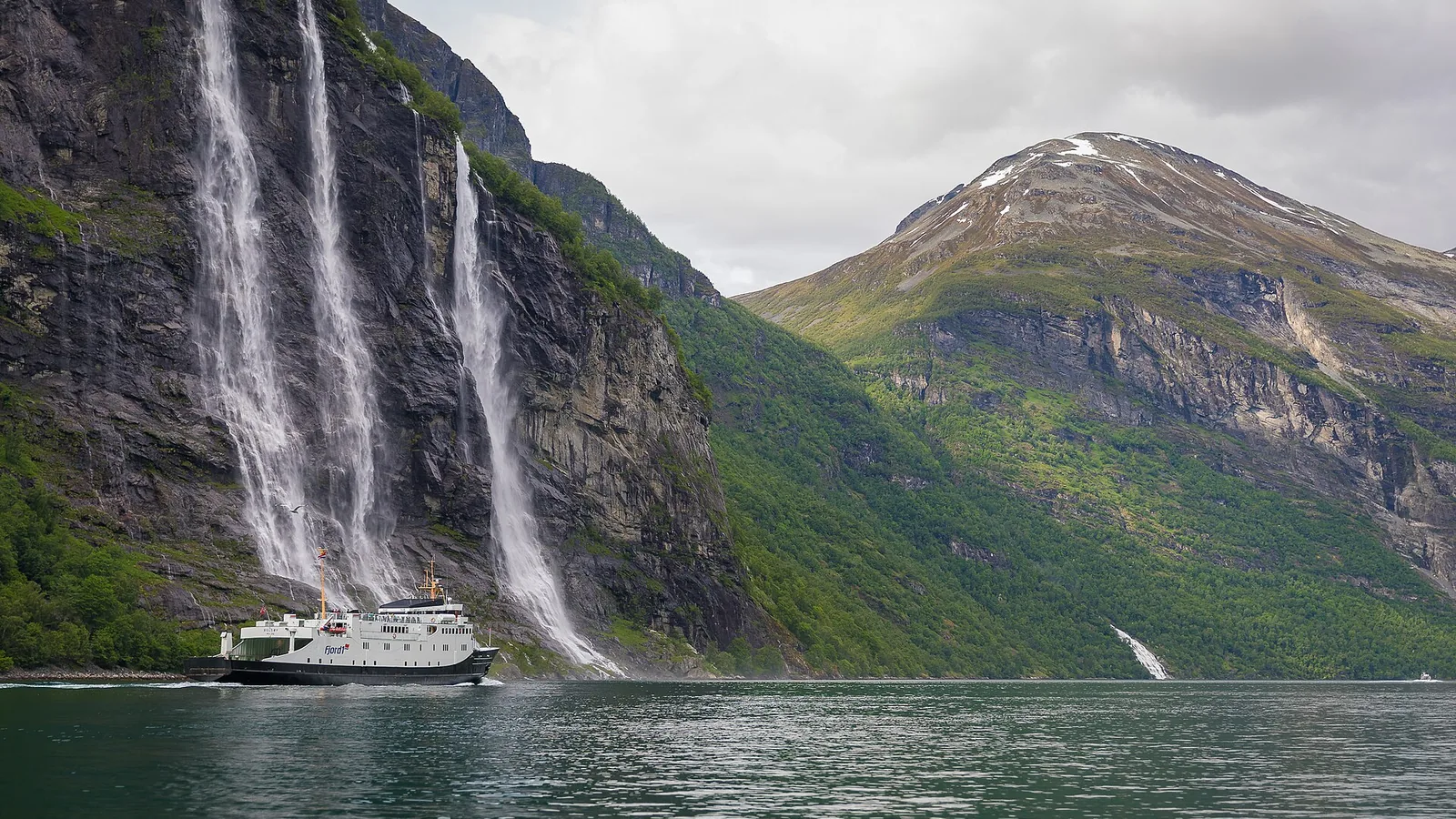
 (c) Svein Magne Tunli / CC BY-SA 4.0
Are Ferries Free in Norway? The 2026 List of Free Routes (and the New Summer Fares)
Yes, many low-traffic and island ferries are free in Norway, but three counties reintroduced summer vehicle fares for 2026. Here is the current picture.
By Serhat Özçelik, Founder & Editor of Ferry Schedule Hub· Published July 13, 2026· updated July 20, 2026
Short answer: some Norwegian car ferries are genuinely free, but far fewer than travel rumours suggest, and the rules changed again for 2026. Since a national reform that rolled out in 2022 and 2023, a defined group of low-traffic and island ferry connections carry vehicles at no charge, and foot passengers ride free on virtually every ferry in the public road network. The twist for 2026 is that three counties, Nordland, Trøndelag and Møre og Romsdal, have brought back a summer vehicle fare on many of these previously free routes, while Troms kept its ferries free year-round. This guide explains exactly which ferries are free, the national criteria behind the scheme, who rides free versus who pays, how the new summer fares work, and how it all connects to AutoPASS.
The two national criteria for free ferries
The free-ferry scheme was a political decision by the Norwegian government (Stortinget) funded through the national budget, and it targets two clearly defined categories of route rather than the whole ferry map.
- Island and community connections without a road link. Ferries that are the only way to reach an island or settlement with no road connection to the mainland became free. This category came into force from 1 July 2022. The logic is that these crossings function like a stretch of road for the people who live there, so charging a fare is effectively a tax on being reachable.
- Low-traffic connections. Ferry routes that carried fewer than 100,000 passengers in the 2019 reference year became free from 16 August 2023. These are the quiet, often rural links that the state judged cheap enough to subsidise fully.
Because both criteria favour small and remote crossings, the free ferries are a minority of Norway's roughly 130 connections, and they rarely sit on the busy main arteries tourists use most. The high-volume backbone routes, such as the big fjord crossings on the E39 coastal highway, still charge vehicle fares. If you want the mechanics of how those paid crossings are billed, see our companion guide to ferry prices in Norway and how AutoPASS billing works.
Who rides free: vehicles, drivers and foot passengers
It is important to separate two different things that both get called "free".
- Foot passengers and cyclists ride free almost everywhere. As part of the reform, passenger fares were removed across the national road-ferry network. Whether you walk on, cycle on, or sit as a passenger inside a car, the person is not charged. This applies even on the big paid routes: the vehicle pays, the people inside do not.
- Vehicles ride free only on the designated free routes. On a route that qualifies under the two criteria above, the car (or camper, van or lorry) and its driver cross at no charge. On every other route, the vehicle is billed by length, and only the passengers travel free.
So on a genuinely free connection, everyone and everything crosses for nothing. On a paid connection, the metal pays and the humans do not. That distinction is the single most common source of confusion for visitors, who often hear "Norway made its ferries free" and assume it covers the fjord crossing on their planned road-trip route. In reality the headline reform was about small links and about people, not about the big vehicle-carrying arteries.
The 2026 change: summer fares are back on many free routes
Here is the fresh development for 2026, and the reason a simple yes/no answer no longer works. The fully free scheme worked so well that some routes filled with leisure and tourist traffic, straining capacity that was sized for local commuters. In response, three counties reintroduced a summer vehicle fare on routes that are otherwise free, using a "pay first, then free" model aimed at protecting locals while charging occasional visitors. Passengers still travel free in every case; only vehicles are affected.
| County | Summer fare period (2026) | How the vehicle fare works |
|---|---|---|
| Nordland | 1 May – 31 August | Vehicles pay for the first six trips on a given connection; from the seventh trip on the same connection it is free for the rest of the summer. Foot passengers stay free. |
| Trøndelag | 1 June – 31 August | Summer fare on all ferries. On normally free routes, vehicles pay the first four trips on the same route; already-paid routes get a summer surcharge. |
| Møre og Romsdal | May – August | Summer fare on all connections for vehicles; anyone making at least four trips on the same route within 90 days is exempt. |
| Troms | No summer fare | Its small island ferries stay free year-round. |
The practical upshot for travellers is blunt. The "free from the fifth, seventh or fifth trip" thresholds are designed for commuters who cross the same water daily. As a tourist crossing a route once or twice, you will almost always fall inside the paid window and pay the fare. A striking example is the seasonal Svolvær–Skrova–Skutvik connection in Nordland, which only sails from June to the end of August, precisely inside the summer-fare window, so despite being a "free" route on paper it is effectively a paid crossing in practice for 2026.
One more housekeeping note from the county rules: cash paid on board is not counted toward the free-trip threshold. To accrue trips and eventually cross free, the vehicle has to be registered through an AutoPASS or FerryPay agreement, which we return to below.
A practical 2026 list of free (or normally free) routes
Below is a representative sample of connections in the free-ferry scheme, drawn from the official AutoPASS for ferry route list. Treat routes in Nordland, Trøndelag and Møre og Romsdal as "free outside the summer window, paid for vehicles during it", and routes in other counties (notably Troms) as free year-round.
- Troms (free year-round): Hansnes–Karlsøy–Vannøy, Belvik–Vengsøy, Rotsund–Havnnes–Uløybukt.
- Nordland (free, except summer vehicle fare): Horn–Igerøy, Nesna–Nesnaøyene, Svolvær–Skrova–Skutvik.
- Møre og Romsdal (free, except summer vehicle fare): Molde–Sekken, Arasvika–Hennset, Festøya–Hundeidvika.
- Rogaland (free year-round): the Finnøy connections, Haugesund–Utsira, and Hjelmeland–Nesvik–Skipavik on national road 13.
- Vestland (free year-round): Kinsarvik–Utne, Masfjordnes–Duesund, and several small island links such as Askvoll–Værlandet.
- Agder: Abelnes–Andabeløy.
This list is not exhaustive and it does change. Individual routes are added, and occasionally payment is reinstated: for instance Krokeide–Hufthamar in Vestland had payment reintroduced from 1 November 2025. Always confirm a specific crossing against the live official overview before you rely on it, and if you are mapping a longer route, our regional guide to Norway's ferry network shows how the free and paid links fit together region by region.
How AutoPASS interacts with free and summer-fare ferries
AutoPASS for ferry (AutoPASS ferje) is Norway's national ferry billing and discount system, and it matters even where ferries are "free".
- On genuinely free routes, you do not need to pay anything and there is no fare to discount. You can simply drive on. Registering the vehicle still helps if the route later moves into a summer-fare scheme, because that is how your trips are counted.
- On paid routes and during summer fares, AutoPASS gives real savings. A prepayment (advance) account gives private customers roughly a 50% discount and businesses about 40% off the standard vehicle fare; an AutoPASS chip without prepayment gives a smaller discount, and paying on board gives none. For 2026, the prepayment balance is around NOK 2,200 for vehicles up to 8 metres (most cars, vans and campers). It is not a fee, it is a topped-up balance drawn down at the discounted rate after each crossing.
- For the summer free-trip thresholds, your crossings only accumulate toward "free from trip N" if the vehicle is identified electronically through an AutoPASS or FerryPay agreement. Cash on board does not count. So registering is what unlocks the free portion for commuters.
If you are deciding between a physical ferry card and an in-car transponder for that discount, our explainer on the AutoPASS ferry card versus the brikke transponder walks through which suits a visitor best.
Bottom line for 2026
Ferries in Norway are partly free. Foot passengers and cyclists ride free across the national road-ferry network. A defined set of island and low-traffic routes carry vehicles free too, thanks to the 2022 and 2023 reforms. But for 2026 the picture is genuinely in flux: Nordland, Trøndelag and Møre og Romsdal have layered a summer vehicle fare on top of their free routes, so tourists crossing once or twice in June, July or August will usually pay, while Troms and most other counties stay free. Because counties can and do adjust these rules each season, verify any specific crossing on the official AutoPASS for ferry route list close to your travel date rather than assuming a route is free.
How to check whether your Norwegian ferry is free
- Find your crossing and county. Free status is decided per county (fylke): ferries in Troms run free all year, while most crossings in Nordland, Trøndelag and Møre og Romsdal are free outside the summer months.
- Check the season. From 1 May to 31 August 2026, several counties charge a vehicle fare for the first six trips per crossing, after which that crossing is free again for the rest of the summer.
- Foot passengers always ride free. You never pay to walk aboard a public road ferry, whatever the vehicle rules.
- If a vehicle fare applies, know how you will pay. Charges are settled through an AutoPASS ferry agreement, with FerryPay, or by card on board — your number plate is read automatically as you drive on.
- Zero-emission vehicles pay less. Where a fare does apply, electric cars are charged a reduced rate.
Check live times and fares
Free-ferry lists and summer schemes shift from year to year, so confirm the current position against the operators themselves. Reis Nordland and AtB in Trøndelag both publish every crossing, and you can browse the whole network from the Norway ferry hub. As a concrete example, the busy Flakk–Rørvik crossing lists its timetable and vehicle fare in full.
On this page
- The two national criteria for free ferries
- Who rides free: vehicles, drivers and foot passengers
- The 2026 change: summer fares are back on many free routes
- A practical 2026 list of free (or normally free) routes
- How AutoPASS interacts with free and summer-fare ferries
- Bottom line for 2026
- How to check whether your Norwegian ferry is free
- Check live times and fares
Frequently asked questions
Keep reading