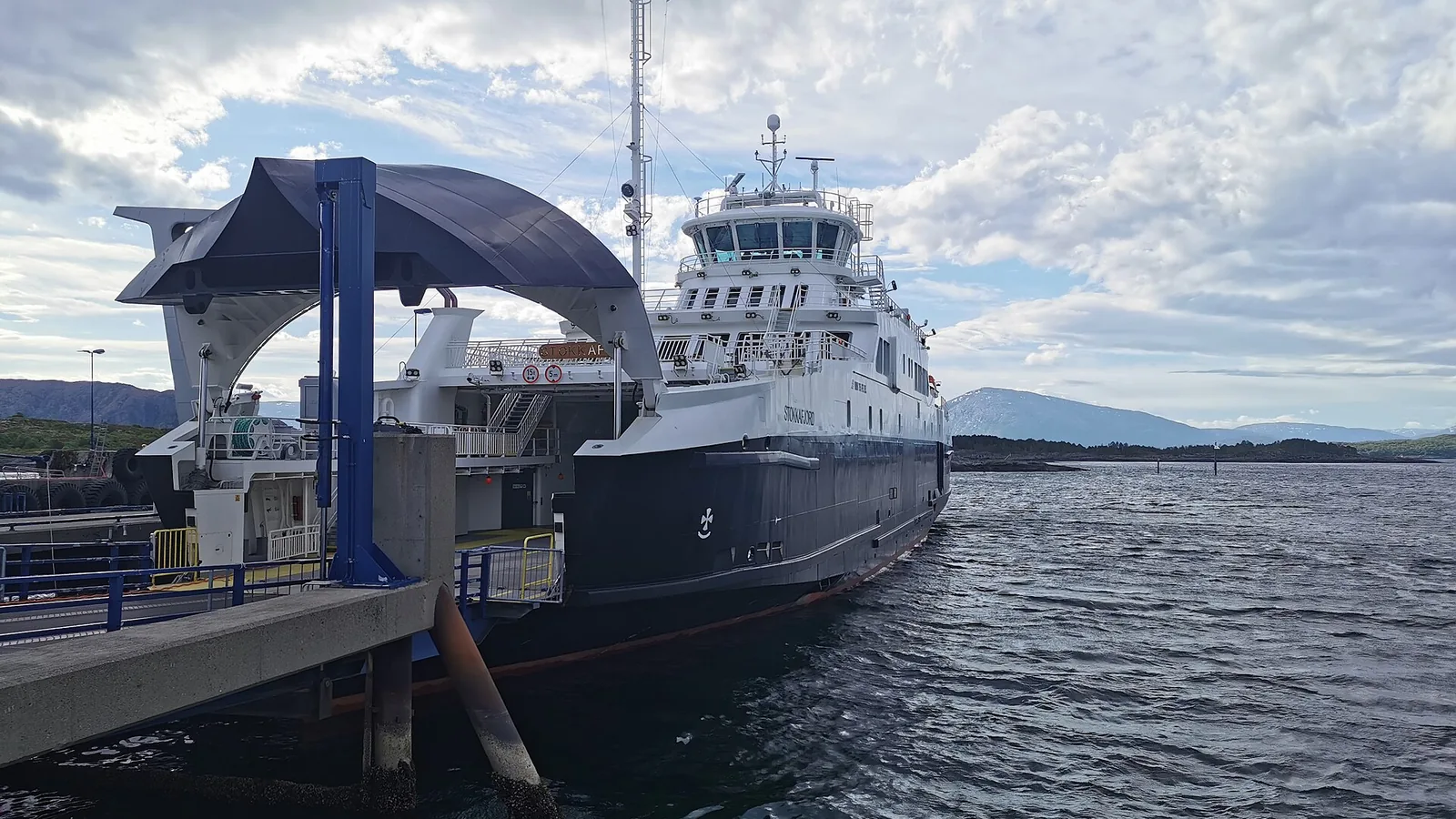
 (c) Wolfgang Hägele / CC BY-SA 4.0
AutoPASS for Ferry in Norway: Ferjekort vs Brikke — Which You Actually Need (2026)
The ferry card and the toll tag are not two rival products — one runs on top of the other. Here is which you actually need in 2026.
By Serhat Özçelik, Founder & Editor of Ferry Schedule Hub· Published July 13, 2026
Ask around before a Norwegian road trip and you will hear two words thrown about as if you must choose between them: ferjekort (the ferry card) and brikke (the toll tag or transponder). Most guides frame it as a contest. It is not. In the 2026 AutoPASS for ferry scheme, one of these is the hardware and the other is a prepaid account that runs on top of it — and whether you need the account at all depends entirely on how many crossings your route contains.
This guide separates the two cleanly, gives the real discount logic (10% versus up to 50%), lists the prepayment deposit thresholds set by the Norwegian authorities, and tells you exactly which setup to arrange for a multi-ferry road trip, a single crossing, a rental car, or a foot passenger. Everything below is checked against the official operator site, autopassferje.no.
Ferjekort vs brikke: what the two words really mean in 2026
The confusion is historical. Until around 2020, a ferjekort was a physical value card or frequent-user card you topped up and swiped at the ramp. That old card has been retired — autopassferje.no states plainly that ferry cards are "phased out as a means of payment and no longer in use." So if a forum post tells you to "buy a ferjekort," that advice is out of date in its literal sense.
What replaced it is a two-layer system:
- The brikke (AutoPASS tag) is the small electronic transponder that sticks to your windscreen — the same device used for Norwegian toll roads and bridges. It is registered to one vehicle's number plate. This is the hardware.
- The AutoPASS for ferry prepayment agreement — what people now loosely call the "ferjekort" — is a prepaid ferry account you open online. It is not a card and not a device; it is a layer that attaches to your brikke and unlocks the deep discount.
So the honest answer to "ferjekort or brikke?" is: you always need the brikke, and the prepayment account is an optional upgrade sitting on top of it. They are not either/or. The real decision is whether to bother opening the account.
Product 1: the AutoPASS ferry prepayment account (the modern "ferjekort")
This is the setup that saves serious money. You register your AutoPASS-approved tag in a prepayment agreement at autopassferje.no, pay an advance deposit, and receive an AutoPASS ferry account. From then on, the tag is read automatically as you drive aboard and the discounted fare is deducted from your prepaid balance. No queuing, no card, no invoice.
The discount is tiered by customer type:
- Private customers: 50% off the ferry fare. You may register up to two vehicles under one account.
- Business customers: 40% off. You supply an organisation number and can link an unlimited number of vehicles.
For electric vehicles, this prepayment discount stacks on top of the existing EV ferry discount — a genuinely large saving on long fjord crossings. The scheme covers most of Norway's ferry connections; the known exceptions are some routes in Trøndelag and the Moss–Horten crossing (Bastø Fosen), which needs its own separate arrangement. For the full fare mathematics and worked examples, see our companion piece on ferry prices in Norway and how AutoPASS discounts are calculated.
Product 2: the brikke on its own — the automatic 10%
If you already own an AutoPASS-approved toll tag but never open a ferry account, you are not left at full price. Driving aboard with a valid tag earns an automatic 10% discount, with no setup and no deposit. The crossing is simply read against your existing tag agreement and billed by your toll-tag issuer (for example SkyttelPASS) on your normal toll invoice.
This is the effortless middle option. It is worth understanding the gap, though: 10% versus up to 50% is the difference between a token saving and half-price travel. On a single short hop the gap is a few kroner; across a week of west-coast fjord crossings it can be hundreds. The operator itself nudges tag-only users to register the account "to receive a 40–50% discount instead of 10%."
Prepayment deposit thresholds (2026)
Opening the account requires an advance deposit, and the amounts are fixed by the Norwegian authorities by vehicle length, not chosen by you. It is prepaid credit, not a fee — it is drawn down as you travel and can be refunded when you close the account.
| Category | Vehicle | Advance deposit |
|---|---|---|
| Category 1 | Motorcycles and vehicles 0–8 m | NOK 2,200 |
| Category 2 | Vehicles 8.01–17.50 m | NOK 10,600 |
| Category 3 | Vehicles 17.51 m and over | NOK 20,100 |
For an ordinary car or camper under eight metres, that is a NOK 2,200 float. If your trip includes only one or two short crossings, tying up that deposit rarely pays off versus the automatic 10% or FerryPay.
FerryPay and the "do nothing" invoice — for people with no tag
Not everyone carries a Norwegian toll tag — foreign-registered cars usually do not. For them the scheme offers two more routes:
- FerryPay: register your number plate and a credit or debit card in advance at ferrypay.no. Your plate is read on boarding and your card is charged one full-price ticket per crossing. There is no discount, but no invoice and no invoice fee — the receipt lands in your email. You can add as many vehicles as you like, including cars you do not own. This is the tidy choice for a foreign or rental car doing a handful of crossings.
- Do nothing (plate invoice): if you have no tag, no account and no FerryPay, your plate is still photographed and you are posted an invoice for the full fare plus a NOK 35 (incl. VAT) invoice fee. Foreign vehicles are billed through EPASS24. This is the most expensive way to cross and the easiest to avoid.
On staffed crossings you can also still pay onboard, but many national road ferries now run cashless and unmanned, so relying on that is risky.
Which one you actually need — by traveller type
| Your situation | Best setup | Why |
|---|---|---|
| Multi-crossing Norwegian road trip (car/camper) | Prepayment account + brikke | 50% off pays back the NOK 2,200 float within a few fjord crossings |
| Single or occasional crossing, own a tag | Brikke only (10%) | Automatic, zero admin, no deposit tied up |
| Foreign car, no Norwegian tag | FerryPay (or account if many ferries) | Full price but no invoice fee; account worth it above ~5–6 crossings |
| Rental car | Usually the rental firm's AutoPASS (or your own account) | Rental cars come pre-registered; passes are billed to you, no discount |
| Foot passenger | Nothing to arrange | Passengers travel free on national road ferries — you pay for the vehicle |
Multi-ferry road trips
If your itinerary threads the fjord country — think the classic west-coast runs where a single day can involve three or four crossings — open the prepayment account before you leave. The 50% private discount repays the NOK 2,200 deposit within a handful of crossings, and the deposit is refundable. Plan the crossings themselves with our regional guide to Norway's ferry network.
Single crossings and foot passengers
For a one-off hop, skip the account. If you own a tag, the automatic 10% applies with no effort; if not, FerryPay avoids the invoice fee. And if you are crossing on foot, on a bike, or as a car passenger, arrange nothing at all — passengers ride free on the state-subsidised national road ferries, and you only ever pay for the vehicle. (A minority of county and fjord tourist routes do charge a separate foot-passenger ticket.) We cover the free-travel rules in detail in are ferries free in Norway?
Rental cars and foreign vehicles
A Norwegian rental car already has AutoPASS registered by the hire company, which passes toll and ferry charges on to you — typically at full price with no ferry discount. If your rental trip is ferry-heavy, you can register the rental's number plate in your own AutoPASS for ferry account for the rental period and claim the 50% back. Foreign vehicles can also join the scheme through EasyGo, the joint toll network spanning Norway, Sweden, Denmark and Austria, which covers well over 130 Norwegian car-ferry routes on a single tag. Always confirm with your rental agreement first, so you are not paying twice.
The bottom line
Stop thinking of ferjekort versus brikke as a fork in the road. The brikke is the tag every Norwegian toll and ferry payment ultimately reads; the "ferjekort" is now the prepaid account you bolt onto it for the big discount. Carry a tag and you automatically save 10%. Open the account and you save up to 50% — worth it the moment your route holds more than a crossing or two. Have no tag at all? FerryPay keeps you at full price but invoice-free, while doing nothing costs you full price plus a NOK 35 fee. Match the setup to your route, not to the jargon.
On this page
- Ferjekort vs brikke: what the two words really mean in 2026
- Product 1: the AutoPASS ferry prepayment account (the modern "ferjekort")
- Product 2: the brikke on its own — the automatic 10%
- Prepayment deposit thresholds (2026)
- FerryPay and the "do nothing" invoice — for people with no tag
- Which one you actually need — by traveller type
- The bottom line
Frequently asked questions
Keep reading