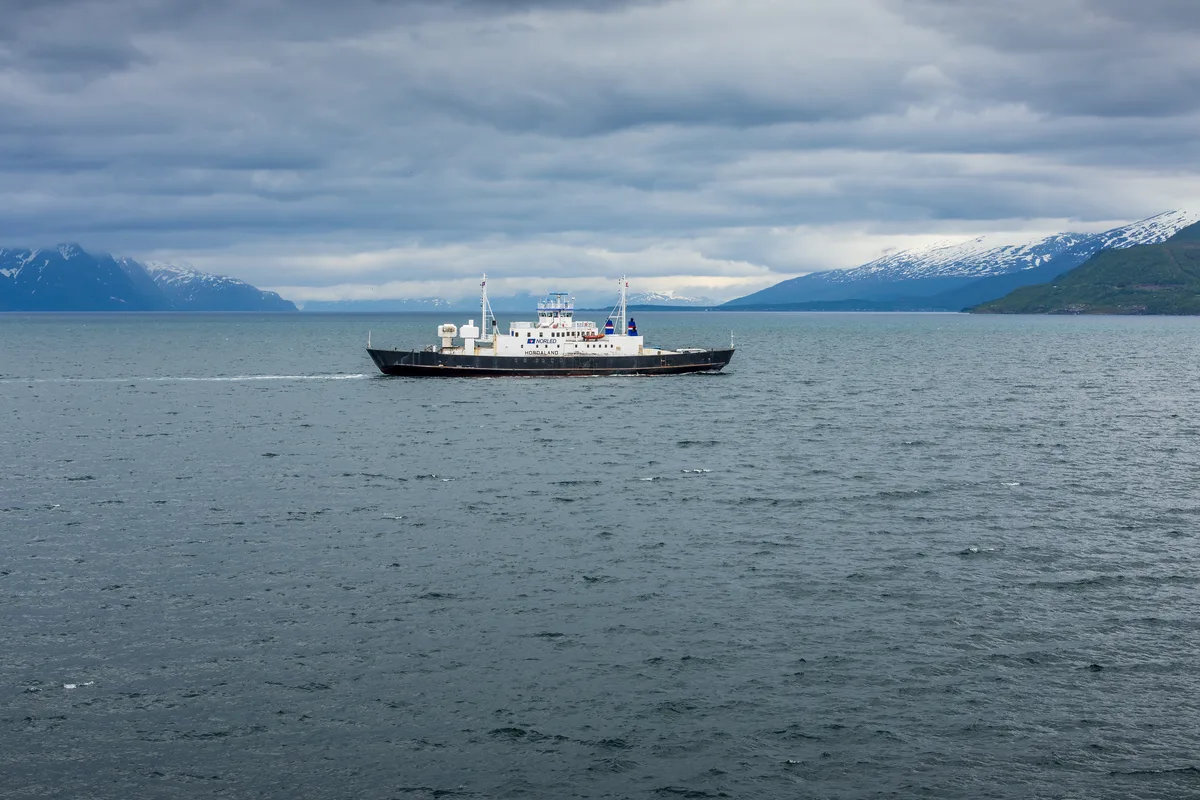
 (c) Ximonic (Simo Räsänen) / CC BY-SA 4.0
Ferry Prices in Norway: AutoPASS, Free Crossings & How Payment Works
Norway's road ferries bill your number plate automatically, discount prepaid AutoPASS accounts and carry foot passengers free. Here is how the pricing system works, including rental cars and foreign plates.
By Serhat Özçelik, Founder & Editor of Ferry Schedule Hub· Published July 4, 2026· updated July 21, 2026
Norwegian car ferries are not really a travel product; they are floating stretches of road. Dozens of crossings on the E39 and the fjord highways exist purely because building a bridge or tunnel would be impossible or absurdly expensive, and the state prices them accordingly — like road tolls, collected automatically, with no ticket office in sight. That system, called AutoPASS, baffles many first-time visitors, so it pays to understand it before your hire car rolls onto its first ferry deck.
How AutoPASS ferry payment works
On most road ferries you simply drive aboard. Cameras and roadside readers record your number plate (or your AutoPASS tag, if the vehicle carries one), the crossing is logged, and the bill finds its way to the vehicle's registered keeper afterwards. There is no barrier, nobody waves a card machine at your window on major routes, and you cannot pay cash. For residents and frequent users, the real value lies in the AutoPASS ferry agreement (AutoPASS for ferje): load an advance payment onto a ferry account linked to your plate and crossings are discounted substantially — the standard scheme has offered up to a 50 per cent reduction for light vehicles, which is why locals treat the account as key rather than optional.
Foot passengers and cyclists travel free
A quiet revolution arrived when Norway abolished fares for pedestrians and cyclists on road ferry crossings, a reform completed in 2023. Walk or wheel your bike aboard a fjord ferry today and nobody will ask you for anything. Passengers travelling inside a vehicle are likewise no longer charged separately on these routes: the fare attaches to the vehicle alone. For backpackers and cycle tourists this transforms the economics of exploring the fjords, since the ferries that once nibbled at a daily budget now cost nothing at all. One caveat for the 2026 season: while the national free-foot-passenger scheme remains the rule, a handful of small, low-traffic routes have reintroduced a passenger charge on a trial basis — the seasonal Andenes–Gryllefjord crossing, for example, now bills foot passengers aged 30–66 — so check the individual route before assuming a walk-on is free.
Vehicle length decides the price
Car fares are banded by overall length, not by the number of people inside. A standard car under six metres pays the base light-vehicle rate; add a roof box overhang, a trailer or a caravan and you slide into a longer, pricier band, with motorhomes and vehicles over six metres paying progressively more. Measure your full combination honestly — length is checked by camera — and note that electric vehicles, once heavily discounted, are now charged much closer to petrol and diesel rates as Norway has wound those incentives down.
Tourists, foreign plates and rental cars
Visitors driving foreign-registered vehicles are billed through international plate-recognition partners, with an invoice arriving by post or email weeks after the trip; registering your plate and a payment card with the Norwegian ferry payment services in advance keeps the process smooth and avoids surcharges. In a rental car, the crossing is charged to the hire company as the registered keeper, which then passes the cost to you, sometimes with an administration fee — worth asking about at the rental desk. Either way, never wait on the quay looking for a booth: on plate-billed routes you just drive on, and on the handful of crossings where staff still sell tickets, cards are accepted and cash generally is not.
Budgeting for a fjord road trip
Because each individual crossing is priced like a toll rather than a voyage, ferry costs sneak up on drivers touring the west coast: a two-week loop through the fjords can easily involve a dozen crossings, and the invoices arrive as one accumulating stream rather than a series of visible purchases. When planning, count the ferry legs on your intended roads — routing tools mark them clearly — and remember that a longer inland detour via a bridge or tunnel sometimes exists but usually burns more fuel and time than the crossing saves. Motorhome travellers should budget more per crossing than car drivers, since the length bands bite hardest on vehicles over six metres.
Hurtigbåt: the separate express-boat system
Do not confuse the car ferries with the hurtigbåt, the fast passenger catamarans that link coastal towns and islands. These are conventional public transport run under county authority: you buy a ticket from the operator or county app, fares are per person, and AutoPASS plays no part. The same applies to the Hurtigruten and Havila coastal ships, which are commercial voyages with their own pricing entirely. Free pedestrian travel applies to the road ferries, not to these services.
What this looks like on real routes
The mechanics above cover almost every crossing listed on our Norway ferries page. On the E39 trunk road, the busy Lavik to Oppedal shuttle across the Sognefjord is pure AutoPASS: drive on, drive off, billed by plate. The long Bodø to Moskenes sailing into the Lofoten islands follows the same plate-based model for vehicles — though summer demand means drivers should check reservation options — while foot passengers board free. And on the spectacular Hellesylt to Geiranger run through the UNESCO fjord, tourist-oriented pricing applies because it functions as a sightseeing service as much as a road link. Check each route page for current schedules, then let the cameras do the paperwork.
See it on a real crossing
Every Norwegian operator lays out its crossings, vehicle fares and AutoPASS status on its own page. Two good places to start are Reis Nordland, which covers the Nordland coast, and AtB in Trøndelag — or browse the full picture from the Norway ferry hub.
Frequently asked questions
How do I pay for car ferries in Norway?
On most road ferries payment is automatic: cameras read your number plate as you drive aboard and the registered keeper is invoiced afterwards. There are no ticket booths on major routes and cash is not accepted. Residents and frequent users cut costs with a prepaid AutoPASS ferry agreement.
Are Norwegian ferries free for foot passengers?
Mostly yes. Following a national reform completed in 2023, pedestrians and cyclists travel free on Norway's road ferry crossings, and passengers inside a vehicle are not charged separately either. From the 2026 season, however, a few small low-traffic routes (such as Andenes–Gryllefjord) have reintroduced a passenger charge for certain age groups, so check your specific route. Express passenger boats (hurtigbåt) and the Hurtigruten coastal ships still charge per-person fares.
How does ferry payment work with a rental car in Norway?
Crossings are billed to the rental company as the vehicle's registered keeper, which then charges them to you, sometimes adding an administration fee. Ask the rental desk how ferry and toll charges are handled before you set off - you do not need to do anything at the ferry itself.
What is the AutoPASS ferry discount?
The AutoPASS for ferje scheme lets you prepay into a ferry account linked to your number plate, discounting crossings by up to around 50 per cent for light vehicles under the standard agreement. It is aimed at residents and frequent users but can be worth setting up for a long driving holiday.
Do I need to book Norwegian car ferries in advance?
Usually not - most road ferries are turn-up-and-drive shuttles running at high frequency. Booking or arriving early matters on a few long or seasonal crossings, such as the Bodø to Moskenes route to Lofoten in summer, where vehicle deck space can run out.
Do I need an AutoPASS ferry card to travel in Norway?
No card is strictly required. On most Norwegian road ferries a camera reads your number plate and the vehicle's registered keeper is billed automatically, so you can simply drive aboard. An AutoPASS ferry card (AutoPASS ferjekort) is optional — it links your plate to a prepaid account and gives a discount of up to 50% on many routes, which is worth it for residents and frequent travellers.
How do I pay for a ferry in Norway as a foreign visitor?
You usually do nothing at the ferry itself: the number-plate camera registers your car and an invoice is later sent to the vehicle's owner. For a foreign or rental car, the toll/ferry charge is typically settled through the rental company or the EPC/Euro Parking Collection system that handles foreign plates. Registering the plate in an AutoPASS ferry account before you travel avoids surprises and unlocks the discount.
Are ferries in Norway free?
Some are. Foot passengers travel free on many Norwegian county (fylkeskommune) ferries, and since 2023 a number of small-community and island-lifeline car-ferry routes have been made completely free for everyone under national and county schemes. On the larger mainland crossings, cars still pay an AutoPASS-based fare while walk-on passengers are often free.
Do electric cars pay less on Norwegian ferries?
Yes, on many routes. Zero-emission cars have long received a reduced ferry fare in Norway (historically up to around 50% off the equivalent fossil-car price), part of the country's EV incentives. The exact discount is set per route and county, so check the specific crossing, but an electric car is generally cheaper to bring aboard than a petrol or diesel one.
Keep reading