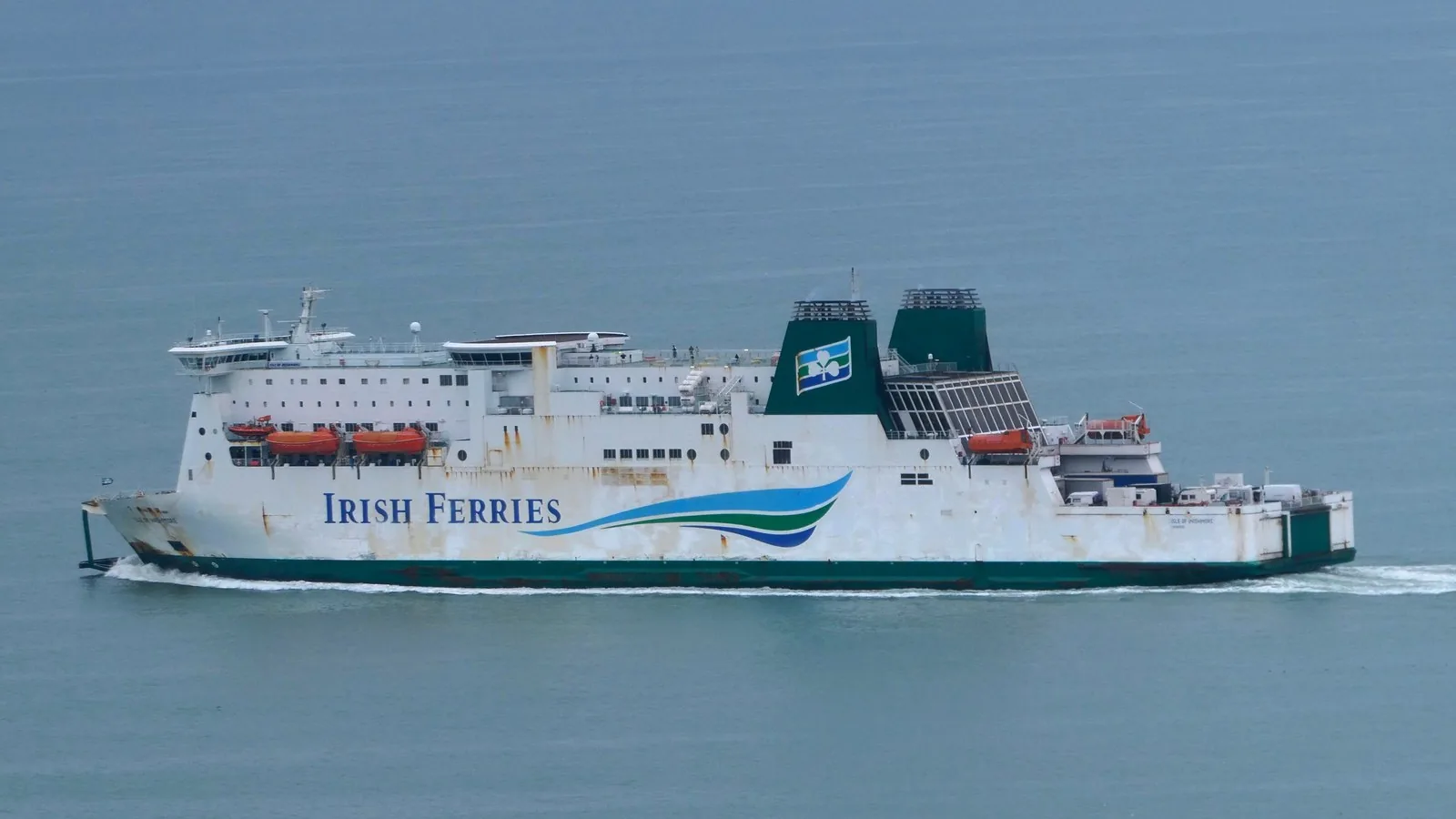
 (c) pam fray / CC BY-SA 2.0
What Happens If You Miss Your Ferry? (And How to Save Your Ticket)
Missed your sailing? Here is exactly what to do, whether your ticket rolls over, how each operator handles it, and how to avoid losing your fare.
By Serhat Özçelik, Founder & Editor of Ferry Schedule Hub· Published July 13, 2026
Traffic on the approach road, a slow petrol queue, a wrong turn at an unfamiliar port — there are a hundred ways to reach the terminal after check-in has closed, and the sinking feeling is the same every time. The good news is that a missed ferry is rarely the disaster it feels like in the moment. On busy short-hop routes you may simply roll onto the next departure; on quieter long-haul crossings the picture is stricter but still workable if you act fast and know your rights. This guide walks through exactly what to do the instant you realise you are running late, whether your ticket can be saved, and how the major operators actually handle a no-show — so you can make the right call at the desk instead of panicking on the hard shoulder.
The moment you realise you'll miss it: act, don't stew
The single most useful thing you can do is contact the ferry operator before check-in closes, not after. Latest check-in — not departure — is the deadline that matters, and it is printed on your booking confirmation and boarding documents. If you phone or reach the customer service desk while there is still time on the clock, staff can often hold your space, flag you as a known late arrival, or move you to a later sailing without treating the booking as a no-show.
If you have booked through an agent such as Direct Ferries, their support line can relay the message to the ferry company for you; Direct Ferries, for example, runs its customer team daily and advises late passengers to get in touch so they can help change the booking. If you have already missed the boat, the advice from operators and agents is consistent: go to the port as soon as you can and speak to a person at the desk. A staff member standing in front of you can check live space and rebook far more flexibly than any app can. Almost every operator will try to put you on the next available crossing — the question is only whether it costs you anything.
Will your ticket roll to the next sailing? It depends on the fare type
This is the fork in the road that decides everything. Ferry fares broadly fall into two families, and the cheap one is cheap for a reason.
- Flexible / open / "flexi" fares let you change sailings — sometimes any departure, sometimes within a set window — for little or no fee. If you bought one of these, a missed sailing is usually a non-event: you turn up, they move you, done.
- Fixed / standard / saver / economy fares are the lowest price precisely because they lock you to a specific sailing. Miss it and the ticket is generally treated as non-refundable. You are not automatically owed a seat on the next boat, though many operators will still accommodate you — sometimes free, sometimes for an amendment or fare-difference fee.
A useful rule of thumb: if there is any real chance you will be late, the flexible upgrade is cheap insurance compared with buying a fresh walk-up ticket at the counter. If you have already booked a fixed fare, don't assume the worst — read on, because the outcome varies a lot by operator and route.
How the major operators handle a missed sailing
Policies change, so always confirm on the operator's own "missed ferry" or terms page, but here is how the big names generally behave.
- P&O Ferries (Dover–Calais): even the cheapest Standard ticket allows travel within roughly plus-or-minus four hours of your booked time, subject to space, with amendment fees possible; Standard Flexi drops the amendment fee; Fully Flexi lets you turn up for any departure at no extra charge. On a route with dozens of daily crossings, a short delay is often absorbed painlessly.
- DFDS (English Channel): if you miss your crossing you can typically transfer free of charge, subject to availability, to the sailing directly after your booked one, and there is generally a grace period of up to around two hours. Flexible tickets rebook free; economy fares may attract a fee. Miss the last sailing of the day, though, and you may be looking at an overnight stay and a fresh booking.
- Brittany Ferries: stricter. If you miss latest check-in your space is not guaranteed, and once the scheduled departure has passed the booking is treated as a no-show — amendments are not permitted after departure. Your latest arrival time is shown on your travel documents, and vehicles must reach the port under their own power.
- Greek operators (Blue Star Ferries and others): miss the departure and you are not entitled to a refund. However, if you change your plans before departure you can often convert to an open-date ticket, which Blue Star lets you use on a future trip for up to 18 months (paying any fare difference). The lesson is that the value is saved by acting before the boat leaves, not after.
- BC Ferries (Canada): if you miss a reserved sailing, you can buy an "At Terminal" fare and be boarded on the next available sailing based on deck space and order of arrival. Waitlisted customers are prioritised after confirmed bookings but ahead of pure standby traffic. During disruptions, standby may be suspended entirely.
- Washington State Ferries (USA): you must check in at least 30 minutes before your reserved sailing or you lose the reserved spot and must travel standby. WSF keeps roughly 10% of vehicle space for first-come standby, and walk-on foot passengers never need a reservation — they just buy a ticket at the terminal.
Car vs foot passenger: why the difference matters
Whether you are on foot or driving changes both your risk and your options. Foot passengers are the more forgiving case: check-in windows are shorter (often 30–60 minutes before departure), and several operators let a foot passenger put a missed fare toward another sailing on the same day, same route and direction, at no charge and subject to space. Losing a walk-on sailing is annoying but rarely expensive.
Vehicles are the harder case. Loading a car deck is a logistical jigsaw, so vehicle check-in closes earlier — commonly 45–90 minutes before departure, and up to 90 minutes on international routes with customs and immigration. Miss it and your reserved deck space can be released to standby or waitlist traffic, and with a fixed fare you may forfeit the booking. If you are driving to catch a specific boat, build in a bigger buffer than you think you need. Our companion guide on how early you should arrive for a ferry breaks the timings down by route type and traveller.
Turn-up and standby: your safety net on frequent routes
The frequency of your route quietly determines how much a missed sailing hurts. On a high-frequency short crossing — Dover–Calais, many Greek island hops in peak season, the busier North American commuter routes — there is usually another boat within an hour or two, and standby or "drive-up" space exists specifically for travellers without a confirmed slot. Slotting onto the next sailing is often just a matter of waiting your turn.
On a long, once-daily or twice-weekly crossing, standby is a thinner cushion. Miss it and the "next available" sailing might be tomorrow — or next week — and the ship may already be fully booked. This is exactly where flexible fares and generous buffers earn their keep. If you are still in the planning stage and weighing whether to lock in a specific boat at all, our guide on whether you need to book a ferry in advance covers when turn-up-and-go is realistic and when it is a gamble.
Are you owed anything? Usually not — if it's your fault
Here is where travellers most often get their hopes up unfairly. Passenger-protection rules such as the EU's Regulation 1177/2010 give you real entitlements when the operator delays or cancels your sailing — re-routing, refunds, sometimes compensation. But those protections explicitly do not apply when the delay or missed connection is caused by your own actions. Arrive after check-in has closed and, however sympathetic the circumstances, the company is under no obligation to refund you or carry you for free.
That is the key distinction: a ferry that leaves without you because you were late is a different situation, legally and financially, from a ferry that is delayed or cancelled by the operator. If the boat was the one at fault, you have genuine rights worth pursuing — we cover them in detail in our guide to ferry delays, cancellations and your refund rights. If you were the one running late, your realistic goal is not a refund but salvaging as much ticket value as possible by acting quickly and, where offered, converting to an open or later ticket.
One practical exception worth checking: if you paid for a free-cancellation add-on, flexible-fare cover, or your travel insurance includes missed-departure protection, you may recover some or all of the cost even when the operator won't. It is always worth reading what you actually bought before writing the money off.
How to make sure it never happens again
A missed ferry is almost always a planning problem, and planning problems are fixable. A few habits remove most of the risk:
- Aim for latest check-in, not departure. Foot passengers should target 30–60 minutes before sailing; drivers 60–90 minutes; international crossings 90 minutes-plus for border formalities. Then add your own margin on top.
- Read your confirmation email. The latest check-in time is stated there and it is the only clock that counts. Set a phone alarm for the time you need to leave, not the time you need to arrive.
- Pad tight connections. Ferries wait for no one, and onward trains or the last boat of the day give you no second chance. If a delay upstream would make you miss the crossing, leave a full sailing's worth of slack.
- Match the fare to your risk. Long drive to the port, unfamiliar route, or a non-negotiable last sailing? Pay for the flexible ticket. The upgrade almost always costs less than a walk-up replacement fare.
- Save the operator's number offline. If you are stuck in traffic, a phone call while check-in is still open is the difference between a free move and a forfeited ticket.
Miss a ferry and the outcome is rarely catastrophic — but it is decided in the first few minutes. Contact the operator before check-in closes, get to the desk, know whether your fare can be moved, and treat any open-ticket offer as a win. Do that, and a missed sailing becomes a short wait rather than a wasted fare.
On this page
- The moment you realise you'll miss it: act, don't stew
- Will your ticket roll to the next sailing? It depends on the fare type
- How the major operators handle a missed sailing
- Car vs foot passenger: why the difference matters
- Turn-up and standby: your safety net on frequent routes
- Are you owed anything? Usually not — if it's your fault
- How to make sure it never happens again
Frequently asked questions
Keep reading