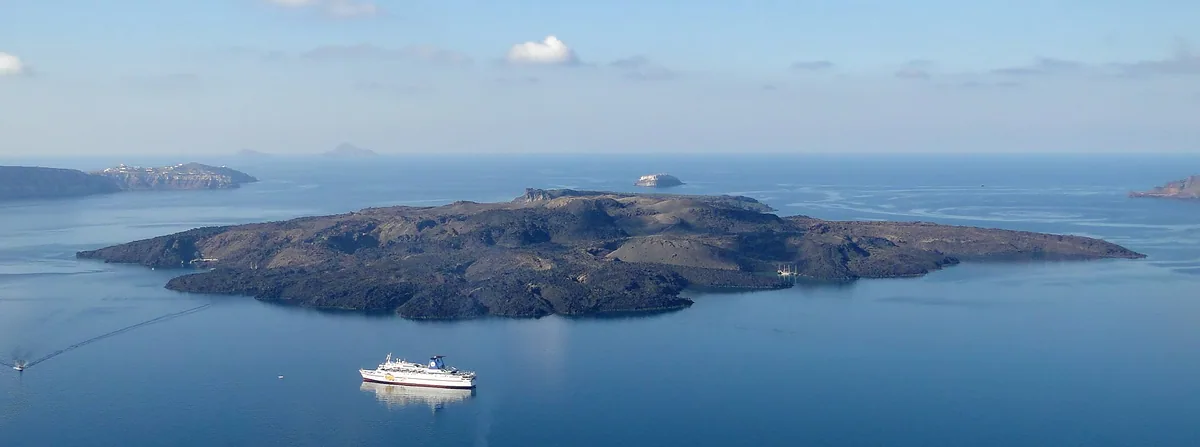
 (c) Bernard Gagnon / CC BY-SA 3.0
Ferry vs Flight: Athens (Piraeus) to Santorini
The Piraeus timetable hides a huge spread — 4h 45m on a SeaJets catamaran, over eleven hours on a multi-stop conventional boat. Here is how the numbers stack up against the 45-minute hop to Santorini airport.
By Serhat Özçelik, Founder & Editor of Ferry Schedule Hub· Published June 18, 2026· updated July 4, 2026
Strip away the brochure gloss and the Athens-to-Santorini choice reduces to a handful of hard numbers. Here they are, before anything else:
| Ferry from Piraeus | Flight ATH → JTR | |
|---|---|---|
| Fastest option | About 4h 45m on high-speed craft | Roughly 45 minutes airborne |
| Slowest option | Up to 11h 15m on multi-stop conventional ships | — |
| Entry-level fare | From €46 one way | Swings with the season — check current fares |
| Where it starts | Piraeus, on the Athens metro | Athens International, well east of the city |
| Where it lands | Athinios port, beneath the caldera cliffs | Santorini airport, near Kamari |
| Baggage rules | Effectively none for foot passengers | Airline weight and size limits apply |
Those two ferry figures — 4h 45m and 11h 15m — sit on the very same departure board, and telling them apart is the most useful skill a first-time visitor can pick up. The rest of this comparison unpacks that table row by row.
One route, two species of ship
SeaJets operates the high-speed craft. Its 07:00 sailing is the quickest of the day at about five hours, with later departures at 09:00, 09:30 and 15:00 taking anywhere from 5h 10m to 6h 10m depending on how many Cycladic ports the vessel threads through on the way south. These catamarans are enclosed, air-conditioned and seat-allocated — an aircraft cabin at sea level, minus the seatbelt signs.
Blue Star Ferries fields big conventional ships with open decks. Its 07:25 needs 7h 25m, the 17:00 manages a brisker 6h 10m, and the 17:30 meanders through more than nine hours of island calls. Fast Ferries — an ironic brand name on this particular run — posts the longest crossings of all: its 07:00, 07:15 and 14:15 departures range from just under ten hours to a full 11h 15m.
Study the whole departure board on the Piraeus to Santorini route page before committing, because the spread between individual sailings is wider here than on almost any other Greek route.
What the slow way buys you
Arriving by sea means sailing straight into the flooded volcano. The ship enters the caldera with Oia perched on the northern rim, then swings beneath a thousand-foot wall of striped rock towards Athinios. No aircraft window seat offers anything comparable, and on Blue Star's open sundecks you can watch it unfold with a coffee in hand. En route, islands such as Paros, Naxos and Ios slide past — a genuine preview of the Cyclades rather than a cloud layer.
One caveat about the landing itself: Athinios sits at the foot of a switchback cliff road. Local buses meet each arrival and taxis queue at the ramp, but in August expect a scrum. Budget half an hour to actually reach Fira or Oia after the gangway drops. Our Santorini guide covers the port-to-town options in detail.
The case for 45 minutes in the air
Aegean and Olympic Air link Athens with Santorini year-round, and Sky Express adds further rotations in season. Block time is well under an hour, yet the honest arithmetic includes the metro or taxi out to Athens International, a security buffer, and — at the Santorini end — a small terminal that gets seriously congested in peak months, plus a 20–40 minute drive to wherever you are staying. Realistic centre-to-centre time works out near four to five hours, which lands surprisingly close to the fastest catamaran once you account for Piraeus being a short metro hop from downtown Athens (see the Piraeus port guide).
The price question, properly
That €46 entry fare belongs to the slower conventional sailings booked in advance; high-speed seats command a premium, and business-class lounges on the catamarans cost more again. Air fares refuse to sit still long enough to quote — the same seat can triple between a damp Tuesday in November and a Saturday in mid-August — which is precisely why the ferry's relative stability appeals to anyone planning months ahead. A useful habit: price the boat first as your baseline, then see whether the airlines beat it on your specific dates. Outside peak season they sometimes do; inside it, rarely.
Factor in the ancillaries too. The ferry fare is essentially final — no seat-selection charges, no baggage tiers, no transfer premium at the Athens end thanks to the metro. The air fare is a starting bid.
Weather, the wild card
July and August bring the meltemi, the dry northerly gale of the Aegean. When it blows hard, high-speed catamarans are the first sailings cancelled; the heavy conventional ships usually keep going, and flights are rarely troubled. If your dates are anchored to something immovable — a wedding, a cruise embarkation — either fly or build a spare day into the plan.
A note on comfort
The two ship types feel as different as they look on paper. Catamaran travel is efficient but sealed-in: allocated seats, big windows, no strolling the rail. The conventional Blue Star experience is closer to a short cruise — cafeteria, open-air seating, room for restless children to roam. In flat summer seas the catamaran's speed is pure gain; when a swell is running, its motion is livelier and the big ship earns its extra hours. Prone to motion sickness? Sit low, sit central, and lean conventional.
Match the mode to the trip
- Tight long weekend: fly at least one direction; the saved hours are worth real money on a three-day itinerary.
- Island-hoppers: take the boat — Paros, Naxos and Ios sit directly on the sailing line, so onward tickets are trivial.
- Families and heavy packers: ferry, without hesitation; nobody weighs your suitcase at Piraeus.
- Nervous of rough water: a morning Blue Star sailing rides the swell far better than any catamaran.
- August budget hunters: price both on your exact dates; low-cost air seats occasionally undercut high-speed ferry tickets outside the weekend peaks.
Whichever side of the table wins for you, book early for July and August — the fast morning boats sell out first — and give yourself a generous 45 minutes at Piraeus, where your gate can be a long walk or a shuttle ride from the metro exit.
Frequently asked questions
How long does the ferry from Piraeus to Santorini take?
The fastest SeaJets high-speed sailings take about 4 hours 45 minutes to 5 hours. Blue Star conventional ships take 6 to 9 hours depending on island stops, and Fast Ferries services can run to 11 hours 15 minutes.
Is the ferry cheaper than flying to Santorini?
Ferry tickets start from around 46 euros one way. Flights fluctuate heavily by season: winter and mid-week air fares sometimes undercut the boat, while August peak flights usually cost considerably more. Compare both on your exact dates.
Do Santorini ferries get cancelled in bad weather?
Occasionally, yes. The meltemi wind in July and August hits high-speed catamarans first; large conventional ferries usually still sail. If your schedule is rigid, choose a conventional ship or fly.
Where do ferries dock on Santorini?
At Athinios port, at the base of the caldera cliffs about a 20-minute drive from Fira. Local buses and taxis meet arrivals, but allow extra time in high season.
Can I bring as much luggage as I want on the ferry?
Foot passengers face no practical weight limit — a real advantage over airline cabin and hold allowances if you are carrying diving gear, prams or bulky suitcases.
Keep reading