 (c) Wikimalte / CC BY-SA 4.0
Norway's Electric Ferry Revolution: A Global Leader
Discover Norway's pioneering role in electric ferries, with around 108 battery-electric and hybrid vessels by 2026, driven by hydropower and green policies.
By Serhat Özçelik, Founder & Editor of Ferry Schedule Hub· Published July 5, 2026· updated July 11, 2026
Norway's Electric Ferry Revolution: A Global Leader in Sustainable Transport
Norway stands as the undisputed world leader in the adoption and development of electric and hybrid ferries. This Nordic nation has pioneered a green revolution in its extensive coastal and fjord-spanning transport network, setting a global benchmark for sustainable maritime travel. As of the 2024–25 counts, Norway operates roughly 70 fully battery-electric car and passenger ferries, plus dozens more diesel-electric hybrids, and that fleet keeps growing season by season — a testament to its unwavering commitment to environmental stewardship and technological innovation. These vessels are not just a glimpse into the future; they are a fundamental part of daily life for countless Norwegians and a significant attraction for visitors exploring the country's dramatic landscapes. The shift towards electric propulsion is transforming the experience of ferry travel, making it cleaner, quieter, and more efficient. For anyone planning to explore the vast network of ferries in Norway, understanding this electric transformation is key to appreciating the nation's forward-thinking approach to public transport.
The Driving Forces Behind Norway's Electrification Journey
Norway's remarkable leadership in electric ferries is not accidental; it is the result of a powerful synergy between abundant natural resources and progressive government policies. A key factor is Norway's access to vast renewable hydropower, which generates approximately 88-90% of its electricity. This clean energy source provides the perfect foundation for electrifying its transport sector, ensuring that the ferries run on power that is not only emission-free at the point of use but also largely clean at its source. This commitment to green energy extends to the very core of public transport planning.
The Norwegian government has played a pivotal role by embedding stringent zero and low-emission requirements into ferry franchise tenders. These requirements compel ferry operators to invest in cutting-edge electric and hybrid technologies to win contracts for operating routes. This policy mechanism has effectively stimulated innovation and accelerated the transition away from fossil-fuel-powered vessels. Regional public-transport authorities are responsible for franchising these routes, ensuring that local needs are met while adhering to national environmental goals. Prominent operators managing these important connections include Skyss, which serves the Vestland region; Kolumbus in Rogaland; Nordland Fylkeskommune, overseeing services in the northern reaches; and AtB, which manages transport in Trøndelag. Their collective efforts, driven by these ambitious policies, have cemented Norway's position at the forefront of maritime electrification.
Pioneering Vessels: Milestones in Electric Ferry Technology
Norway's electric ferry journey is marked by several groundbreaking vessels that have pushed the boundaries of maritime technology. These ships represent significant milestones, demonstrating the viability and scalability of electric propulsion for various ferry types and routes.
MF Ampere: The World's First Fully Electric Car Ferry
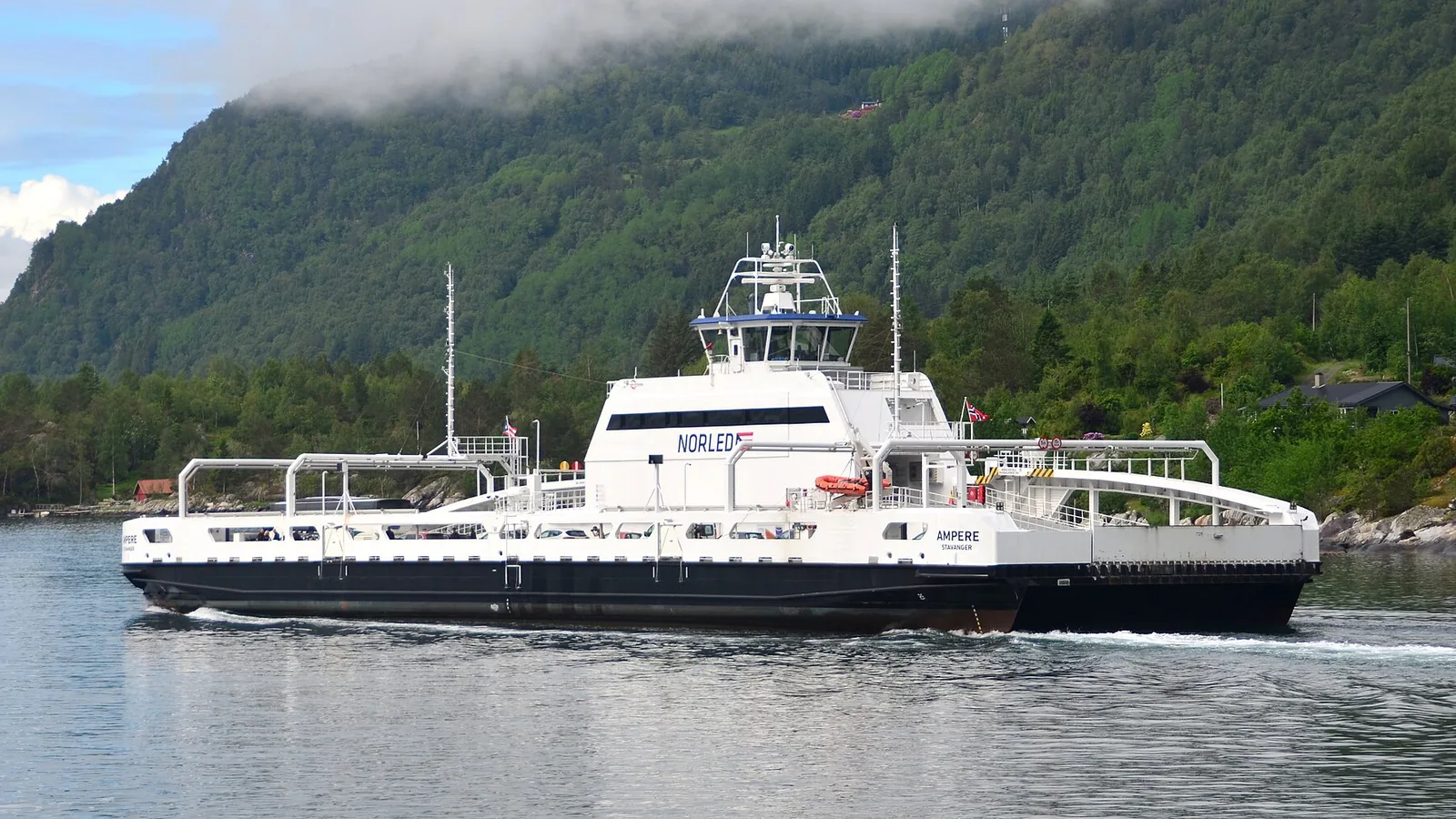
Launched in 2015, the MF Ampere holds the distinction of being the world's first fully electric car ferry. Operating on the Lavik-Oppedal crossing across the grand Sognefjord, this vessel revolutionized ferry travel. Powered by advanced lithium-ion batteries, the MF Ampere can carry up to 120 cars and 360 passengers, proving that electric propulsion can handle substantial capacities on busy routes. Its successful deployment demonstrated the practical feasibility of battery-powered ferries for regular service, inspiring similar projects worldwide.
MF Basto Electric: A Giant of Green Transport
In 2021, the MF Basto Electric took to the waters, setting a new standard as the world's largest all-electric ferry at its launch. This impressive vessel operates on the busy 10-kilometer Moss-Horten crossing, one of Norway's most important ferry connections. With a massive 4.3 MWh battery capacity, it can transport up to 600 passengers and 200 cars, showcasing the potential for large-scale electrification on high-demand routes. The MF Basto Electric exemplifies how electric technology can be scaled to meet significant transport needs without compromising efficiency or capacity.
MS Medstraum: High-Speed Electric Passenger Catamaran
The innovation continued in 2022 with the introduction of the MS Medstraum, the world's first fully electric high-speed passenger catamaran. Designed for rapid transit, this vessel can carry approximately 150 passengers at an impressive speed of 23 knots. The MS Medstraum demonstrates that electric propulsion is not limited to slower, car-carrying ferries but can also power fast, efficient passenger services, opening new possibilities for urban and regional waterborne transport.
The Future: Hydrofoil "Flying" Electric Ferries
Looking ahead, Norway's commitment to innovation remains strong. In April 2026 the operator Boreal ordered 20 Candela P-12 hydrofoil "flying" electric ferries — the largest order of its kind to date — with the first two vessels due in 2027 and the rest delivered in yearly batches through 2030. Designed to lift out of the water on computer-controlled foils at speed, these craft cut energy use dramatically and leave almost no wake, further solidifying Norway's pioneering role in the next generation of sustainable maritime transport.
How Electric Ferries Operate: Technology and Infrastructure
The operational model of Norway's electric ferries is a marvel of efficiency and integration, designed to maintain existing timetables while maximizing the benefits of electric propulsion. The core principle revolves around rapid charging infrastructure at the quays.
Electric ferries are equipped with substantial battery packs, typically lithium-ion, which are recharged during the brief periods when the vessel is docked for loading and unloading passengers and vehicles. This "fast charging" approach means that the ferries do not require extended downtime for refueling, allowing them to adhere to the same rigorous schedules as their diesel-powered predecessors. High-power charging stations at the ferry terminals deliver significant amounts of electricity in a matter of minutes, ensuring the batteries are topped up for the next leg of the journey. This smooth integration of charging into the regular operational cycle is key for maintaining the high frequency and reliability expected of public transport services.
The infrastructure supporting these ferries includes smart grid solutions to manage power demand and ensure a stable supply from the local electricity network. For passengers, the experience is largely the same in terms of boarding and disembarking, but the journey itself is transformed. The absence of engine noise and vibrations creates a remarkably quiet and smooth ride, enhancing comfort and allowing for a more calm appreciation of Norway's striking coastal scenery. This operational model not only reduces emissions but also significantly lowers the overall operating costs by eliminating the need for fossil fuels and reducing maintenance requirements associated with traditional combustion engines.
Benefits of Electric Ferries: Environmental and Operational Impact
The widespread adoption of electric ferries in Norway brings a multitude of benefits, profoundly impacting both the environment and the operational efficiency of the transport network. These advantages underscore why Norway has so aggressively pursued this green transition.
- Zero Local Emissions: Perhaps the most significant benefit is the elimination of local emissions. Electric ferries produce no exhaust fumes, particulate matter, or greenhouse gases during operation. This dramatically improves air quality in port areas and along the ferry routes, contributing to healthier environments for both communities and marine ecosystems. It aligns perfectly with Norway's broader climate goals and its commitment to reducing its carbon footprint.
- Remarkably Quiet Operation: Electric motors are inherently quieter than diesel engines. This translates to a vastly improved experience for passengers, who can enjoy the journey in peaceful tranquility, free from the constant hum and vibration of traditional engines. Furthermore, the reduced noise pollution is beneficial for marine life, minimizing disturbance to sensitive aquatic environments.
- Lower Operating Costs: While the initial investment in electric ferries and charging infrastructure can be substantial, the long-term operating costs are significantly lower. Electricity, especially when sourced from hydropower, is generally cheaper and more stable in price than marine diesel fuel. Additionally, electric motors typically require less maintenance than complex internal combustion engines, leading to further savings over the vessel's lifespan.
- Enhanced Sustainability: By leveraging Norway's abundant renewable hydropower, electric ferries offer a truly sustainable transport solution. They represent a closed-loop system where clean energy powers clean transport, minimizing environmental impact from generation to consumption. This commitment to sustainability is evident on many routes, including important connections like the Sandvikvåg-Halhjem crossing, where electric vessels contribute to a greener journey.
- Same Timetables, Improved Experience: Crucially, the transition to electric ferries has not compromised service frequency or journey times. Thanks to efficient fast-charging systems at quays, electric ferries maintain the same timetables as their conventional counterparts. Passengers get to enjoy all the environmental and comfort benefits without any reduction in convenience or reliability.
These combined benefits make electric ferries a cornerstone of Norway's sustainable transport strategy, demonstrating a path forward for maritime industries globally.
Navigating Norway's Ferry System: Practical Information for Travelers
For visitors and residents alike, Norway's ferry system is an indispensable part of navigating its intricate coastline and numerous fjords. With the increasing number of electric ferries, the experience is becoming even more pleasant and environmentally friendly. Understanding how to use the system efficiently will enhance your travels.
Ferry routes are operated by various regional public-transport authorities and private companies under franchise agreements. While specific schedules can be found directly on the operators' websites or through comprehensive ferry reference sites like ferryschedulehub.com, it's generally advisable to check in advance, especially during peak seasons or for less frequent routes. Most car ferries operate on a turn-up-and-go basis, but some longer or more popular routes may offer booking options, particularly for vehicles.
Payment for ferry services in Norway has largely transitioned to automated systems. The primary method for vehicle payment is through the AutoPASS system. If you are driving a vehicle, registering for an AutoPASS agreement or ensuring your rental car is equipped with an AutoPASS tag is highly recommended, as it often provides discounts and simplifies the payment process. Without an AutoPASS agreement, your license plate will be photographed, and an invoice will be sent to the vehicle owner. Pedestrians and cyclists typically travel free on road-network ferries, though a few small routes have begun charging again in 2026. Be aware that some routes, particularly those for high-speed passenger catamarans, may have different ticketing procedures.
When traveling on an electric ferry, you might notice the absence of a traditional engine room. Instead, you'll find quiet, spacious passenger areas. Take the opportunity to enjoy the calm journey and the striking Norwegian scenery without the typical noise and fumes associated with older vessels. It's a truly modern and enjoyable way to experience Norway.
The Future of Ferry Travel: Norway's Continued Leadership
Norway's journey with electric ferries is far from over; it is a continuous evolution. The nation's unwavering commitment to innovation and sustainability ensures its continued leadership in this important sector. The success seen with vessels like MF Ampere, MF Basto Electric, and MS Medstraum is not just about individual achievements but about establishing a scalable, replicable model for green maritime transport worldwide.
The ongoing investment in new technologies — such as Boreal's 2026 order for 20 Candela P-12 hydrofoil "flying" electric ferries, arriving between 2027 and 2030 — signifies Norway's ambition to push the boundaries even further. These developments promise even greater energy efficiency and reduced environmental impact, setting new global standards. As other nations increasingly look to decarbonize their transport sectors, Norway serves as a powerful inspiration and a practical blueprint. Its experience demonstrates that transitioning to electric ferries is not only environmentally responsible but also economically viable and operationally efficient. The future of ferry travel, characterized by quiet, clean, and efficient journeys, is already a reality in Norway, and its pioneering spirit continues to shape the global maritime landscape.
On this page
- Norway's Electric Ferry Revolution: A Global Leader in Sustainable Transport
- The Driving Forces Behind Norway's Electrification Journey
- Pioneering Vessels: Milestones in Electric Ferry Technology
- How Electric Ferries Operate: Technology and Infrastructure
- Benefits of Electric Ferries: Environmental and Operational Impact
- Navigating Norway's Ferry System: Practical Information for Travelers
- The Future of Ferry Travel: Norway's Continued Leadership
Frequently asked questions
How many electric ferries are currently operating in Norway?
Independent counts for 2024–25 put Norway at roughly 70 fully battery-electric car and passenger ferries, plus dozens more diesel-electric hybrids, with new vessels entering service every year. Either way, the figure keeps Norway firmly the global leader in sustainable maritime transport, steadily expanding its green fleet across its fjords and coastal routes.
What factors have driven Norway's leadership in electric ferries?
Norway's leadership is driven by two main factors: its abundant renewable hydropower, which generates 88-90% of its electricity, and proactive government policies. The government mandates zero or low-emission requirements in ferry franchise tenders, compelling operators to adopt electric and hybrid technologies for their routes.
How do electric ferries in Norway recharge their batteries?
Electric ferries in Norway recharge efficiently at the quay during loading and unloading periods. High-power charging stations at terminals rapidly top up the lithium-ion batteries in minutes, allowing the ferries to maintain their scheduled timetables without extended downtime. This seamless process ensures continuous, reliable service.
What are the main benefits of traveling on an electric ferry?
Traveling on an electric ferry offers several key benefits. Passengers experience a remarkably quiet and smooth journey due to the absence of engine noise and vibrations. Environmentally, these ferries produce no local emissions, contributing to cleaner air and a reduced carbon footprint, aligning with Norway's green initiatives.
Are electric ferries faster or slower than traditional diesel ferries?
Electric ferries are designed to operate on the same timetables as traditional diesel ferries. Thanks to efficient battery technology and rapid charging systems at the quays, they maintain comparable speeds and journey durations. The transition to electric propulsion does not compromise service frequency or travel time for passengers.
Keep reading