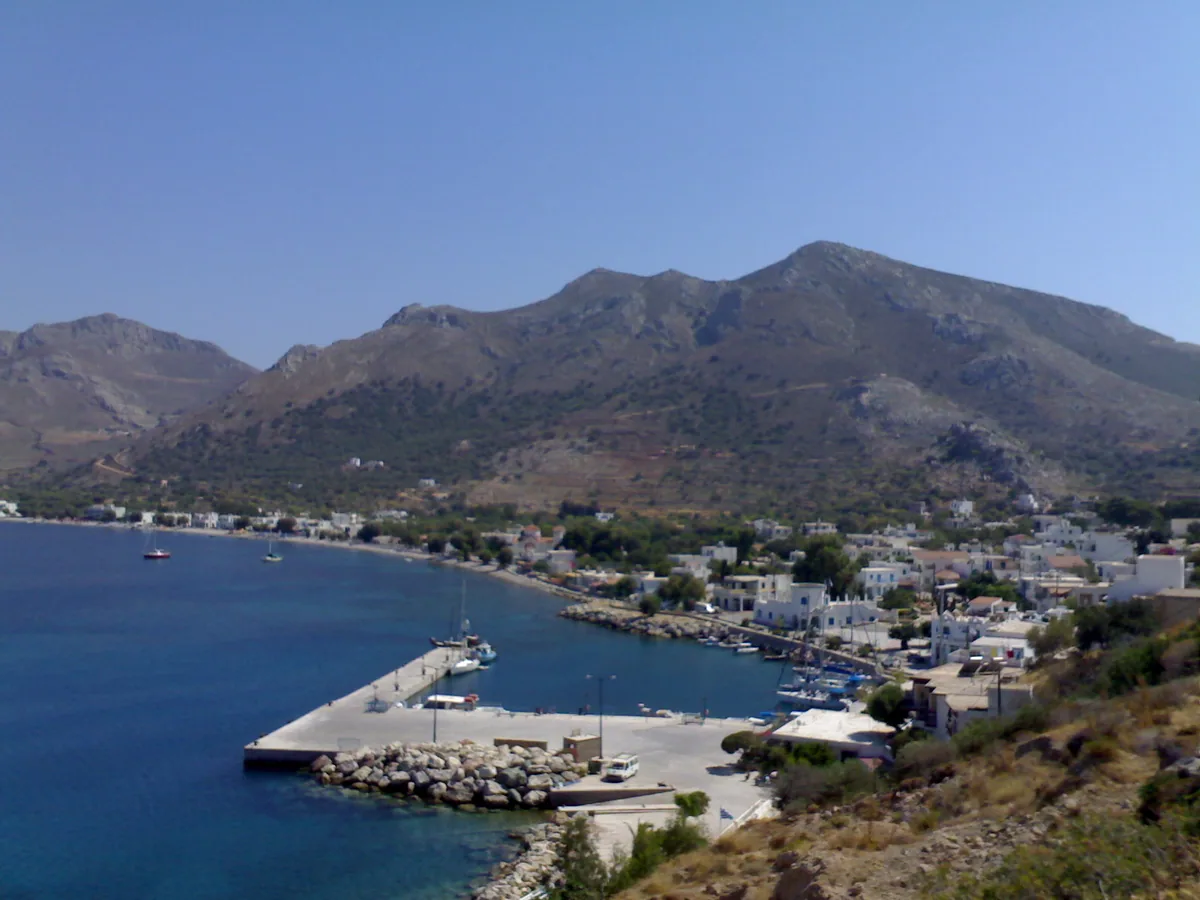
Dodecanese · Greece
Tilos
In 2019 Tilos became the first island in the Mediterranean to run on its own renewable power — one wind turbine, a field of solar panels and a battery, for a population you could fit in a village hall. It is also a Natura 2000 wildlife refuge with more than 160 recorded bird species. Those two facts survive for the same reason: the ferry does not come very often, and that is the point.
Getting to Tilos by ferry
Direct crossings serving Tilos — open one for its full timetable.
How you get here, and how rarely
Our timetable holds 2 sailings from Rhodes at about 2 h 45 m, 2 from Nisyros at an hour, and a seasonal link to Bodrum in Turkey at around 2 h 30 m. The Kos route exists at about 85 minutes but we hold no current sailings.
The high-speed craft of Dodekanisos Seaways are the usual way in, arriving at Livadia, the port, around the middle of the day. There is no airport.
⚠ Check the return before you commit
With this many sailings, a cancellation is not an inconvenience, it is an extra night. Wind stops the fast boats first and Tilos has no second operator and no flight to fall back on.
Practical rule: never make Tilos the last stop before a flight home from Rhodes or Kos. Put it in the middle of a trip, and leave a spare day on the far side of it.
The island that generates its own electricity
The system is small enough to describe in one sentence: an 800 kW wind turbine, about 160 kW of photovoltaic panels and roughly 2.8 MWh of battery storage, which together made Tilos energy self-sufficient in 2019 and drew a good deal of European attention.
It is paired with a zero-waste policy that the island takes seriously. Bring less packaging than you would elsewhere; there is nowhere convenient for it to go.
A refuge with a ferry stop attached
Tilos is inside the Natura 2000 network and has been a protected area for decades. More than 160 bird species have been recorded here — Eleonora's falcons on the sea cliffs, Bonelli's eagles inland — alongside monk seals and nesting turtles.
Hunting has been banned since the 1990s, long before that was fashionable, and the result is an island where wildlife behaves as though people are not a threat. Walkers, birdwatchers and people who want a footpath rather than a beach club are the natural visitors.
Livadia and Megalo Chorio
Livadia is the port and where almost all the accommodation is: a long pebble beach with a traffic-free promenade along it. Megalo Chorio is the old village inland, under a castle, with the island's museum — including the bones of the dwarf elephants that lived here until a few thousand years ago.
Between and beyond them are footpaths, an abandoned village at Mikro Chorio, and beaches that take a walk to reach. That is the island.
Do not bring a car
You can hire one, and there is little reason to. Tilos has very few roads and the distances are walkable or covered by the small local bus. The things worth seeing are mostly at the end of a path rather than a road.
If you are arriving on a high-speed craft from Rhodes you could not bring a vehicle anyway — those boats carry foot passengers.
Season
This is a spring-to-autumn island. The Dodecanese links run from roughly April to October, the Turkish crossing is a summer service, and winter reduces Tilos to a basic lifeline schedule.
May and June are the best of it: the island is green, the birds are at their most visible, and the boats are running without August's competition for the handful of rooms.
Tilos ferry & travel FAQ
How do I get to Tilos?
By sea only — there is no airport. Our timetable holds two sailings from Rhodes at about 2 hours 45 minutes and two from Nisyros at an hour, usually on Dodekanisos Seaways high-speed craft arriving at Livadia around midday.
How often do ferries run to Tilos?
Rarely by Greek island standards. That is why you should check the return sailing before committing, and never make Tilos the last stop before a flight home — wind cancels the fast boats and there is no alternative.
Is Tilos really powered by renewable energy?
Yes. In 2019 it became the first Mediterranean island to run on its own renewables — an 800 kW wind turbine, around 160 kW of solar panels and roughly 2.8 MWh of battery storage — paired with a zero-waste policy.
What wildlife is on Tilos?
More than 160 recorded bird species, including Eleonora's falcons on the sea cliffs and Bonelli's eagles inland, plus monk seals and nesting turtles. The island is in the Natura 2000 network and hunting has been banned since the 1990s.
Where do people stay on Tilos?
Almost all accommodation is at Livadia, the port, along a long pebble beach with a traffic-free promenade. Megalo Chorio is the old village inland, under a castle.
Do I need a car on Tilos?
No. There are very few roads, the small local bus covers them, and most of what is worth seeing is at the end of a footpath. High-speed craft from Rhodes carry foot passengers only in any case.
Can I get to Turkey from Tilos?
There is a seasonal crossing to Bodrum at around 2 hours 30 minutes.
When should I visit Tilos?
May and June. The island is green, the birds are most visible, and the boats are running without August's competition for the small number of rooms.
More Dodecanese destinations
Reviewed by Serhat Özçelik, Founder & Editor of Ferry Schedule Hub · Last updated August 8, 2026.