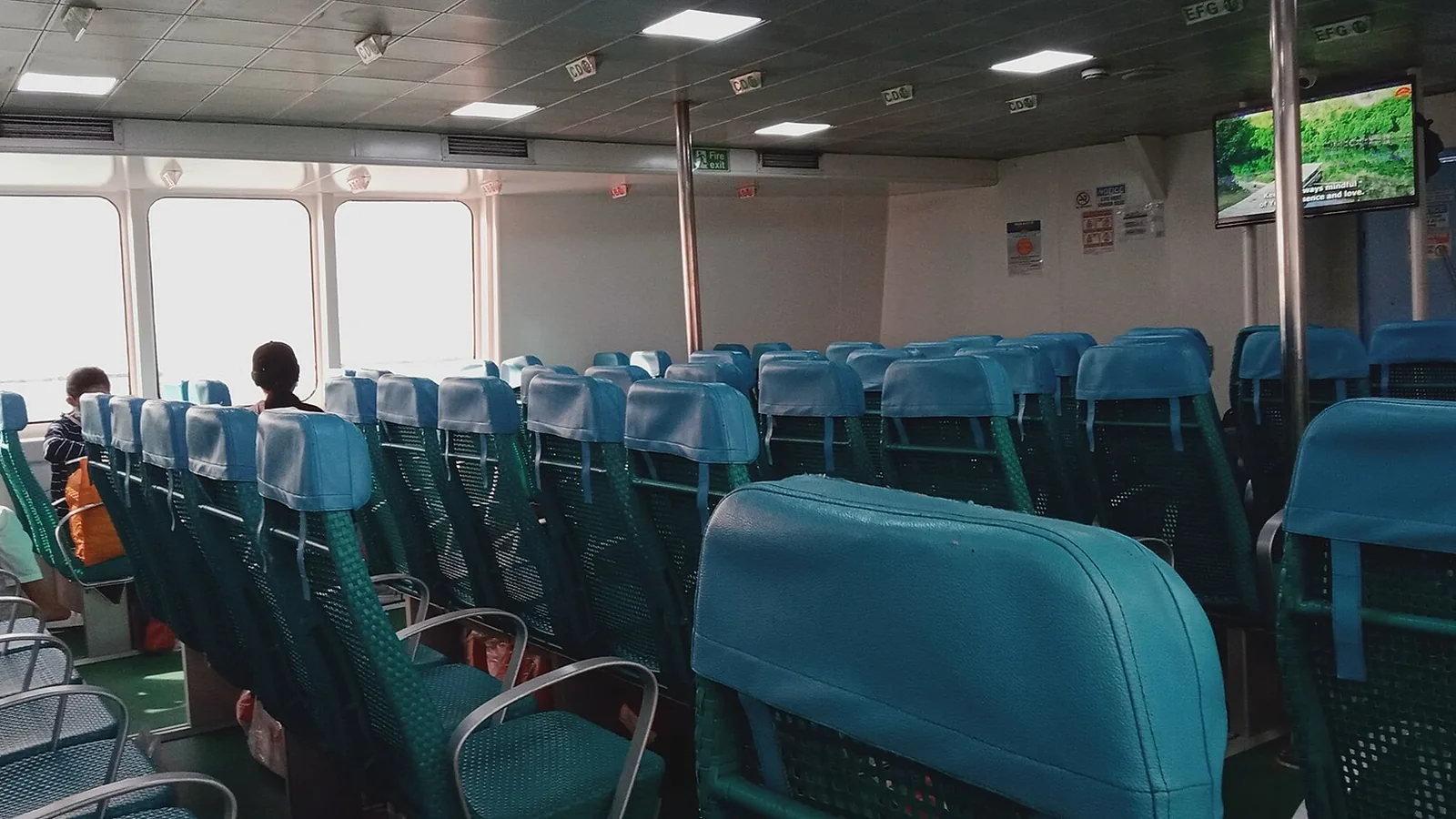
 (c) Howhontanozaz / CC BY-SA 4.0
Ferry Travel in the Philippines: 2GO, OceanJet, FastCat and the Others Explained (Safely)
Which operator does what, fastcraft vs RoRo, how to book, terminal fees, and the weather rules that keep you safe on Philippine ferries.
By Serhat Özçelik, Founder & Editor of Ferry Schedule Hub· Published July 13, 2026
The Philippines is more than 7,600 islands, and for most of them a boat is still the honest way in. But the ferry map confuses first-timers fast: one route might be served by a two-hour air-conditioned fastcraft, a slow overnight ship with cabins, and a car-carrying RoRo that costs a third as much, all leaving from different piers under names like 2GO, OceanJet, SuperCat, FastCat, Lite Ferries, Montenegro and Cokaliong. This guide untangles who runs what, when to pick speed over price, how booking actually works (the e-ticket reality included), and the weather rules that decide whether you sail at all. The examples lean on the Visayas, where the port of Cebu is the busiest hub in the country.
The operators, mapped to what they're for
There is no single national ferry company. Instead, a handful of operators specialise by boat type and region. Sort them by the job they do and the whole system gets simpler:
- 2GO Travel — the giant of the long haul. 2GO runs large multi-deck ships on overnight and multi-day inter-island routes out of Manila, Cebu, Bacolod, Iloilo, Cagayan de Oro and beyond, with cabins ranging from budget bunk-style Mega Value to private Suiterooms. Think Manila–Cebu (around 23 hours) or Manila–Cagayan de Oro (up to two days), not a quick island hop.
- OceanJet — the fastcraft workhorse of the central Visayas. Air-conditioned, foot-passengers-only fast ferries linking Cebu with Tagbilaran (Bohol), Dumaguete, Ormoc, Siquijor and more. Fast, frequent, comfortable, and the default choice for tourists moving between the popular islands.
- SuperCat — OceanJet's main fastcraft rival on the same Cebu routes (Bohol, Ormoc). Often a little cheaper. Despite once being a 2GO sister brand, SuperCat was acquired by the Udenna/Chelsea Logistics group in 2019 and now competes independently.
- FastCat — a modern RoRo (roll-on/roll-off) operator run by Archipelago Philippine Ferries. Slower than a fastcraft but it carries cars, motorbikes and cargo, which the fast boats cannot.
- Lite Ferries — a large RoRo fleet (around 20 vessels) covering the Visayas and Mindanao: Cebu–Tubigon, Cebu–Tagbilaran, Cagayan de Oro–Bohol and many more. Cheap, unhurried, good for vehicles and tight budgets.
- Montenegro Lines — one of the country's oldest and widest RoRo networks (also branded Marina Ferries), running passenger, cargo and vehicle vessels across Luzon, Visayas and Mindanao, including short crossings like Dumaguete–Siquijor.
- Cokaliong Shipping Lines — a Cebu-based RoRo operator since 1989 with roughly a dozen routes fanning out from Cebu to Surigao, Ozamis, Iloilo, Calbayog, Dapitan and other Visayas/Mindanao ports. A reliable, well-regarded regional name.
- George & Peter Lines and other smaller lines (Aleson Shipping, Starlite, Trans-Asia, HS/Anika Star) fill in specific crossings. You'll meet them on aggregator listings for particular routes rather than nationwide.
Fastcraft vs RoRo: the one decision that matters most
Almost every practical choice comes down to fastcraft versus RoRo. Get this right and the rest follows.
A fastcraft (OceanJet, SuperCat, the Montenegro fastcraft) is a sleek, air-conditioned catamaran for foot passengers only. It is roughly twice as fast and typically costs more. Cebu–Tagbilaran runs about two hours by fastcraft; Dumaguete–Siquijor is a quick ~40 minutes on OceanJet. If you are travelling light and want to save daylight, this is your boat.
A RoRo (FastCat, Lite Ferries, Montenegro RoRo, Cokaliong) is a bigger, slower ship built to drive vehicles straight on and off. It carries cars, vans, motorcycles and freight, usually costs noticeably less per seat, and often has open-air decks. The trade-off is time: the same Dumaguete–Siquijor hop takes about two hours by RoRo instead of forty minutes, but the passenger fare can be less than half. Bringing a car, a big motorbike or a surfboard? A RoRo is the only option.
A rough rule for the Visayas: tourist with a backpack → fastcraft; road-tripper, budget traveller, or anyone with a vehicle → RoRo.
Booking: online, aggregators and the e-ticket reality
You can book three ways, and each has a catch.
Direct with the operator. 2GO, OceanJet, SuperCat, FastCat and Lite Ferries all have their own websites and, in several cases, apps. This gives you the live schedule and the operator's own price with no middleman markup. It's the most accurate source when a route or fare changes.
Aggregators. Platforms like Barkota (strong for Montenegro, Lite Shipping, Trans-Asia, SuperCat, Aleson and others) and 12Go let you compare operators on one screen and pay with a foreign card — genuinely convenient for trip planning. Two caveats: aggregators add a booking fee or markup, and their inventory doesn't always sync in real time, so a last-minute cancellation or schedule change may not show instantly. For same-day travel, cross-check the operator directly.
At the terminal. Buying at the pier still works on most routes and is often the only way to claim senior citizen (20% off base fare for Filipino nationals aged 60+) and PWD discounts, which most online channels don't apply. The risk is a sold-out sailing on peak days, holidays and summer weekends.
The e-ticket reality: an online confirmation is not always your boarding pass. Some operators — Super Shuttle Ferry and Starlite among them — require you to swap the e-ticket for the shipping company's physical ticket at their port office before boarding. Assume you may need to validate on arrival, keep a screenshot and a printout, and don't cut your buffer too fine.
Terminal fees, arriving early and IDs
Your ticket price is rarely the final number. Nearly every port charges a separate terminal fee, paid in cash at the pier before boarding — commonly around ₱25 at Cebu and generally in the ₱25–₱50 range elsewhere. Keep small bills handy; the booth doesn't take cards.
Arrive early. For fastcraft and short RoRo hops, check in at least 60–90 minutes ahead; boarding gates typically close about an hour before departure. If you're bringing a vehicle or cargo, come earlier still — 2GO and others advise several hours for cargo, and RoRo vehicle loading is first-come. A valid photo ID is required at check-in and to claim any discount; bring your passport (foreign travellers) or a government ID, and carry the ID that matches a senior or PWD booking or you'll lose the discount at the gate.
The safety angle: weather is the real timetable
Philippine ferries are regulated by MARINA and the Philippine Coast Guard (PCG), and the fleet has been modernising — MARINA's 2024 figures show a big shift toward newer steel vessels. But sea travel here has a real safety history, and the single most important thing to understand is that weather, not the printed schedule, decides whether you sail.
The country's typhoon season runs roughly June through November. When PAGASA (the weather bureau) issues a Gale Warning or raises tropical cyclone signals, the PCG suspends sailings — smaller vessels first — until conditions are declared safe. This is routine and protective, not an overreaction. In early July 2026, for example, the PCG and Coast Guard Station Siquijor cancelled trips to Dumaguete and across Eastern Visayas as Super Typhoon “Inday” and the enhanced habagat (southwest monsoon) whipped up dangerous seas. Cancellations can strand you for a day or more, so build slack into any island itinerary and never book a same-day international flight connection off a wet-season ferry.
Practical safety habits that genuinely help:
- Check the forecast the night before and the morning of travel — look at PAGASA gale warnings and the operator's advisories, not just the sky.
- Favour reputable operators and modern steel vessels. The big fastcraft and RoRo brands display safety certificates at their counters; the sketchier end of the market is small, overloaded wooden bangka boats. Avoid visibly overcrowded craft.
- Note the life jackets and exits when you board, keep your ID and ticket accessible, and don't argue your way onto a sailing the Coast Guard has suspended.
- If a trip is cancelled for weather, operators generally rebook or refund — keep your booking reference and ask at the counter.
Key Visayas routes from the Cebu hub
Cebu is the country's busiest ferry hub, with piers (mainly Pier 1 and Pier 3) sending boats across the central Visayas all day. These are the crossings first-timers use most:
| Route | Best for | Type | Approx. time | Operators |
|---|---|---|---|---|
| Cebu → Tagbilaran (Bohol) | Speed to Bohol's beaches & Chocolate Hills | Fastcraft | ~2 hrs | OceanJet, SuperCat |
| Cebu → Tubigon (Bohol) | Cheapest Bohol crossing / vehicles | Fastcraft & RoRo | ~1.5 hrs | FastCat, Lite Ferries, StarCraft |
| Cebu → Dumaguete | Negros & onward to Siquijor | Fastcraft | ~4–5 hrs | OceanJet |
| Cebu → Siquijor (via Tagbilaran) | Direct-ish to Siquijor | Fastcraft | ~3.5–5 hrs | OceanJet |
| Cebu → Ormoc (Leyte) | Route to Leyte | Fastcraft | ~2.5 hrs | OceanJet, SuperCat |
| Dumaguete → Siquijor | Popular island hop | Fastcraft & RoRo | ~40 min – 2 hrs | OceanJet, Montenegro, Aleson |
For deeper route planning, see our detailed pages on the Cebu to Tagbilaran fastcraft crossing, the budget-friendly Cebu to Tubigon RoRo route, and the short Dumaguete to Siquijor ferry hop. Planning where to land? Our island guides to Bohol and Siquijor pair naturally with these routes.
Put together, the system rewards a little planning: match the boat type to your load and your patience, book direct when the date is near, pad your schedule for weather, and treat the Coast Guard's word as final. Do that and Philippine ferry travel is one of the most rewarding — and scenic — ways to see the islands.
Frequently asked questions
Keep reading