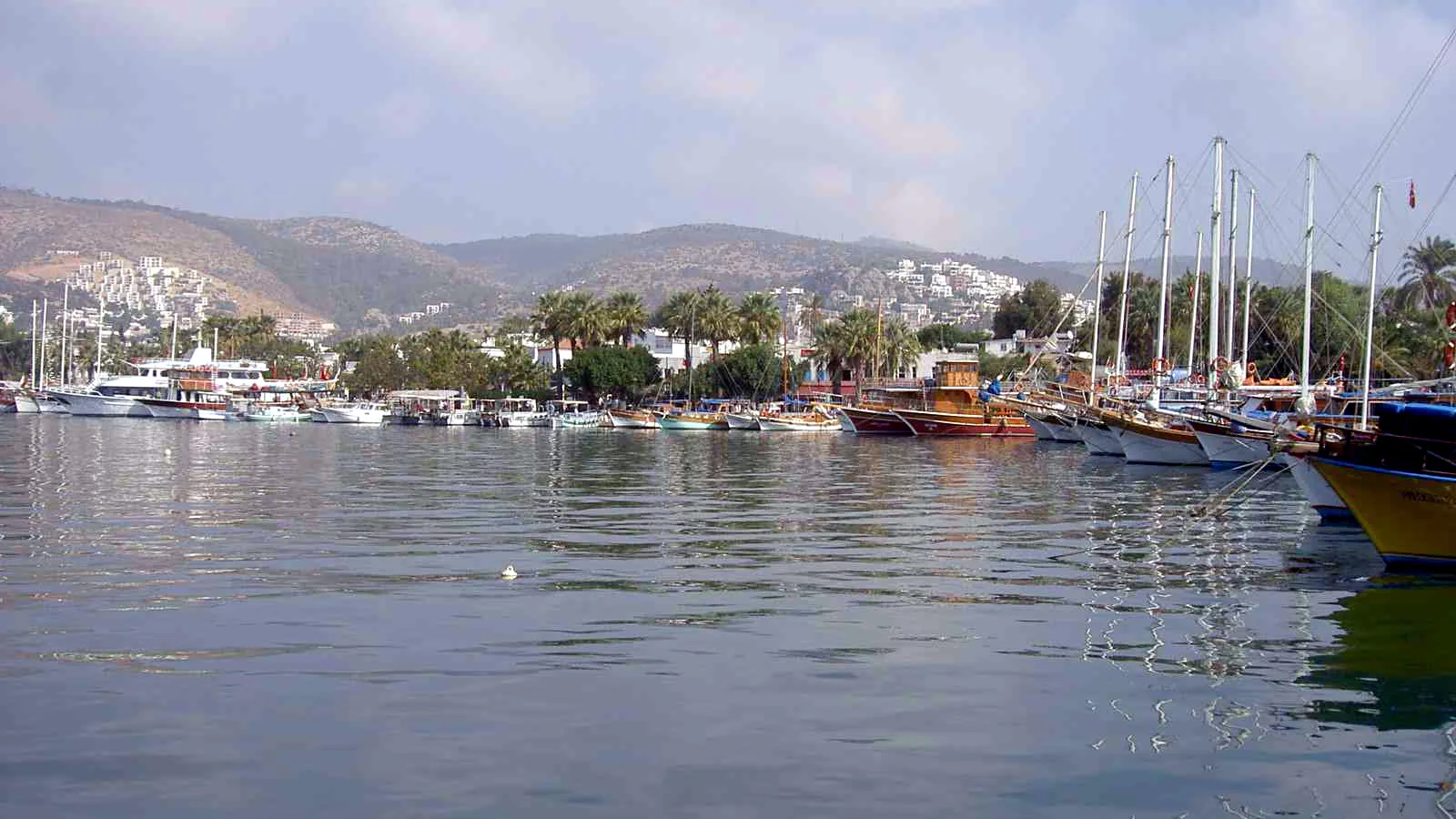
 (c) Simone / CC BY-SA 3.0
Turkey to the Greek Islands by Ferry: Routes, Passports & the Express Island Visa
Crossings from the Turkish coast to the eastern Aegean, plus passport rules and the €60 express island visa for day trips.
By Serhat Özçelik, Founder & Editor of Ferry Schedule Hub· Published July 13, 2026
A ferry across the narrow Aegean is one of the most rewarding day trips in the Mediterranean: you leave a Turkish beach resort after breakfast and are sipping frappé in a Greek harbour by lunch. But this short hop crosses one of the European Union's external borders, so the paperwork matters as much as the timetable. This guide covers the popular crossings between the Turkish coast and the eastern Aegean Greek islands as they run in 2026, the passport rules on both sides, and the special "express" island visa that lets certain travellers make short trips without a full Schengen visa. Rules and sailings change with the season and with diplomatic decisions, so treat the dated facts below as a starting point and confirm before you book.
The main crossings, port by port
All of these routes are short international hops run by small fast catamarans and passenger boats, not the large overnight car ferries you find inside Greece. Frequencies swing hard with the season: several of the routes below are effectively summer-only, dropping to a handful of weekly sailings (or none) in winter. Journey times are short, typically 20 to 90 minutes.
| Route | Approx. crossing | 2026 seasonality | Typical foot fare (one way) |
|---|---|---|---|
| Bodrum ↔ Kos | 20–30 min | Daily, most frequent in summer; limited spring/autumn | ~€21–30 |
| Turgutreis ↔ Kos | ~30 min | Seasonal; daily in summer (Dentur Avrasya) | ~€20–30 |
| Kuşadası ↔ Samos | from ~30 min | Summer; multiple daily in peak, sparse off-season | ~€40–55 |
| Çeşme ↔ Chios | 20–30 min | ~51 sailings/week Jun–Sep; ~4/week low season | ~€28 |
| Marmaris ↔ Rhodes | ~1 hr | ~22/week Jun–Sep; ~3/week Oct–May (Sea Dreams) | ~€45–55 |
| Ayvalık ↔ Lesvos (Mytilene) | 40–90 min | Daily May–Oct; ~3 days/week Nov–Apr | ~€30–35 |
| Fethiye ↔ Rhodes | ~1.5 hr | Daily in summer; reduced in low season | ~€40–55 |
A few notes on the individual lines. Bodrum–Kos is the busiest and most day-trip-friendly: crossings are frequent enough in July and August that you can pick a morning boat over and an evening boat back without much planning. Turgutreis–Kos is a shorter, quieter alternative from the western tip of the Bodrum peninsula. Kuşadası–Samos lands at either Vathy (Samos Town) or Pythagorio depending on the sailing, so check which port your ticket uses. Çeşme–Chios and Ayvalık–Lesvos serve the North Aegean and are the two routes most likely to carry vehicles (more on that below). Marmaris–Rhodes and Fethiye–Rhodes both reach the Dodecanese; Marmaris is the faster hop. Further south, the tiny Kaş–Kastellorizo line also runs across to the smallest inhabited eligible island. Because operators, ports and exact departure times shift year to year, verify current sailings on an aggregator such as Ferryhopper or directly with the operator before you commit.
Passports: this is an EU external border
Whatever your nationality, you cross a full international frontier in each direction, so a valid passport is non-negotiable—a national ID card alone will not do on these routes. Bring a passport valid for at least six months beyond your trip, with at least two blank facing pages for stamps. National border police in both Turkey and Greece check documents at the port, and ferry operators collect passenger details in advance to relay to the authorities, which is why you are usually asked to book with your passport number rather than just turning up. If you are unsure whether a passport is required for any ferry, our explainer on whether you need a passport for a ferry walks through domestic versus international crossings.
What you need on the Greek side depends on who you are:
- Visa-exempt travellers (citizens of the US, UK, Canada, Australia, the EU/EEA, and many others) need only a valid passport to enter Greece for short stays—no visa at all. You simply clear passport control on arrival.
- Schengen visa holders can enter normally, provided the visa permits the entry.
- Visa-required nationals resident in Turkey—most importantly Turkish citizens, and third-country nationals holding a valid Turkish residence permit—may qualify for the express island visa described next, or must otherwise hold a standard Schengen visa.
The express ("gate") island visa explained
The headline convenience for travellers based in Turkey is a special scheme, widely called the visa express or gate/door visa, that lets eligible travellers visit specific eastern Aegean islands without a pre-arranged Schengen visa. First introduced in April 2024 and repeatedly renewed, the Greek Ministries of Migration and Asylum and of Foreign Affairs confirmed on 1 April 2026 that the scheme is extended through April 2027, so it is live for the whole 2026 season.
Key features, as they stand for 2026:
- Cost: €60, which covers passport control and fingerprinting.
- Validity: a seven-day visa issued on arrival, usable within a 12-month window; it is single-entry and cannot be extended.
- Who qualifies: Turkish citizens and third-country nationals holding a valid Turkish residence permit.
- How to get it: no prior application is strictly required—it is issued at the port on arrival. For day trips there is no need to show proof of accommodation. In practice, most ferry agencies pre-collect your passport details when you buy the ticket and forward them to the Greek authorities, which smooths the on-arrival process.
The scheme's official core covers ten islands: Lesvos, Chios, Samos, Kos, Rhodes, Kalymnos, Limnos (Lemnos), Leros, Symi and Kastellorizo. Several widely used sources, including Ferryhopper, describe a twelve-island list that also adds Patmos and Samothrace. Because the exact roster has shifted between renewals, confirm that your specific island is covered for the current period before you rely on the gate visa.
The single most important limitation: the express visa is valid only for the island you enter. You may not use it to hop onward to another Greek island, to reach the Greek mainland (Athens, Thessaloniki), or to travel into any other Schengen country. Its entire purpose is short visits to that one island. One more practical passport note tied to eligibility: passports showing entry stamps from the Turkish Republic of Northern Cyprus (TRNC) can create problems at Greek control, so travellers using the gate visa should be mindful of that.
Schengen stamping and your 90/180 days
Greece is in the Schengen Area, so every entry and exit is stamped and—for visa-exempt visitors—counts against the standard limit of 90 days in any rolling 180-day period. The gate visa is stamped separately at the port on arrival. A subtle but important point for long-stay travellers who are bouncing between the two countries: the days you spend on the Greek islands count toward your Schengen allowance, while the time you spend in Turkey does not, since Turkey is outside Schengen. If you are combining a Turkish holiday with Greek island-hopping, keep a running tally of your Greek (Schengen) days so a series of day trips doesn't quietly eat into your allowance.
Taking a car: usually don't
For the vast majority of travellers the answer is simple—cross as a foot passenger. Most of these short international boats are passenger-only, and even the routes that do carry vehicles (chiefly Ayvalık–Lesvos, which takes cars only once or twice a week, and Çeşme–Chios) have very limited vehicle capacity. More decisively, a rental car cannot normally be taken across the border: Turkish hire companies almost universally forbid it, insurance coverage is voided the moment the vehicle leaves the country by ferry, and the paperwork for a car you don't personally own makes the crossing impractical. If you want a car on the Greek island, the standard move is to leave your Turkish vehicle at the port and simply rent a fresh car on the Greek side after you arrive.
Operators, booking and day-trip logistics
These routes are run by a mix of small Turkish and Greek operators—names you will encounter include Dentur Avrasya, Sea Dreams, Meander Travel, Jalem Tur and Turyol, among others—often several per route. You can compare and book through an aggregator like Ferryhopper, directly with the operators, or via a local travel agency at the port; agencies are especially useful for gate-visa passengers because they handle the passport paperwork. Book ahead in July and August, when popular boats sell out.
For a smooth day trip: take an early boat, travel light (foot passenger), carry your passport plus a photocopy, and note the last return sailing—miss it and you may be stuck overnight, which for gate-visa holders means finding accommodation you weren't required to pre-book. Build in a buffer for passport control at both ends, which can be slow at peak times. If you are doing a genuine one-way crossing to continue travelling in Greece, remember the gate visa won't help you leave the island; you'll need to be visa-exempt or hold a full Schengen visa to reach other islands or the mainland.
Once you're island-side, our companion guides to Greek ferries and how the system works and to ferries between the Greek islands explain how to keep hopping—bearing in mind that onward travel requires the right visa status, not just a ticket.
Quick planning checklist
- Confirm the route runs on your dates—many crossings are summer-only or thin out sharply off-season.
- Carry a passport valid 6+ months with 2 blank pages; a national ID is not enough.
- Check your nationality's status: visa-exempt (passport only), Schengen visa, or eligible for the €60 gate visa.
- Gate visa = one island only; no onward hops, mainland or Schengen travel.
- Travel as a foot passenger; plan to rent a car on the Greek side rather than shipping one over.
- Book early in peak season and note the last return boat for day trips.
Frequently asked questions
Keep reading