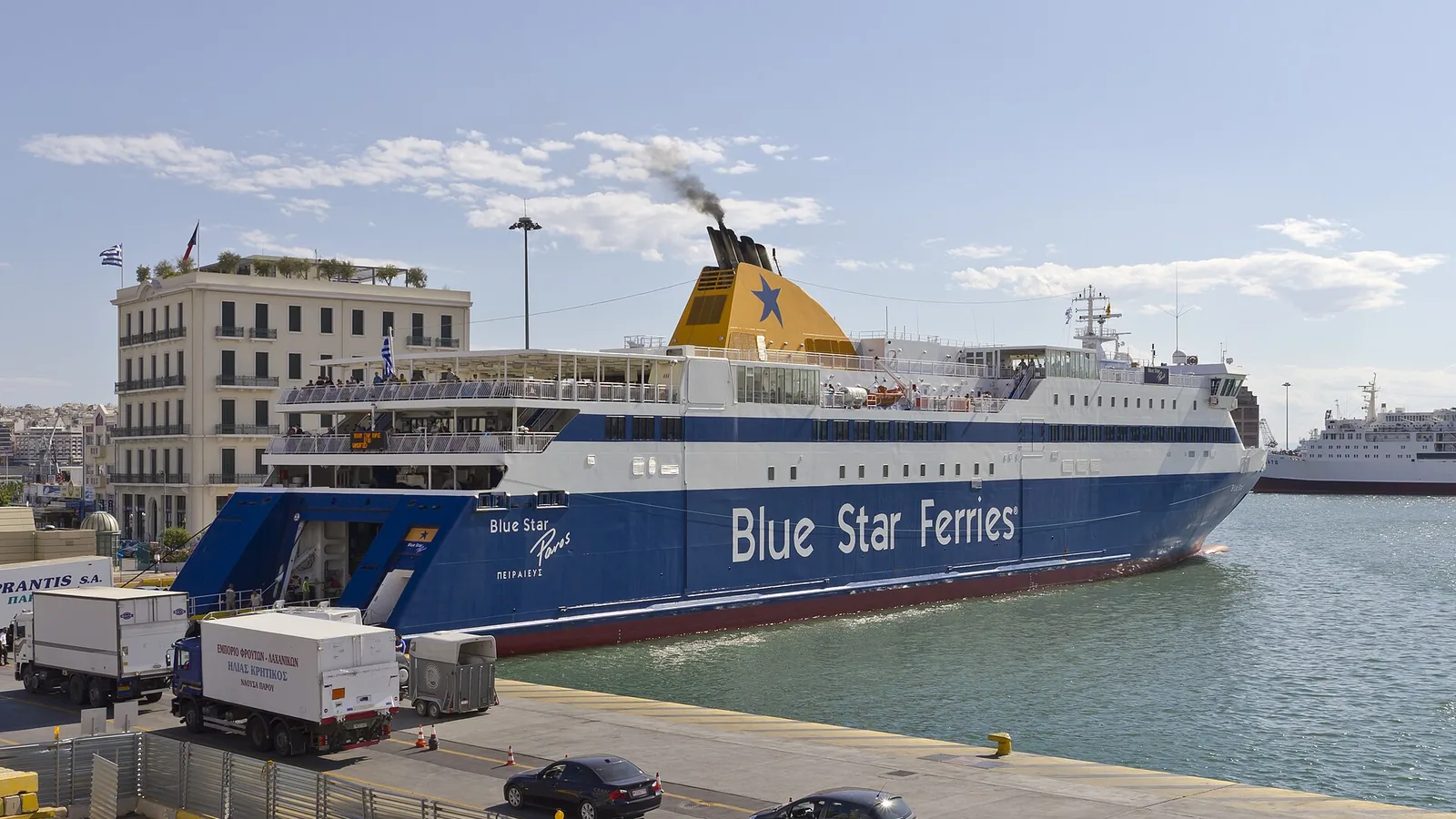
 (c) A.Savin / CC BY-SA 3.0
Greek Ferry Strikes Explained: How They Work and What to Do
How Greek seafarer strikes work, why the PNO calls them, when they hit, and exactly what to do with your ticket so a strike doesn't wreck your trip.
By Serhat Özçelik, Founder & Editor of Ferry Schedule Hub· Published July 13, 2026
Few things unsettle a Greek island itinerary quite like the word strike. Once or twice a season, and reliably on Labour Day, the ferries that stitch the mainland to the islands simply stop: hundreds of vessels stay tied to the quay, sailings vanish from the board, and travelers scramble to rebook. The good news is that Greek ferry strikes are not random chaos. They follow a predictable legal choreography, they are almost always announced days ahead, and the fallout for your ticket is usually manageable if you know how the system works. This guide explains who calls these strikes, why they happen, when to expect them, and the practical steps that keep a single stoppage from unravelling your whole trip.
What a Greek ferry strike actually is
A Greek ferry strike is an organised, time-limited work stoppage by seafarers, not a cancellation caused by weather or a mechanical fault. The overwhelmingly common form is a nationwide 24-hour strike that runs from one minute past midnight (00:01) to midnight the following day (24:00). During that window, all categories of vessel are affected, from the big overnight ferries and high-speed catamarans to short-haul coastal boats. In practice this means ships remain docked in ports across the country, and the day's scheduled passenger routes are cancelled or shifted.
This is a different animal from a weather cancellation, where only some routes on exposed crossings are pulled while sheltered ones keep running. A strike is binary and near-total: on a nationwide strike day, you should assume nothing sails. If your concern is wind and waves rather than labour action, see our separate guide on whether ferries are cancelled in bad weather, which follows a very different logic.
Who calls the strikes: the PNO
Most nationwide ferry stoppages are called by the Panhellenic Seamen's Federation (PNO, in Greek Panellinia Naftiki Omospondia), the umbrella body that represents Greece's maritime unions. When the PNO declares a strike, its member unions across the fleet observe it, which is why a single announcement can freeze the entire coastal network at once. The federation also joins broader labour days alongside the big private- and public-sector confederations, so a maritime strike often coincides with metro, rail and other transport shutdowns on the same date.
Not every ferry strike is national, though. Smaller, port-specific unions can call localised action too. In late June and early July 2026, for example, the Pan-Hellenic Union of Merchant Marine Sailors (PENEN) struck for 24 hours at Rafina alone, over safety and docking-capacity problems at that port, suspending services to Andros, Tinos, Mykonos and the Cyclades while the rest of Greece sailed normally. Patras saw multi-day merchant-seamen action in June 2025. So when you hear "ferry strike," the first question to ask is: nationwide, or one port?
Why Greek seafarers strike
The demands behind these strikes are consistent from year to year, which is part of what makes the phenomenon evergreen. The PNO's stated grievances typically centre on:
- Collective labour agreements — the renewal and signing of sector-wide contracts covering pay and terms is the recurring flashpoint.
- Working conditions and safety of life at sea — crewing levels, hours and onboard conditions. In 2026, unions publicly opposed proposed rules they said could stretch working hours.
- Pensions and social protections — including the restoration of pension cuts for retired seafarers.
- Maritime education and union rights — protecting training standards and the right to organise.
- Geopolitical crew safety — on 5 March 2026, the PNO struck partly over risks to Greek crews operating near Middle East conflict zones such as the Persian Gulf and Strait of Hormuz.
You do not need to track the politics to plan around it. The takeaway is that these are structural, repeating disputes, so the possibility of a strike is a permanent feature of Greek ferry travel, not a one-off crisis.
When strikes happen
There is one date every island traveler should circle: 1 May, Labour Day. A 24-hour seafarers' strike on May Day is close to an annual fixture, and 2026 was no exception, with ferries docked nationwide from 00:01 to 24:00. If your trip touches 1 May, plan as though the ferries will not run.
Beyond that, strikes cluster around national general strikes called by the big labour confederations, which the PNO frequently joins. These tend to land in spring and autumn and are tied to budget votes, pension reforms or labour-law changes rather than a fixed calendar. Recent examples in 2026 alone included nationwide 24-hour ferry stoppages on 5 March and 1 May, plus localised action at individual ports. Peak summer sailings (July and August) are less commonly hit by nationwide strikes but are not immune, as the July 2026 Rafina action showed.
Crucially, Greek law requires advance notice: unions must give formal notice before striking (at least 24 hours, and typically several days' warning of demands in the case of public-utility services). In practice, nationwide ferry strikes are announced days in advance and widely reported before they happen, which is exactly what gives you room to react.
What a strike does to the day's schedule
On a nationwide strike day, the default is simple: no ferries sail, and the network resets around the stoppage. Operators handle this in two ways. Sailings scheduled during the strike window are cancelled outright. Some overnight departures are instead rescheduled to leave just before the strike begins (the evening before) or resumed late once it ends, so a handful of long-haul overnight ferries may show adjusted departure times of, say, 23:00–23:59 rather than being scrapped. Everything in between the bookends is gone for the day.
Because a single strike day compresses two days of demand into the sailings on either side, the boats immediately before and after a strike fill up fast. If you can travel a day early, do; the post-strike rush is real. For how the wider island network connects and where the pinch points are, our guide to ferries between the Greek islands is worth reading alongside this one.
What happens to your ticket
When a strike cancels your sailing, you are not simply out of pocket. Greek ferry operators treat a strike as grounds to change or refund the ticket, and their published strike notices spell out what to do. The mechanics vary slightly by company and by how you booked, but the pattern is consistent:
- If you booked through an agency or online platform, contact the agency that issued the ticket. That is who processes your change or refund.
- If you booked directly via an operator's website, app or call centre, contact the operator. Blue Star Ferries, for instance, directs such passengers to its call centre for rebooking on strike-affected sailings.
- Rebooking onto the next available departure (often the day before or after the strike) is the usual first option, subject to space.
- Open-date tickets and refunds are also generally available. Under Blue Star's standard terms, tickets can be cancelled, refunded or converted to an open or alternative date up to seven days before departure in high season, and refunds on invalidated tickets can be claimed through the issuing agency for up to two years.
One caveat: for sailings the operator merely reschedules (rather than cancels), you typically keep your existing ticket and no change is needed. Read the operator's strike notice carefully to see which of your sailings is cancelled and which is just time-shifted. And because strike-week boats are crowded, rebook the moment a strike is announced rather than waiting.
How to find out in advance
The single most useful habit is to check for strike news before you lock in any island-hop with tight connections. Reliable places to look:
- Operator "strike" or "itinerary modifications" notices — every major line (Blue Star Ferries, Hellenic Seaways, SeaJets, Fast Ferries, ANEK, Minoan and others) posts a dated notice listing exactly which sailings are cancelled or modified, plus a contact number. This is the authoritative source for your specific ticket.
- GTP Headlines (news.gtp.gr) — Greek travel-industry news that reports nationwide strikes days ahead with the hours and scope.
- Keep Talking Greece (keeptalkinggreece.com) — an English-language outlet that consistently covers strike dates, timings and which services are affected.
- Your travel agent or the local port authority (limenarcheio) — the fallback the operators themselves recommend for last-minute confirmation.
A quick search for "Greece ferry strike" plus your travel month will usually surface a general-strike date within minutes if one is looming. New to Greek ferries generally? Start with our Greek ferries 101 guide for how booking, ports and operators fit together, then use this strike guide to stress-test your dates.
How to protect your trip
You cannot prevent a strike, but you can build an itinerary that shrugs one off:
- Keep a buffer day before your flight home. Never schedule the final island-to-Athens ferry for the same day as an international departure. A strike (or bad weather) on that leg is the classic trip-ruiner.
- Avoid pinning critical crossings to 1 May. If your dates are flexible and touch Labour Day, move the big transfers off it.
- Don't over-optimise island-hopping. Chains of same-day, back-to-back connections leave no slack; one strike day cascades through the rest.
- Book refundable or open tickets where offered, and keep the operator's contact details handy so you can rebook fast.
- Know your alternatives. For a stranded island connection, a domestic flight (many larger islands have airports) can rescue a travel day when the ferries are down.
- Watch the news as your date approaches, not just when you book — general-strike dates are often set only a week or two out.
Handled this way, a Greek ferry strike becomes a scheduling wrinkle rather than a disaster. The strikes are announced ahead, the ships are back the next day, and your ticket is almost always rebookable or refundable. Plan with a little slack, check the right sources, and act quickly when a date is called, and even Labour Day won't strand you.
Frequently asked questions
Keep reading