Dalmatia · Croatia
Zadar
Zadar's islands are not the ones on the postcards. Sali, Silba, Premuda, Iz, Sestrunj — a few hundred residents each, no cruise tenders, no queue for a table. More than fifteen islands sit in this archipelago and the ferries that serve them were built for the people who live there. That is a completely different product from the one two hours down the coast, and it is the reason to come here.
What Zadar's boats actually serve
From our timetable, the busiest links out of Zadar:
- Sali on Dugi Otok — 6 sailings, about 45 minutes, with G&V Line Iadera and TP Line.
- Silba — 5 sailings, about 1 h 45 m, with Miatours and TP Line. Cars are banned on the island.
- Premuda — 5 sailings, about 80 minutes.
- Iz and Sestrunj — smaller again, on the local network.
None of these names will mean anything to most visitors, which is precisely the point.
Not the Split experience, and deliberately so
Split fans out to Hvar, Brač and Vis — islands with nightlife, marinas and full-season crowds. Zadar fans out to villages.
The consequences are practical, not just atmospheric: accommodation is limited and often family-run, restaurant choice is thin outside July and August, and the last boat back genuinely is the last boat. In exchange, you get a Croatian island that is still a place rather than a product.
⚠ Two ports, four kilometres apart
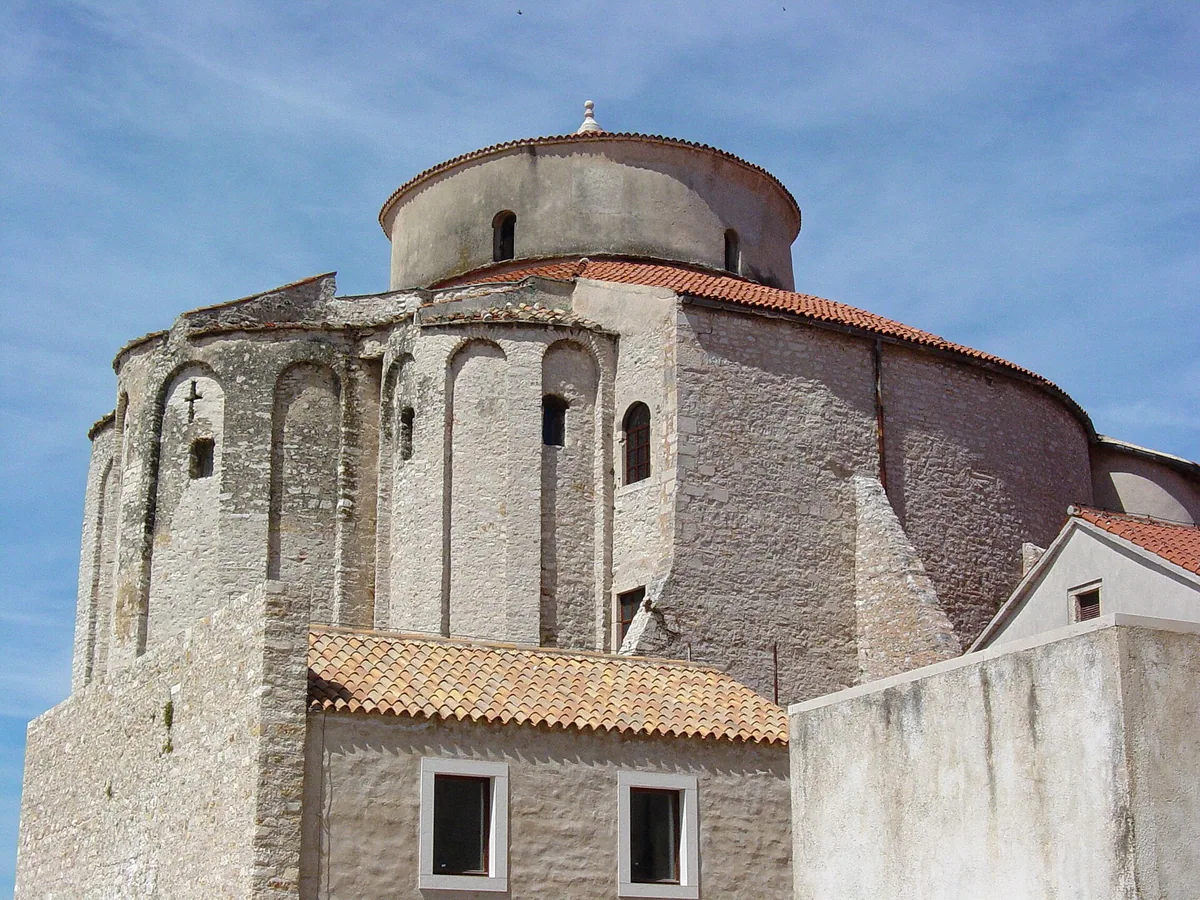
Catamarans and domestic lines use the small Old Town harbour on the peninsula, a short walk from St Donatus. Car ferries, international sailings and cruise ships use Gaženica, about 4 km south between Zadar and Bibinje.
Gaženica has twelve berths — roughly one to seven for local ferries, eight and nine for international, ten to twelve for cruise. It is a proper terminal with facilities; it is also not somewhere you walk to with luggage. If your ticket is a catamaran you are probably in the old town; if it takes a car, you are not.
Islands where the car stays behind
Silba bans cars outright. Several of the smaller islands have so little road that bringing one is pointless. On this archipelago the default should be to travel as a foot passenger and leave the vehicle in Zadar, which also removes the Gaženica question entirely.
Where a car does earn its keep is Dugi Otok, which is long, thin and has the Telašćica nature park at its southern end — but even there, a scooter or the local bus covers most of it.
Zadar as a place, not a transit stop
The city is usually treated as a lunch stop between Split and the Plitvice lakes, which does it no favours. The Roman forum sits in the middle of the old town, the sea organ turns swell into sound along the promenade, and the peninsula is small enough to walk end to end in twenty minutes.
It is also the cheapest of the major Dalmatian bases, and the one where a table on the water in August does not require a reservation a week out.
Reading the timetable before you commit
Local island routes run to island logic: an early boat out, a late boat back, and long gaps in between. That is fine for a night or two on Dugi Otok and unworkable for a lunchtime visit.
Check the return sailing before you board, particularly on Sundays and outside July and August, when several of these lines drop to one crossing a day. On the smallest islands there is no fallback — no second operator, no hydrofoil, no bus to somewhere else.
Reaching Zadar
Zadar has its own airport and sits on the A1 motorway, roughly ninety minutes from Split and three and a half hours from Zagreb. International ferries from Italy arrive at Gaženica.
Coming overland from the south, it is worth knowing that the coastal road is slower but far better looking than the motorway, and that the difference is about an hour.
Season
The local island lines run year round because the islands need them, but frequency drops sharply from October, and some routes fall to a single daily crossing. The seasonal catamarans and the Italian links are summer services.
June and September are the sweet spot here more than almost anywhere else in Croatia: the boats are still frequent, the islands are quiet, and Zadar itself never reaches the pressure that Split and Dubrovnik do.
Zadar ferry & travel FAQ
Which port do ferries use in Zadar?
Two. Catamarans and domestic lines use the small Old Town harbour on the peninsula; car ferries, international sailings and cruise ships use Gaženica, about 4 km south. Check whether your ticket carries vehicles.
How far is Gaženica from Zadar Old Town?
About 4 km, between Zadar and the village of Bibinje. It is a full terminal with facilities but not a walk with luggage.
Which islands can I reach from Zadar?
More than fifteen in the Zadar archipelago. The busiest in our timetable are Sali on Dugi Otok at about 45 minutes with six sailings, Silba at 1 hour 45 minutes, and Premuda at about 80 minutes.
Should I take a car to the Zadar islands?
Usually not. Silba bans cars outright and several islands have almost no road. Travelling as a foot passenger also keeps you at the Old Town harbour rather than Gaženica.
How is Zadar different from Split for island hopping?
Split's islands are Hvar, Brač and Vis — busy, developed, full-season. Zadar's are villages of a few hundred people. Expect limited accommodation and thin restaurant choice, and a genuinely quiet island in return.
How often do the island ferries run?
They run to island logic: an early boat out, a late one back, long gaps between. Outside July and August, and on Sundays, several routes drop to one crossing a day — check the return before you board.
How do I get to Zadar?
It has its own airport and sits on the A1 motorway, about ninety minutes from Split and three and a half hours from Zagreb. Ferries from Italy arrive at Gaženica.
When is the best time to visit Zadar?
June and September. The boats are still frequent, the islands are quiet, and Zadar never reaches the pressure that Split and Dubrovnik do in August.
More Dalmatia destinations
Reviewed by Serhat Özçelik, Founder & Editor of Ferry Schedule Hub · Last updated August 8, 2026.