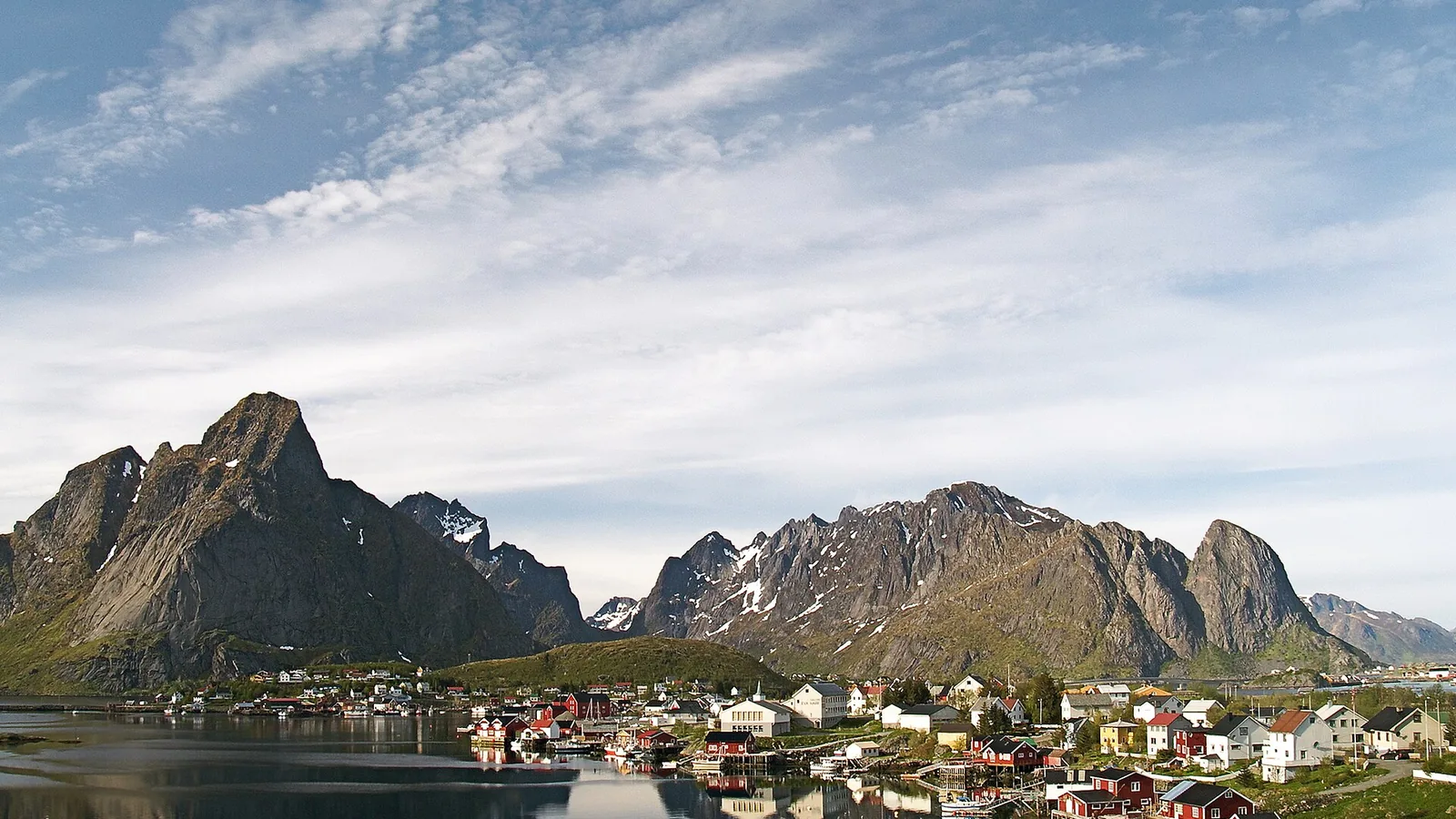
Nordland · Norway
Lofoten Islands
Lofoten's road is fine. The ferry is the problem. Almost everyone driving to the islands crosses the Vestfjorden from Bodø to Moskenes, and in summer those car spaces disappear from the booking system weeks ahead — while the alternative, the long road in from the north, adds most of a day. Sorting the ferry first is not a detail of the trip; on this archipelago it is the trip.
Book the Bodø crossing before you book anything else
Bodø to Moskenes is the way in: about 3 h 15 m across the Vestfjorden, with 37 sailings in our timetable — the most-searched Norwegian crossing on this site.
In summer there can be up to nine departures a day. That sounds like plenty until you understand that vehicle spaces sell out weeks in advance in July and August, and that missing your slot can mean waiting a full day at the terminal. Reserve the car space at the same time you book the flights.
⚠ A reservation is not a seat until you turn up early
Even with a valid booking, the operator expects you at the quay 45 to 60 minutes before departure. Arrive later and the space can be released to somebody in the standby queue.
This catches visitors who are used to reservations behaving like airline tickets. Here the reservation buys you a place in the loading order, not an unconditional right to board.
Where the ferry actually puts you
Moskenes is at the southern end of the archipelago, which is the good news: Å is about twenty minutes' drive away, and Reine and Hamnøy — the corner of Lofoten in every photograph — are between the two.
Svolvær and the northern islands are a further two hours up the E10. If your accommodation is at that end, the ferry saves less than you think and the northern road route becomes worth pricing.
Værøy, the island beyond the road
Moskenes to Værøy runs about 75 minutes with 13 sailings south and 10 back. Værøy has no road connection to anywhere — it is the ferry or nothing.
It is the quiet counterpoint to Reine: a few hundred people, a bird cliff, and a mountain walk with a view back along the whole chain. Check the return sailing carefully; the timetable is built around residents, not day trippers.
Winter is a different timetable, not a slower one
From roughly September to May the Vestfjorden crossing drops to one or two sailings a day. That changes the shape of a trip completely: a missed connection is not a two-hour wait, it is tomorrow.
It also removes the booking problem — winter spaces are generally available — and replaces it with a weather problem. The Vestfjorden is open water and rough crossings are cancelled rather than endured.
Doing Lofoten without a car
Possible, and less pleasant than it sounds. Foot passengers do not need a vehicle reservation on the Bodø ferry, and buses run the E10, but the villages are strung along 150 kilometres of road and the beaches and trailheads are not at bus stops.
The workable car-free version is to base in one village — Reine, Henningsvær or Svolvær — and accept that you are seeing that part of the archipelago rather than all of it.
When to come, and what you are choosing between
Lofoten sits about 200 km inside the Arctic Circle, which makes the seasons absolute rather than gradual. Midnight sun runs from late May to mid-July; the northern lights from roughly September to March. You cannot have both, and the ferry timetable follows the first.
Late August and early September is the compromise: the full summer schedule is still running, the crowds are gone, and the first aurora nights arrive before the boats thin out.
Where this fits in an Arctic road trip
North from Lofoten the chain continues through Vesterålen and on to Senja and Tromsø. The link that makes that a loop rather than an out-and-back is the summer-only Andenes–Gryllefjord ferry — and unlike this one, that crossing cannot be booked at all.
Two ferries, opposite problems: here you must reserve, there you must queue. Read both before setting your dates. Our Lofoten by ferry guide covers the routes in more detail.
Lofoten Islands ferry & travel FAQ
How do I get to Lofoten by ferry?
The car ferry from Bodø to Moskenes crosses the Vestfjorden in about 3 hours 15 minutes, with 37 sailings in our timetable. It is the standard route in and the most-searched Norwegian crossing on this site.
Do I need to book the Bodø–Moskenes ferry?
In summer, yes, and early. Vehicle spaces disappear weeks ahead in July and August, and missing a slot can mean waiting a day. In winter spaces are generally available.
How early do I need to arrive with a reservation?
45 to 60 minutes before departure. A booking buys you a place in the loading order, not an unconditional right to board — arrive late and the space can go to the standby queue.
Where does the ferry arrive in Lofoten?
Moskenes, at the southern end of the archipelago. Å is about twenty minutes away and Reine and Hamnøy are between the two. Svolvær and the north are a further two hours up the E10.
How often does the ferry run in winter?
One or two sailings a day from roughly September to May, against up to nine a day in summer. A missed connection in winter means tomorrow, not two hours.
Can I visit Lofoten without a car?
Yes, but the villages are spread along 150 km of road and the trailheads are not at bus stops. The workable version is to base in one village — Reine, Henningsvær or Svolvær — and see that part properly.
Can I get to Værøy from Lofoten?
Yes — Moskenes to Værøy takes about 75 minutes, with 13 sailings south and 10 back. Værøy has no road connection at all, so check the return sailing carefully.
When should I visit for midnight sun or northern lights?
Midnight sun from late May to mid-July, northern lights from roughly September to March. You cannot have both. Late August to early September is the compromise — full summer ferry schedule, no crowds, first aurora nights.
More Nordland destinations
Reviewed by Serhat Özçelik, Founder & Editor of Ferry Schedule Hub · Last updated August 8, 2026.