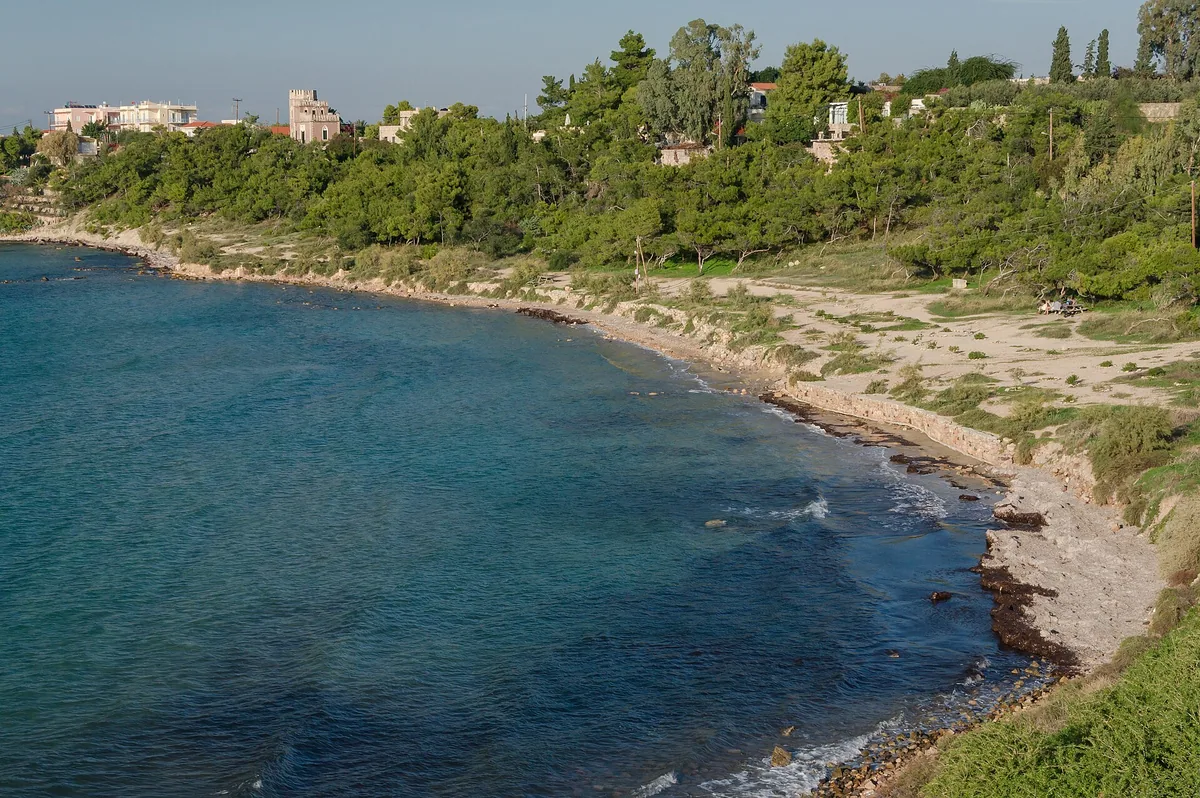
Saronic Gulf · Greece
Aegina
Aegina is forty minutes from Athens and behaves accordingly. People commute from it, weekend on it and buy their pistachios from it, and the ferry runs like a bus route rather than a holiday service. The one thing worth deciding before you book is which of the island's two ports your boat is going to, because they are on opposite coasts.
Getting to Aegina by ferry
Direct crossings serving Aegina — open one for its full timetable.
Gate E8, and how long you actually want to be on the water
Every Piraeus–Aegina sailing leaves from Gate E8, about five minutes' walk from Piraeus metro station. That is worth writing down: Piraeus is enormous and its gates are far apart. (For reference, the Crete ships use E2 and E3, at the other end of the port.)
Two kinds of boat make the crossing. The fast catamarans take about 40 minutes, with up to seven a day. The conventional ferry takes around 1 h 15 m and costs less. Our timetable holds 12 sailings on Piraeus to Aegina.
⚠ Aegina Town or Agia Marina?
The island has two ferry ports on opposite sides. Aegina Town on the west coast takes most sailings and is where the buses, the market and the waterfront are. Agia Marina on the east coast is served directly from Piraeus in season.
If you are heading for the Temple of Aphaia or the eastern beaches, the direct Agia Marina boat lands you next to them and saves a cross-island bus at each end. If you are here for the town, take the ordinary sailing. Booking the wrong one is not a disaster, but it costs an hour.
Agistri is ten minutes further
Aegina to Agistri runs at about 10 minutes with 8 sailings in our timetable, on Hellenic Seaways, Saronic Ferries and the local flying dolphins.
Agistri is much smaller, much quieter and mostly pine forest. As a pairing it works well: sleep on Agistri, use Aegina for supplies and the onward ferry.
A commuter route has commuter advantages
Because Aegina is part of the Athens travel-to-work area, the service does not behave like a seasonal island link. The first boats are early, the last are late, and the timetable holds up in winter when Cycladic routes collapse to a couple of sailings a week.
That makes it the most practical island in Greece for a short trip. You can leave central Athens after breakfast and be swimming before lunch, which is not true of anywhere in the Cyclades.
The pistachios are not a gimmick
Aegina pistachios have protected designation status and the island's soil and climate really do produce a distinctive nut. They are sold along the harbour front, they are cheaper here than anywhere in Athens, and the crop is a genuine part of the local economy rather than a souvenir line.
Time your visit for September and you arrive during the harvest, which the island makes a festival of.
The Temple of Aphaia
The best-preserved Doric temple in the Saronic Gulf, from around 500 BC, standing in pines on a hill in the east of the island with the sea on three sides. It forms a rough triangle with the Parthenon and the temple at Sounion, which was probably deliberate.
It is a short ride from Agia Marina and a longer one from Aegina Town. This is the single reason to consider which port you book.
In a Saronic route
Aegina, Agistri, Poros, Hydra and Spetses run in a line out of Piraeus and the hydrofoils connect them. Aegina is the first and the busiest; Spetses at the far end is the largest and the quietest.
A three or four island Saronic week is entirely feasible without ever going near the Cyclades, and it is much cheaper.
Season
The Piraeus link runs all year and heavily — this is a lifeline and commuter route, not a summer product. The direct Agia Marina sailings and some of the small inter-island boats are seasonal.
Weekends in summer are the busy time, and they are busy with Athenians rather than with foreign visitors. Midweek in May, June or September is quiet and the boats are half empty.
Aegina ferry & travel FAQ
How long is the ferry from Athens to Aegina?
About 40 minutes on the fast catamarans, with up to seven a day, or around 1 hour 15 minutes on the cheaper conventional ferry. Our timetable holds 12 sailings.
Which gate at Piraeus do Aegina ferries use?
Gate E8, roughly five minutes' walk from Piraeus metro station. The Crete ships use E2 and E3 at the other end of the port, so the gate matters.
Should I book Aegina Town or Agia Marina?
Aegina Town on the west coast takes most sailings and has the buses and market. Agia Marina on the east coast is served directly in season and is next to the Temple of Aphaia and the eastern beaches.
How do I get from Aegina to Agistri?
About 10 minutes, with eight sailings in our timetable on Hellenic Seaways, Saronic Ferries and the local flying dolphins.
Do Aegina ferries run in winter?
Yes, heavily. It is a commuter and lifeline route rather than a summer service, so the first boats are early and the last are late all year.
What is Aegina known for?
Pistachios with protected designation status, sold along the harbour front and cheaper than in Athens, and the Temple of Aphaia — the best-preserved Doric temple in the Saronic Gulf, from around 500 BC.
Can I do Aegina as a day trip from Athens?
Easily. Leave central Athens after breakfast and you can be swimming before lunch, which is not true of anywhere in the Cyclades.
Which other islands can I combine with Aegina?
Agistri, Poros, Hydra and Spetses run in a line out of Piraeus with hydrofoils connecting them. A three or four island Saronic week costs far less than the Cyclades equivalent.
More Saronic Gulf destinations
Reviewed by Serhat Özçelik, Founder & Editor of Ferry Schedule Hub · Last updated August 8, 2026.